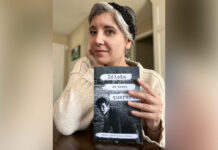
After her parents passed, Jan Cress Dondi acquired hundreds of family letters dating back to World War II. Each letter sent the Mercerian on a fact-finding mission to connect the dots of her father and uncle’s service in the U.S. Army Air Corps and understand the historical significance of the missions they flew.
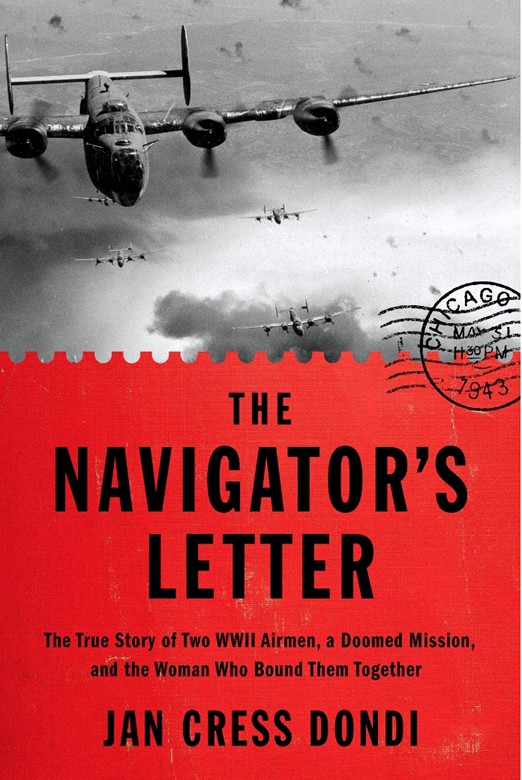
The culmination of her extensive research is The Navigator’s Letter, a nonfiction book set for release from leading publisher Hachette Book Group in February 2026 and available for preorder now.
Dondi was born in Hillsboro, Illinois, and grew up in Atlanta. She attended Mercer from 1973-75 and finished her bachelor’s degree from the University of Georgia in 1977. After working at a major department store in Florida for a year and a half, she switched gears and moved to Alaska, where her brother was living. She served as a paralegal while earning a teaching certificate from the University of Alaska but decided not to pursue teaching. Instead, she resumed her paralegal work and turned it into a 30-year trial litigation career.
When her Alaska law firm sent her to Texas for discovery work, she reconnected with a college sweetheart, Beda Dondi, and they eventually married and settled in Fort Lauderdale, Florida. They now have two grown daughters and four grandchildren.
After retirement, Dondi channeled her research, writing and interviewing skills into the project that would become The Navigator’s Letter. She grew up hearing stories about the wartime experiences of her father, Bob, and had him recount his tales on video when he was about 70 years old, which became the foundation of her book.
A few years after her father died, Dondi lost her mother, Polley, and her sister and niece to breast cancer over the course of three years. The wartime letters she had earlier discovered from her father and her mother’s brother, John B., became a much-needed distraction during a difficult time.
“Each letter led me on a journey to find out what these two men experienced,” Dondi said.
Bob and John B. were not related by blood, but their life paths shared “uncanny” similarities that are woven throughout the book. They served in the 15th and 8th Air Forces, respectively.
“They were born and raised in the same town,” Dondi said. “They both joined the Air Corps. They both became B-24 navigators, and they were both sent to the European theater. Both of them flew over Ploesti, and both were shot down and went missing.”
The Navigator’s Letter takes readers through the U.S. campaign to destroy Nazi Germany’s oil source at Ploesti, Romania, through the eyes of Bob and John B. It begins in 1943 with Operation Tidal Wave, a low-level, high-risk mission that took the U.S. bombers 50 to 150 feet above the target and resulted in the loss of more than half of the aircraft involved.
The book also delves into high-altitude raids over Ploesti and the U.S. campaign’s conclusion with Operation Reunion, the largest evacuation by air in history that rescued 1,162 prisoners of war and transported them to American airbases in Italy.
“Researching (this), I’ve come to appreciate just how difficult it must have been to fly combat missions over enemy territory — enduring freezing temperatures, relentless flak and enemy fighters shooting to kill — truly fearsome,” Dondi said. “And beyond the dangers in the skies, there was the heavy burden of leaving families behind, sustained only by the belief that their sacrifice would help shorten the war and make the world a better place so that they could return home.”
Much of the story was pulled from memoirs Bob had begun to compile, including the book’s introduction and a chapter about Chicago. Just days before deployment overseas for combat duty, Bob and his B-24 pilot schemed a fake emergency landing in Chicago’s Midway airfield so that Bob could rendezvous with Polley and his pilot could see his wife, who was days away from delivering their baby.
But the book is not just a family story; it’s an historical account sourced not only from personal letters and scrapbooks but the memoirs of crew members, pilot logs, interviews with veterans and experts, and information in the national archives in Germany and America.
“It’s been years in the making. I worked hard, stayed persistent, and yes, I got a little lucky,” Dondi said. “If you dig enough and are determined to ask enough questions, you can find amazing information out there.”
Dondi traveled to Romania to visit her father’s POW camp and the site where his plane crashed, speak at the U.S. Embassy in Bucharest, and meet with an aviation archaeologist and historian. In England, she stood on the Harwick airfield from which her uncle had flown, and she discovered a life-size photograph of him in the Imperial War Museum at Duxford. In Germany, she visited the Federal Archives to get the records of the German pilot who claimed her father’s plane. She also interviewed a POW veteran in Indianapolis who knew her father.
In addition, she spoke about her uncle’s mission to the 93rd Bombardment Group in Washington, D.C., and flew in one of the only two B-24 Liberators still operating.
“The book has been a true labor of love. My biggest desire is to get Bob and John B.’s story out to the public and as wide an audience as possible,” Dondi said. “They did an extraordinary thing, and not just them, all the airmen. It was an incredible feat. Those airmen deserve a lot of credit.”