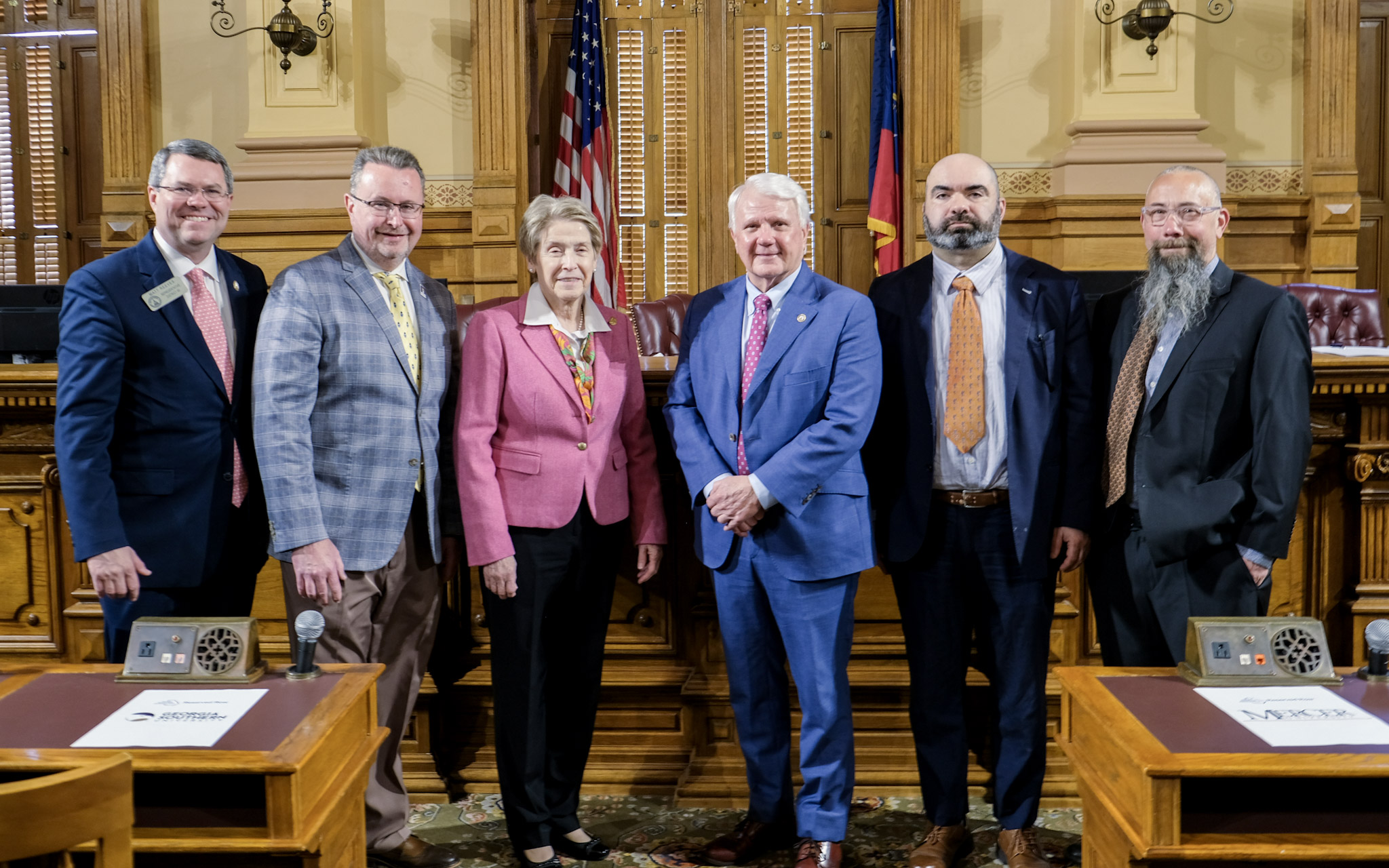
In its most recent funding cycle, the Georgia Opioid Crisis Abatement Trust awarded more than $600,000 to two research and prevention projects at Mercer University School of Medicine (MUSM). Both projects focus on addressing substance use in Georgia, with an emphasis on prevention, treatment and long-term impact in rural communities most affected by the opioid epidemic.
Established in 2022, the Georgia Opioid Crisis Abatement Trust oversees the distribution of up to $1.3 billion from opioid-related settlements over an 18-year period. These funds support a wide range of efforts across the state, including prevention, treatment, recovery, harm reduction, education, law enforcement and research.
Supporting pregnant, postpartum women with substance use disorder
The first funded project focuses on improving care for pregnant and postpartum women with substance use disorder. Led by Michael Kramer, Ph.D., professor of community medicine and director of MUSM’s Center for Rural Health and Health Disparities, the project received $400,000 over two years.
Titled “mMOMCare: Leveraging Mobile Health to Improve Outcomes for Pregnant and Postpartum Women with OUD/SUD in Georgia,” the project expands and evaluates an existing mobile health intervention. The platform is designed to help women better navigate care, connect with treatment and social services, and remain engaged throughout pregnancy and after delivery.
“Too many pregnant and postpartum women fall through the cracks because our systems don’t talk to each other,” said Dr. Kramer. “This Georgia-grown, evidence-based project uses mobile technology to build the connective tissue between maternal health care, substance use treatment and community support — meeting women where they are and delivering timely, compassionate care when it matters most.”
The project will operate in both rural and urban areas, including Liberty, Chatham and Fulton counties, as well as Atlanta. In addition to strengthening coordination among obstetric providers, substance use treatment programs and community organizations, the initiative will train health care providers in evidence-based perinatal substance use treatment. Researchers will also evaluate outcomes to support future expansion across Georgia and beyond.
mMOMCare builds on existing National Institutes of Health funding that examines rural and urban differences in substance use-related harms during pregnancy and the postpartum period.
Addressing fentanyl use through research, education
The second funded project, “From Neurons to Neighborhoods: A Comprehensive Initiative to Address Fentanyl Use and Overdose in Rural Georgia,” is led by Ali Gheidi, Ph.D., assistant professor of neuroscience. Funded at $276,000 over two years, the project takes a multi-level approach to addressing the growing threat of fentanyl in rural Georgia.
By combining neuroscience research, clinical data and community-based education, the initiative aims to reduce fentanyl-related harm and prevent future opioid misuse. Working in partnership with Mercer’s pathways program, the project will deliver evidence-based educational workshops, distribute age-appropriate harm-reduction materials and provide specialized training for teachers and school counselors.
“Leveraging my strengths in basic science research and partnering with local school districts, health departments and community organizations, we designed this program to be culturally relevant and community driven,” said Dr. Gheidi. “Our goal is to have a lasting, positive impact in these rural communities.
Teaching students about the science behind addiction can reduce stigma surrounding substance use and promote healthy decision-making before misuse begins. This outreach effort will help strengthen community resilience and support the next generation in making informed, confident choices.
A broader commitment to addressing the opioid crisis
These two projects build on MUSM’s ongoing work to address the opioid crisis in rural Georgia, including efforts through the CwC Alliance and previously grant-funded project North Georgia OPEN.
“Behind every grant we award is a Georgia family, a Georgia child and a Georgia community that deserves a chance to heal,” said Kevin Tanner, trustee of the Georgia Opioid Crisis Abatement Trust and commissioner of the Georgia Department of Behavioral Health and Developmental Disabilities (DBHDD). “These funds are not simply financial investments; they represent hope, opportunity and a commitment to saving lives.”
According to DBHDD, opioid-related overdoses have claimed more than 650,000 lives over the past 25 years, with a 200% increase between 2010 and 2020.
“The projects we fund support the people and organizations working every day to prevent addiction, expand treatment and strengthen long-term recovery,” Tanner said. “These award recipients are building a future where every Georgian has the chance to reclaim their life, to thrive and to live with dignity and purpose.”
About the Georgia Opioid Crisis Abatement Trust
The Georgia Opioid Crisis Abatement Trust was created to ensure transparency, accountability and strategic use of opioid settlement funds in Georgia. The Trust supports evidence-based programs that prevent opioid misuse, treat substance use disorders, expand recovery supports and save lives across the state. The Georgia Opioid Crisis Abatement Trust manages Georgia’s share of national opioid settlement funds, with more than $1.3 billion expected over the next 18 years. For more information, visit https://www.gaopioidtrust.org/.