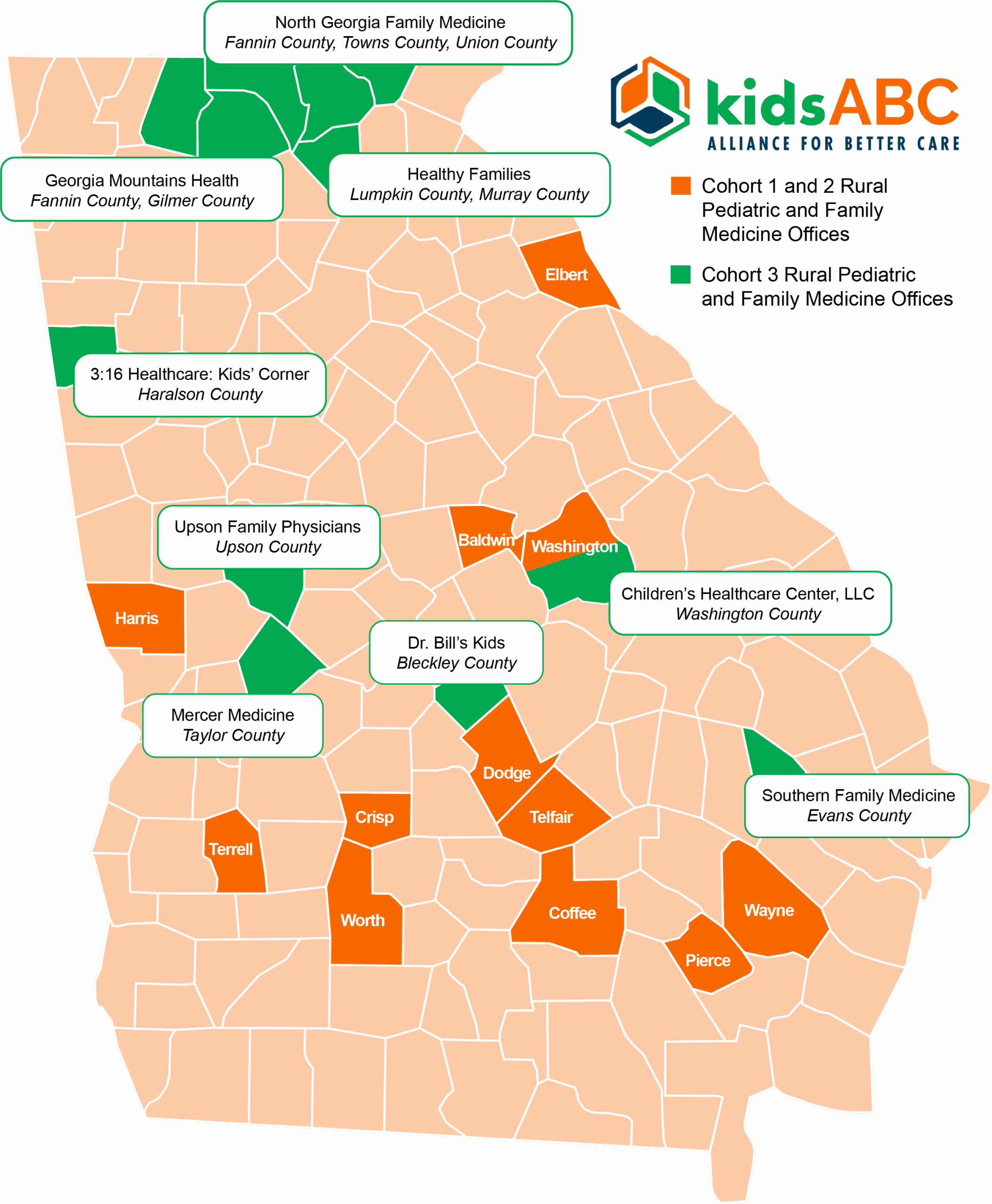
MACON, Ga. —Mercer University School of Medicine (MUSM) and the Georgia Rural Health Innovation Center (GRHIC) expanded their rural pediatric health initiative to additional rural counties across the state. More than 80 pediatric and family medicine physicians, along with advanced practice practitioners, in 23 counties are part of the initiative with the latest additions.
In February 2023, the School of Medicine and GRHIC, with the support of Children’s Healthcare of Atlanta (Children’s), launched a major initiative to strengthen access to pediatric health care in rural communities across the state of Georgia. This effort established the Kids Alliance for Better Care (KidsABC) and involves hospitals, pediatricians and school systems in rural Georgia counties.
The primary goal of KidsABC is to strengthen and expand quality pediatric care and keep care for kids close to home. For year three of the initiative, MUSM and GRHIC have selected these pediatric and family medicine practices:
- 3:16 Healthcare: Kids’ Corner, Haralson County
- Children’s Healthcare Center, LLC, Washington County
- Dr. Bill’s Kids, Bleckley County
- Georgia Mountains Health, Fannin and Gilmer Counties
- Healthy Families, Lumpkin and Murray Counties
- Mercer Medicine, Taylor County
- North Georgia Family Medicine, Fannin, Towns, and Union Counties
- Southern Family Medicine, Evans County
- Upson Family Physicians, Upson County
The rural pediatrician support component of the initiative is two-pronged: physician training and consultation and ensuring that access to subspecialty telehealth care is available for pediatric patients, so care remains local and close to home, if possible.
Georgia’s rural pediatricians are often isolated and without adequate timely access to subspecialty consultation and after-hours assistance. The KidsABC initiative provides avenues of physician-to-physician support for the purpose of building regional contacts with nearby pediatricians and regional children’s hospitals. An example of that support is the Children’s Rural Access Line Pilot, a direct line for rural providers to seek consultative support from Children’s pediatric specialists. Additionally, the initiative offers physicians and health care professionals training through the KidsABC Rural Pediatric Continuing Education Conference and monthly virtual seminars with subject-matter experts.
For some health issues, rural children often receive treatment from a subspecialist outside of their residential county, placing the burden of travel and time away from work on families. Telehealth services within the pediatric and family medicine clinic setting give patients access to subspecialists from a variety of medical fields, reducing the need for families to travel long distances for in-person appointments.
“Pediatricians and family medicine physicians are vital to the health and well-being of children,” said MUSM Dean Jean R. Sumner, M.D., MACP. “KidsABC provides rural physicians continuing medical education and paths to training, treatment, advice and follow-up on medical conditions from subspecialists. Building relationships with subspecialists and receiving expert guidance via a phone call or through telehealth means children have more opportunities to receive the quality care they need close to home. We believe this initiative will transform health care in rural communities across Georgia. We are grateful for Children’s Healthcare of Atlanta’s support.”
“We are so proud that the KidsABC program continues to expand each year with new physicians wanting to improve care for kids in Georgia,” said Children’s Chief Executive Officer Donna Hyland. “The goal of KidsABC is to help ensure access to pediatric care closer to home for kids in the state, and this growth is a true testament to the expertise that Mercer University School of Medicine and its Georgia Rural Health Innovation Center have within our rural communities.”
KidsABC brings together a network of rural hospital emergency departments, pediatric offices, regional and state pediatric tertiary care hospitals and school systems to address the challenge of health care access, which many rural families face. KidsABC participants are equipped with the necessary tools, protocols, training and research, so families have access to subspecialty care, mental health care and emergency medical care in their hometowns.
Programs within KidsABC address the challenges of distance to specialty care and limited resources while emphasizing the importance of early intervention in achieving positive outcomes. Children’s has provided specialized pediatric clinical guidance to launch and sustain these programs. Specific work related to this initiative includes:
- Rural hospital emergency department support — Through KidsABC, rural hospitals receive the training and support to build regional pediatric networks. This support helps the hospitals respond to pediatric patients in their emergency departments more effectively. The pilot’s inaugural year included eight rural hospitals.
- Rural pediatrician support — This initiative provides physician-to-physician telehealth support and offers provider training for physicians, advanced practice practitioners and nurses. Four rural pediatricians practicing in five rural counties were part of the pilot.
- Behavioral and mental health support — MUSM, GRHIC and Children’s worked with schools to deliver mental health and wellness assessments to students and develop interventions appropriate for local needs. Virtual mental health counseling is made available as well as training in suicide awareness and prevention and stress management.
Additionally, to increase the health care workforce in rural communities, the Children’s Healthcare of Atlanta Rural Pediatric Scholarship Program was established to provide 10 scholarships each year for MUSM pediatric medical students who have committed to living and serving in rural communities. This year, a new Children’s Healthcare of Atlanta Marriage and Family Therapy Scholarship Program was established to provide scholarships for marriage and family therapy students who are committed to living and working in rural Georgia and providing mental health services to rural children.
KidsABC programs will continue expanding with the selection of additional rural hospitals, pediatric and family medicine offices and school systems in rural counties across Georgia for the next eight years as part of the ten-year initiative.