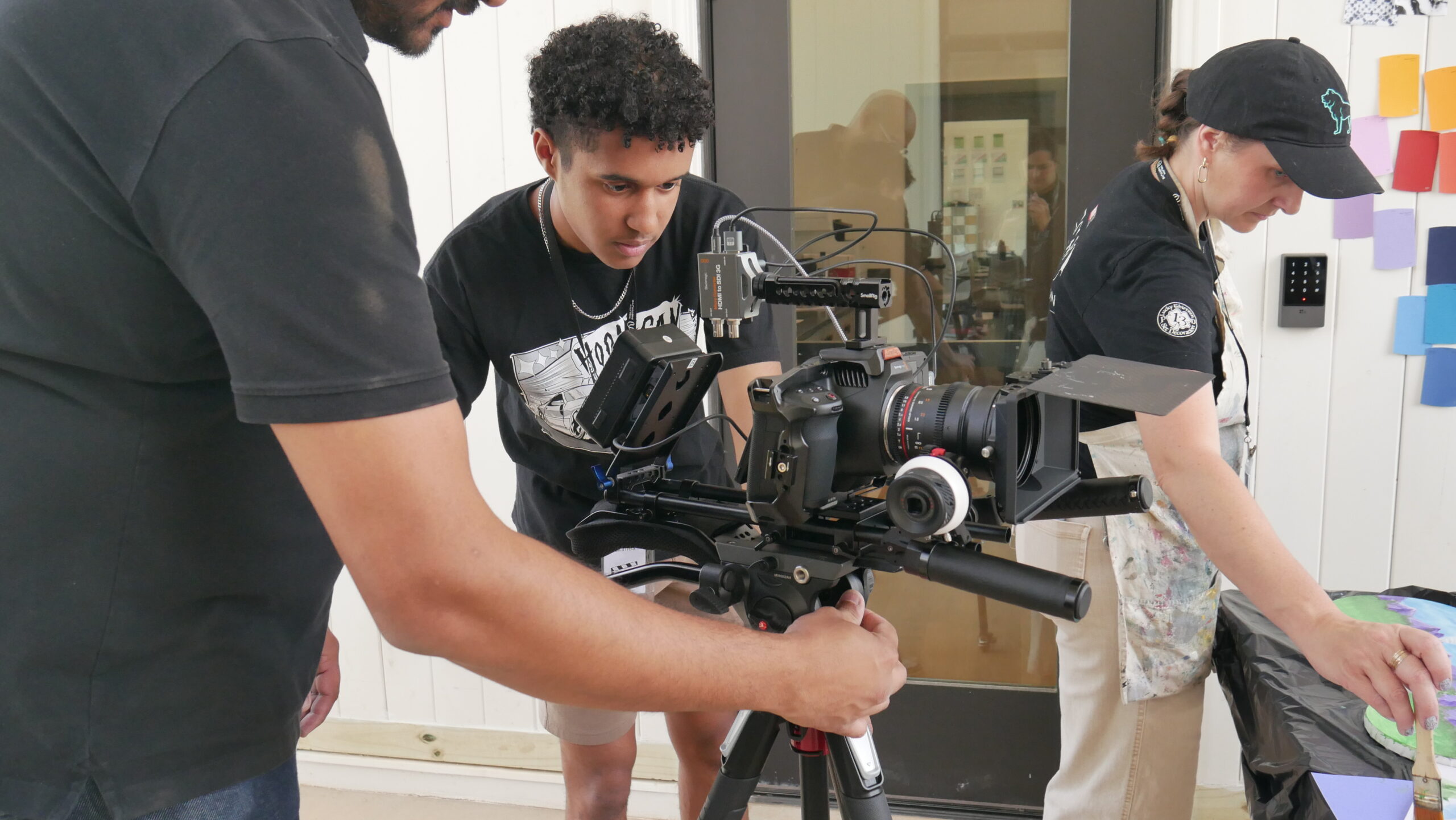
As Georgia’s film industry continues to develop, a Mercer University alumnus is trailblazing a new path in molding the creatives of the future. Josh Lee is chief operating officer and co-founder of Trilith Institute, a nonprofit that fosters the development and advancement of creatives in the industry.
Originally from Decatur, Lee said he discovered his passion while he was a Mercer student. A professor had selected him to spend a semester taking journalism classes at American University in Washington, D.C., where he discovered a love for postproduction and film and spent time as a broadcast intern at CNBC.
After graduating from Mercer in 2007 with a degree in journalism and media studies, Lee moved back to D.C. and launched his own video production company, where he worked with clients like Hillary Clinton, Al Gore and John Kerry. In 2011, he returned to Georgia to teach film and video at Northview High School in Johns Creek, where he grew the program from 30 to 150 students over three years, was awarded Teacher of the Year, and helped the program win state and national film competitions.

He was promoted in 2014 and came to support over 17 high school film programs as well as Fulton County Schools TV for four years. Lee also obtained a master’s degree in instructional design and technology from Georgia State University and a Master of Business Administration from the University of Mississippi.
From 2017-22, Lee worked for the Georgia Film Academy, where he helped create statewide high school film programming and helped build a curriculum that would expand the workforce for Georgia’s emerging film and television industry.
While Georgia’s film tax incentives have helped create a billion-dollar industry in the state, Lee said the film industry has been missing a consistent supply of new talent to work in production, writing and other behind-the-scenes roles. It was from this gap in the market that he decided to launch Trilith Institute in October 2022 alongside colleague Jeffrey Stepakoff, who spent more than 20 years writing in Hollywood for projects including Dawson’s Creek, Disney’s Tarzan and The Wonder Years.
“Georgia has been great at being a destination for the big distribution companies of the world, but we’re missing the above-the-line piece,” he said. “We’re taking a strategy in a setting where we are training up the storytellers of tomorrow and having them stay here in Georgia, where we make their work from start to finish.”
Trilith Institute is a training program that includes programming for K-12 students and professionals looking to work in media and production. The institute is based at Trilith Studios in Fayetteville, which bills itself as “North America’s largest purpose-built studio complex” and was the filming location for productions like Superman, Family Feud, Avengers: Endgame and other Marvel Studios projects.
Students interested in working in the creative industry can join a summer camp where they gain hands-on training with media professionals and learn skills like screenwriting, postproduction and filmmaking. Trilith Institute also hosts workshops, field trips and other crash courses on specific topics for students looking for more experience. In addition, it offers grant funding and professional education to adults looking to enter the creative industry. It has a residency program where creatives can live and work at Trilith with a $100,000 grant to create their own production.
Lee said one of the goals of the institute is not only to house and invest in emerging artists but to show budding creatives what job options are available to them in the film and television industry.
“What’s interesting is there are hundreds of unique jobs that exist in the film industry that most people don’t think about,” he said. “You can work in culinary (roles) in the film industry. You can be an engineer. You can work in painting, lighting or education. You can do all these things on a film, but most people only think about the director, actor and camera person positions.”
Lee said that as the film industry in Georgia and beyond continues to expand, Trilith Institute is in a special position to help contribute to the growing market for new creatives and a need for people who are skilled behind the camera.
“The timing is perfect. There is a global disruption that’s happening in the film industry where folks like us are able to redefine it. We’ve got a lot of people who are uniquely qualified to be doing this work,” he said. “I think the access to resources and the space, vendor support and crew is another reason why we’re in a position to do this work.”
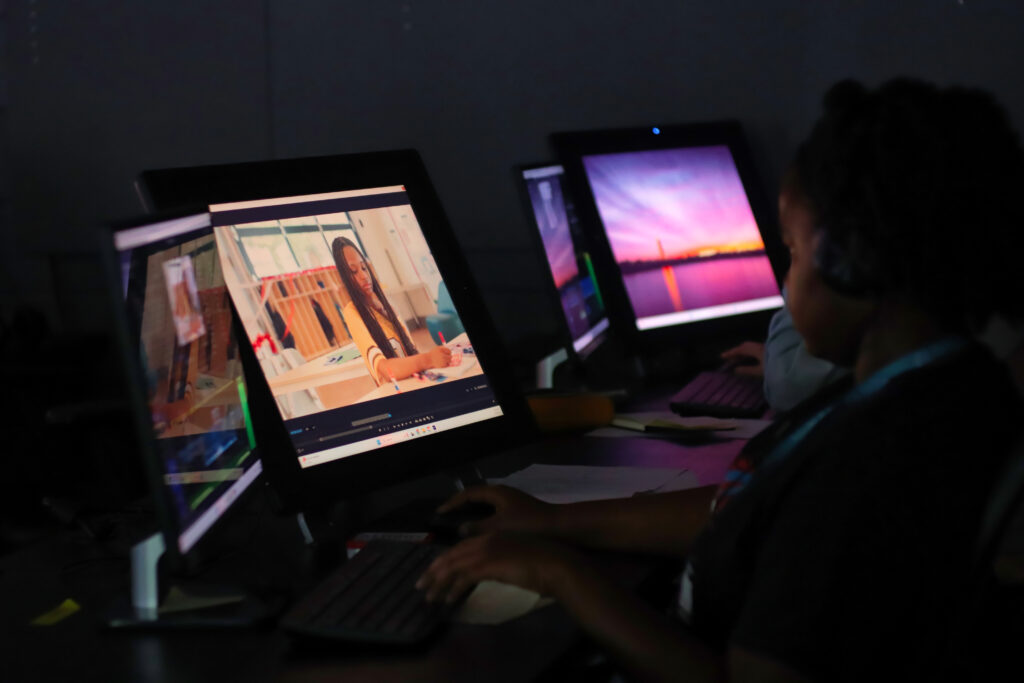
Having spent much of his career focused on education and training the next generation of media professionals, Lee said it’s imperative that the industry continues to uplift and support younger professionals.
“These types of jobs we’re training for mainly exist in LA and New York. There just hasn’t been as much robust training in this area,” he said. “So I think investing in these kids and at younger ages, we’re providing them with the exposure and early training so that they can really excel in their career right away from a young age and be placed right into the job market as soon as they’re done.”
He said having opportunities at every level of one’s career, from a young student to an adult professional, helps create a pipeline of talent that Georgia’s film industry can continuously benefit from.
“It’s building culture in this community. Students who join us at summer camp can then join us for professional education. They can join us for our Emerging Creative Residency and can join us for even larger productions. And it works both ways in that the people who are working on larger productions are supporting the (residency), who are supporting the people who are working with the summer camp students,” Lee said. “It’s really a strategic pipeline that is working to create this new community to provide training and access for younger generations as well as older generations.”
This year, Lee was named to the Atlanta Business Chronicle‘s “40 under 40,” which honors Atlanta’s “best and brightest young professionals and emerging leaders.”
He said the journalism classes he took at Mercer had some of the biggest impacts on his career and that his time at the University gave him the platform to become the media professional he is today.
“The culmination of experiences that I’ve had is the reason I am where I am today, but it all started with the college experience of Mercer,” he said. “I spent a lot of time in the journalism building because that’s where a lot of my classes were, so I think it really shaped my educational experience. It immediately led to jobs at CNBC and CNN, and that training was the jumping-off point for what I’m doing and have done and has really helped shape my career.”