A Mercer University-developed method for detecting lead in new, oil-based paint has been approved as an international standard, paving the way for low- and middle-income countries to keep lead paint off shelves.
Exposure to lead from paint can seriously harm a person’s health, and its effects are especially dangerous for children. Because lead is intrinsically toxic, identifying and removing lead-based paint from the market is essential to minimizing exposure.
The method, developed by College of Liberal Arts and Sciences chemistry professors Dr. Caryn Seney and Dr. Adam Kiefer, is significantly less expensive and faster than conventional methods of analysis used in laboratories around the world.
They began investigating more practical ways to detect lead in paint after Dr. Kiefer’s Mercer On Mission team in Guyana in 2019 found the toxic heavy metal in new paint, despite a regulation restricting it.
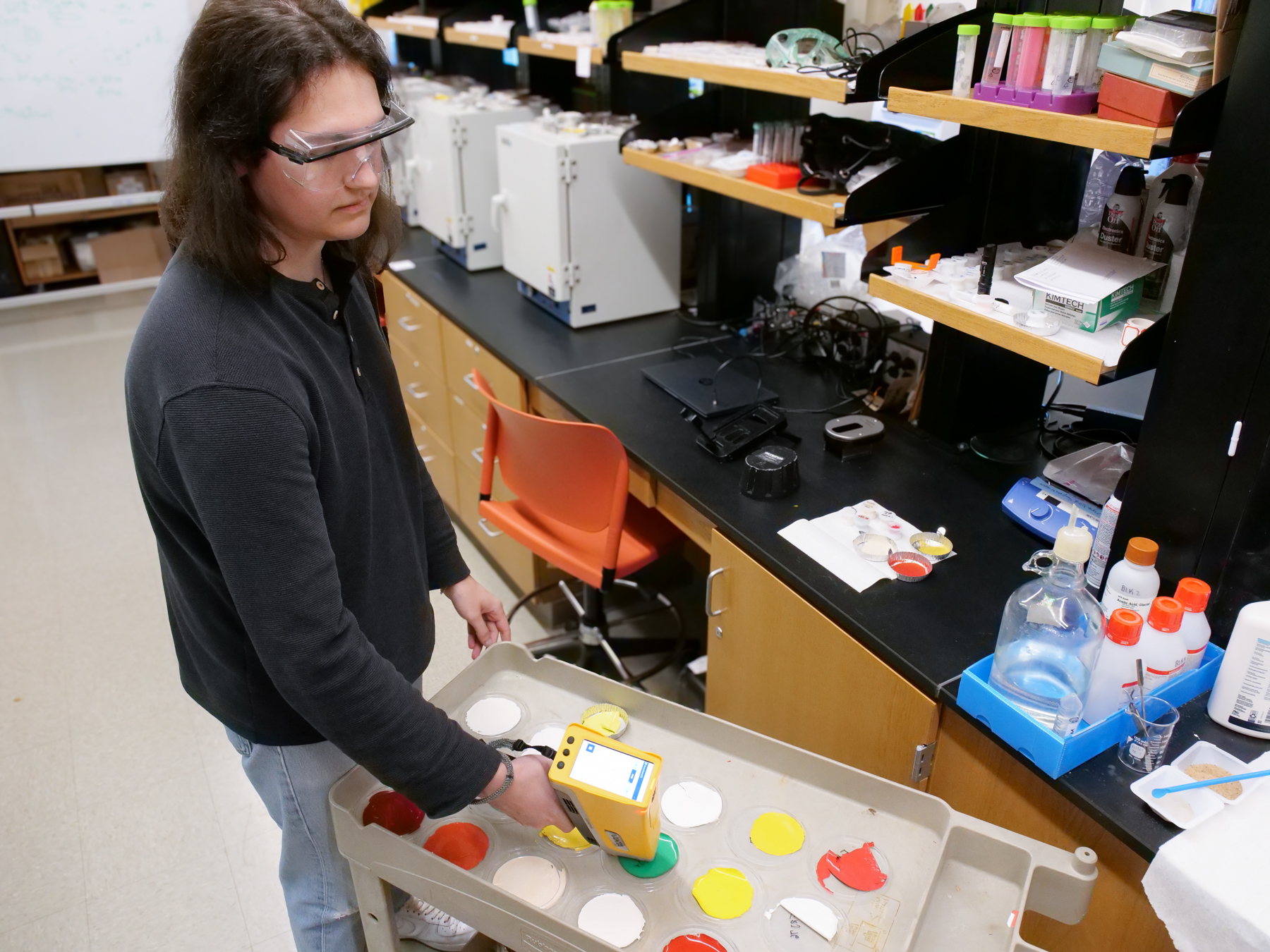
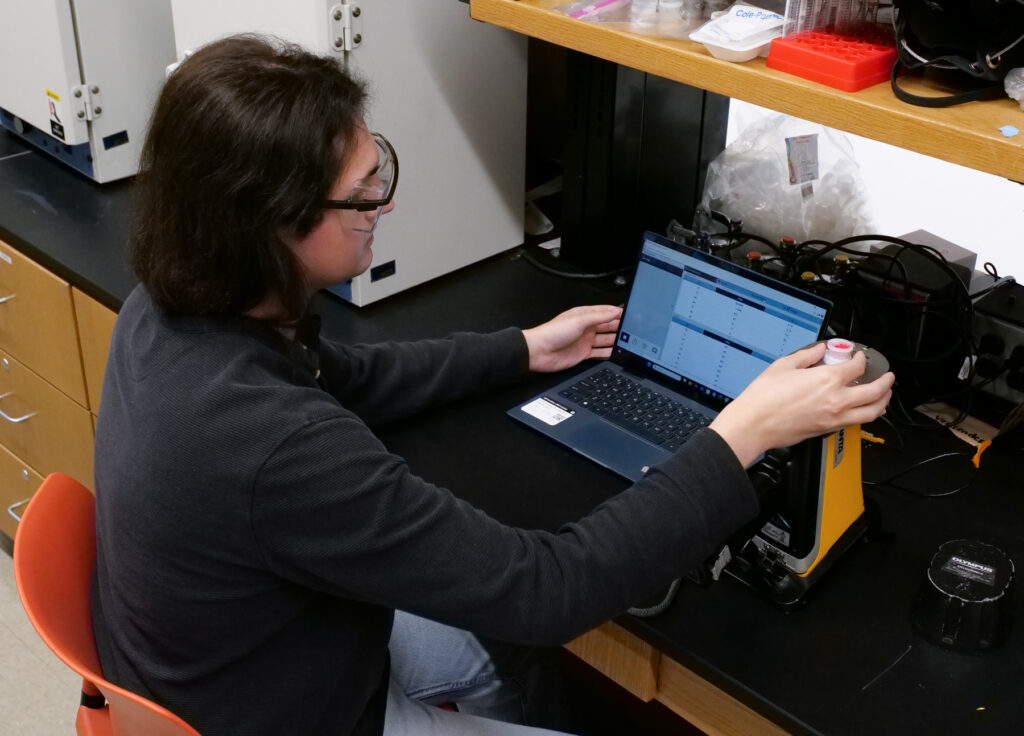
This led to the team’s development of a new method employing a relatively inexpensive device called an X-ray fluorescence analyzer, or XRF, to analyze dry, powdered paint samples. The XRF data is then standardized against a more accurate technique, resulting in a relationship that allows the user to accurately determine concentrations of lead in the paint.
In addition to support from Mercer On Mission, this work has been funded both by Coefficient Giving and the Lead Exposure Elimination Project (LEEP).
In March, ASTM International’s Paint and Related Coatings, Materials and Applications Committee approved the new standard ASTM D8661-26e1: “Standard Test Method for Determination of Lead in New Enamel Paint Samples through X-Ray Fluorescence (XRF) Analysis.” The not-for-profit organization is a global leader in the development and delivery of voluntary consensus standards.
“It is huge,” Dr. Seney said of the approval. “To have it approved means that government regulators around the world, particularly those in low- and middle-income countries, can point to this method and determine whether new paint contains lead above their nation’s regulatory limit.”
Dr. Kiefer has introduced this method to governmental organizations and regulators in Belize and Peru, and he has hosted scientists and regulators from Zimbabwe, Malawi, Burkina Faso, Senegal, Nigeria and Kenya at Mercer for in-depth training.
This summer, Dr. Kiefer and Dr. Adaline Buerck, assistant professor of environmental engineering, led a Mercer On Mission team in Kenya. There, they introduced the method to representatives from Uganda, Rwanda, Tanzania, Burundi and Zimbabwe while screening over 200 new paint samples for lead.
“ASTM Standard D8861 offers laboratories, particularly those with mandates to stamp out lead-based paint, an effective alternative to the current analytical methods,” Dr. Kiefer said. “Once countries see the data collected by our new method in a fraction of the time compared to the existing, gold-standard methods, they have been eager to learn this new method of detection to help them enforce regulations.”