Walk through any drugstore, and you’ll see a variety of cosmetics and personal care products, from shampoos to skin moisturizers, proudly labeled as free of parabens and phthalates.
These synthetic chemicals are commonly used in beauty products to make them last longer. They’re also found in a wide range of other items, from food packaging to detergents to medical devices.
Parabens and phthalates belong to a group known as endocrine-disrupting chemicals, named for their potential to interfere with hormone function in the body. Recently, these chemicals have come under scrutiny for environmental and health concerns.
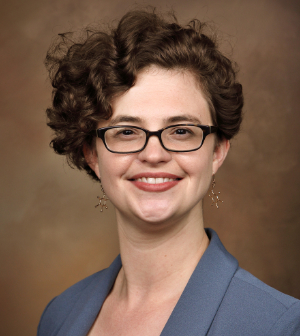
Dr. Maggie Meadows, associate professor of chemistry, has been studying endocrine-disrupting chemicals, starting with bisphenol A, since 2019. She and her students are currently researching new methods to test products for these chemicals, specifically phthalates.
“These were really interesting to me as a field that hasn’t been studied that much in terms of how we detect these things,” she said. “How do we make a way to detect them that you don’t need laboratory instrumentation?”
Her lab is examining the potential for creating a molecular sensor that could detect phthalates by changing color.
“Phthlates’ specific geometry would kind of, almost like pinchers, grab onto it really well,” Dr. Meadows said.
Such a method would be more accessible and cheaper than those currently available, she said.
“It’s something that you could do handheld, or you could even, in theory, make test strips or something like that, so there was a wide way that this could be applicable,” she said.
Whitney Wallace, a senior majoring in biochemistry and molecular biology, has been working in Dr. Meadows’ lab since her sophomore year.
“This (research) has really helped me solidify my interest in chemistry, specifically,” she said. “I’m actually applying to graduate schools right now for organic chemistry, so this has definitely played a significant part in that and also just made me a better scientist in general.”
She said working in the lab has taught her how to think critically and interpret results, as they’ve tried different methods to synthesize the color-changing molecule over the years.
Undergraduate research can benefit all students, regardless of whether they want to pursue research as a career, Dr. Meadows said. In a lab, students learn how to collect and analyze data; adapt to the situation; and problem solve, she said.
In April, Dr. Meadows’ students presented their work at the National Conference on Undergraduate Research in Pittsburg. And in June, Dr. Meadows and two former undergraduate research students — Alexa E. Richardson, CLAS ‘22, and Oneeka Kohli, CLAS ‘24 — published an article in the Journal of Solution Chemistry. The research provides information that supports future work on removing endocrine-disrupting chemicals from the water supply.
“The research I find very interesting, but the reason I do it is so the students can get involved and learn the problem-solving and the different skills, all of it,” Dr. Meadows said.