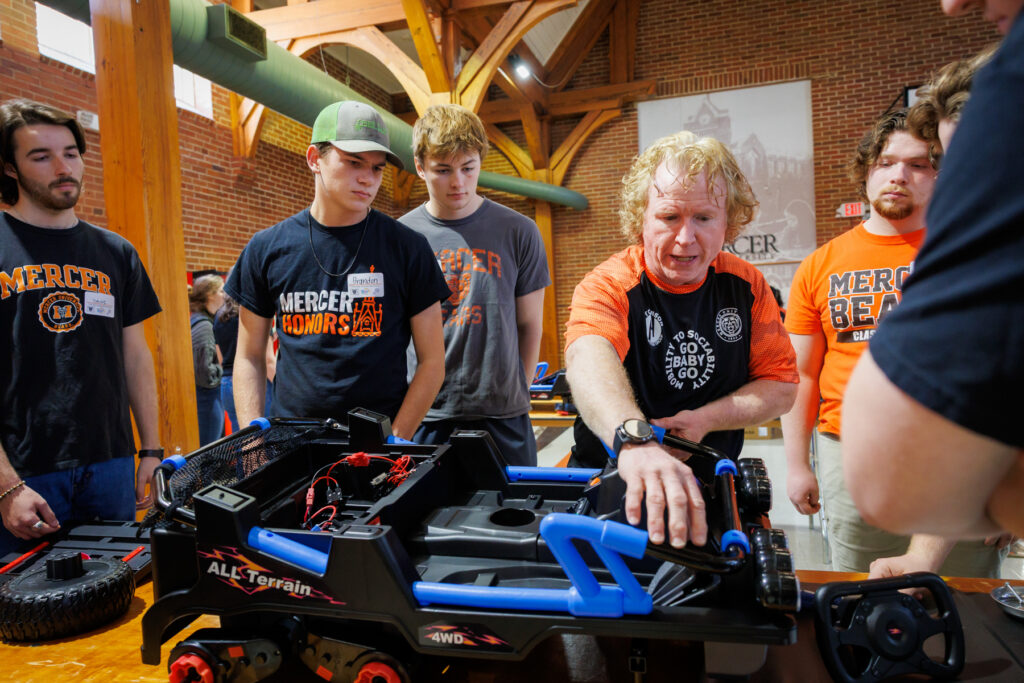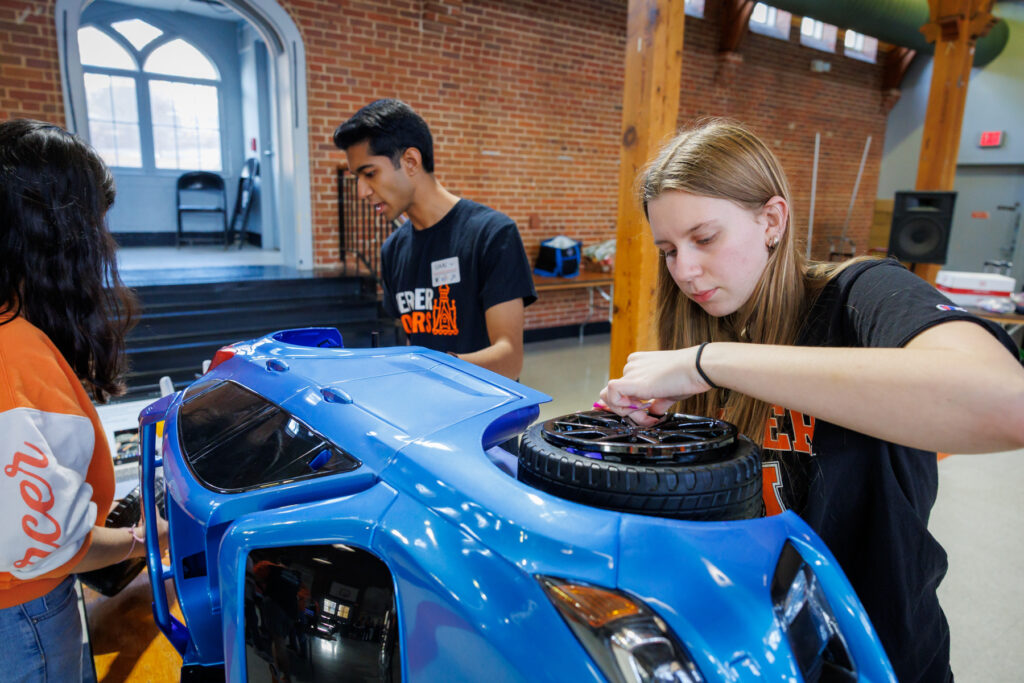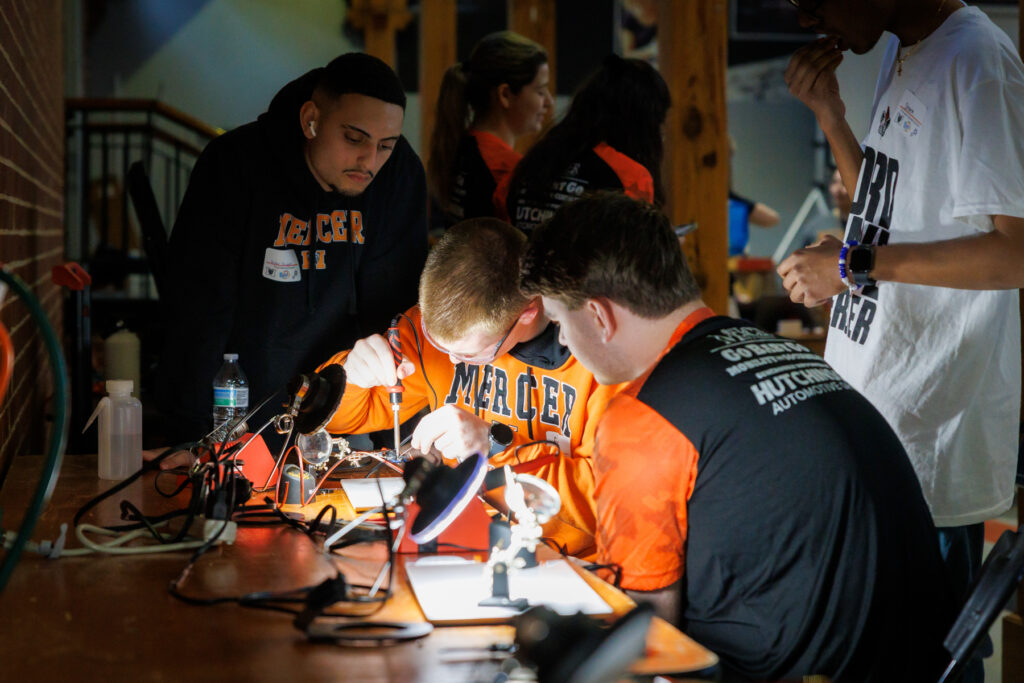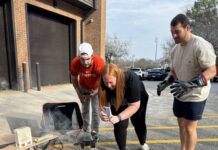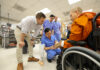
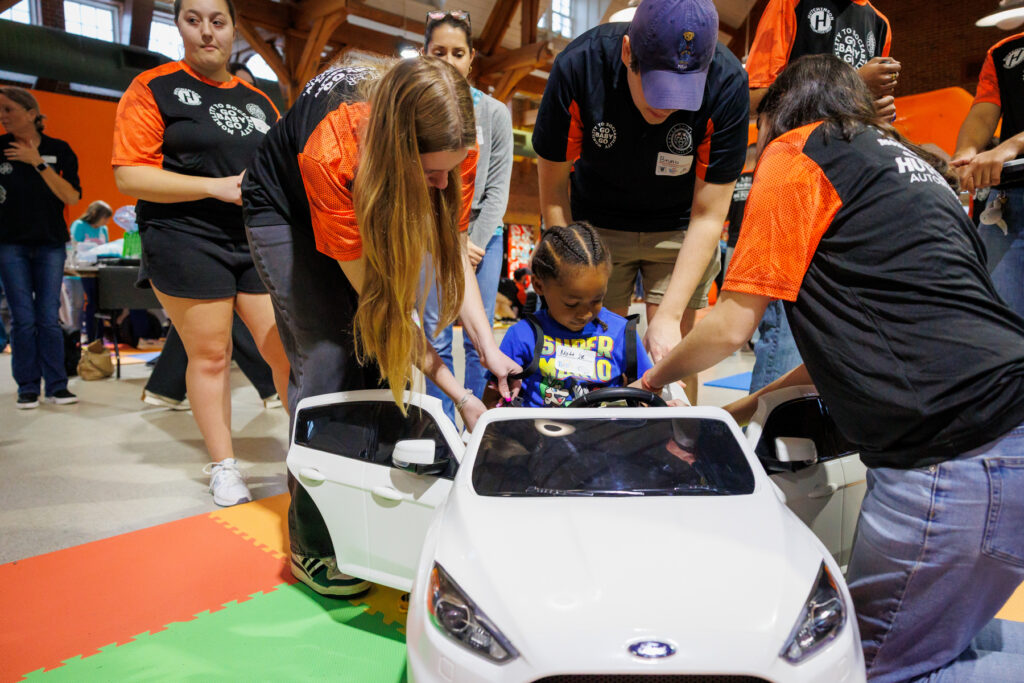
While the room hums with tools and conversation, one family stands quietly to the side. Engineering students carefully prepare a small battery-powered car to fit their child’s needs. The parents watch every movement, aware that what looks like a toy could become something much bigger for their family.
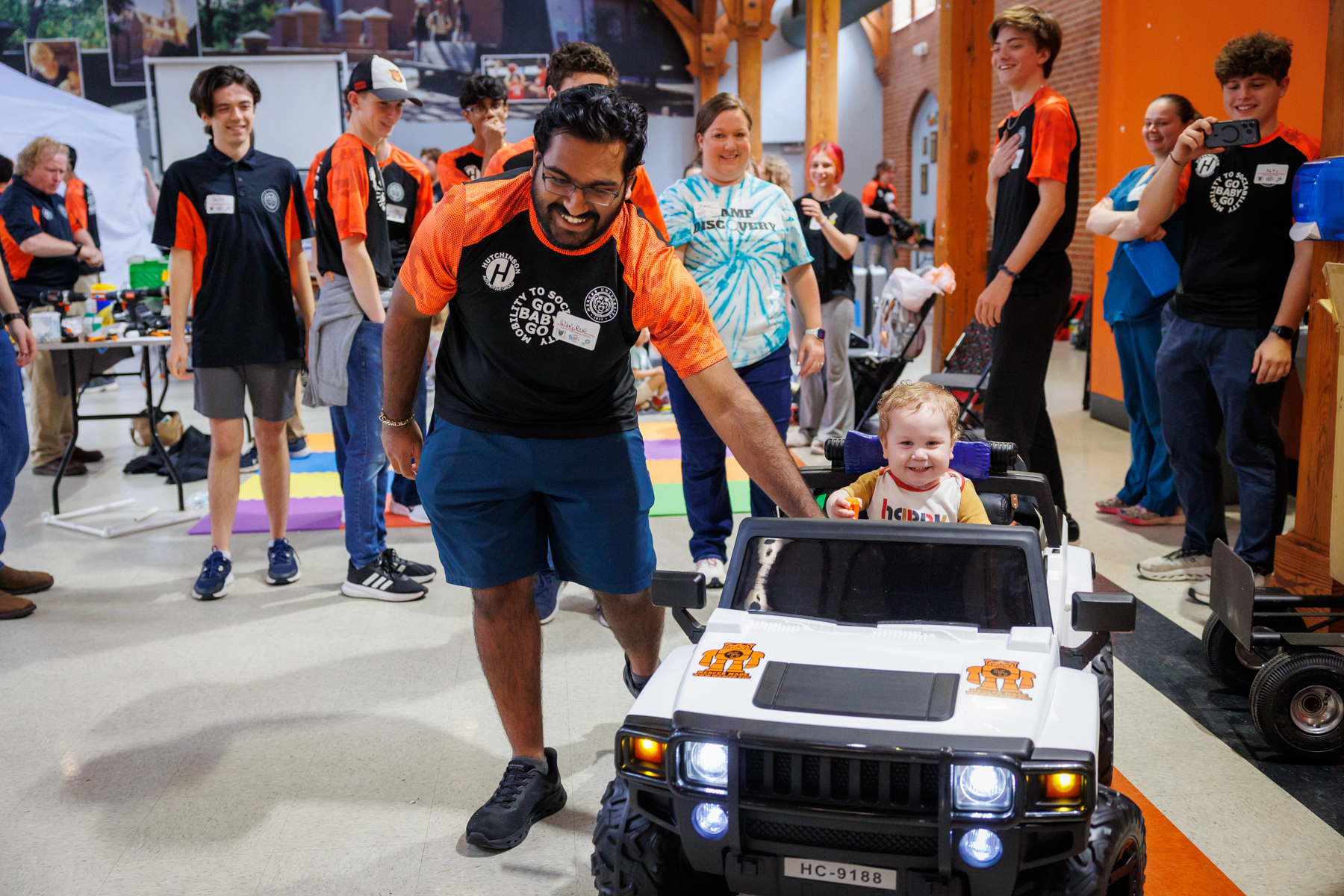
On Feb. 21, Mercer University’s Engineering Honors Program and Tift College of Education held their latest Go Baby Go event. During the event, battery powered cars were modified to fit children with limited mobility. This event marked the 200th vehicle given to a child.
Go Baby Go is a national, community-based research, design and outreach program that began in 2012 at the University of Delaware. Mercer held its first event in December 2016 and gifted nine cars to children. Dr. Philip McCreanor, chair of the environmental and civil engineering department, brought the event to Mercer after looking for a way to connect engineering students.
“I wanted the first-year students to connect with the seniors and the sophomore students to connect with the seniors, so the seniors would be able to provide some mentorship to newer students and maybe see themselves reflected in these young, enthusiastic students that are showing up when the seniors are in the final year of their studies,” Dr. McCreanor said.
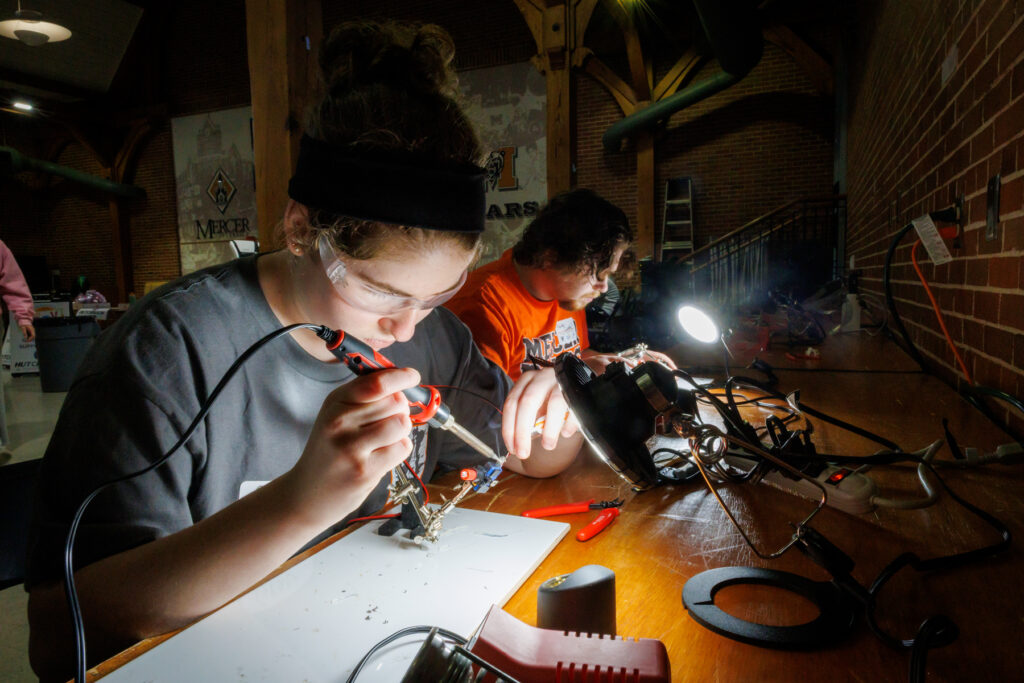
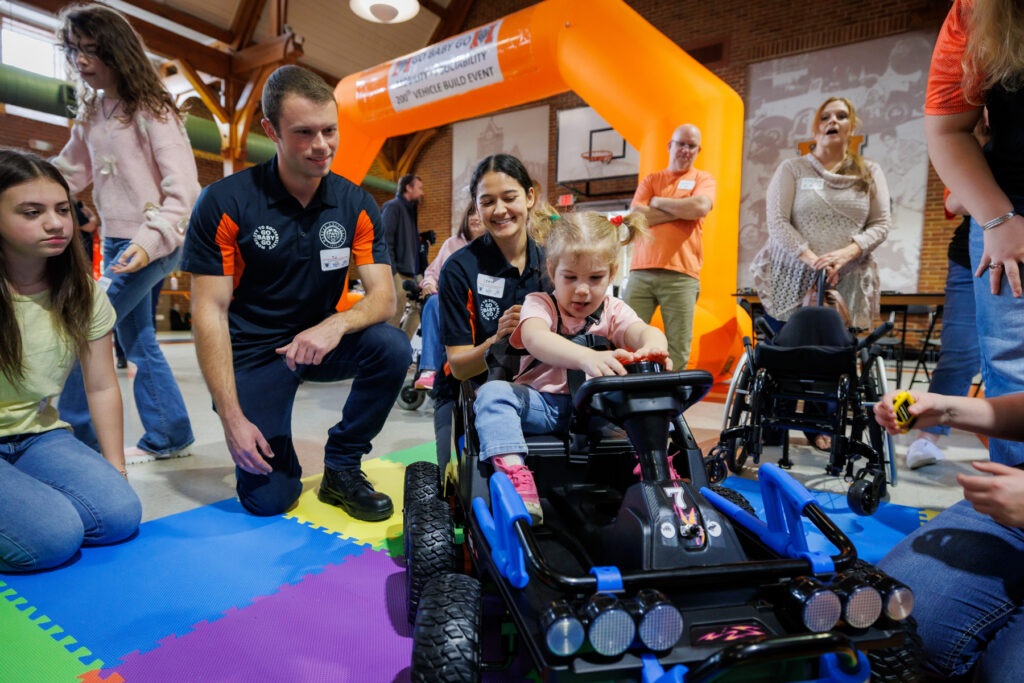
Sophomore engineering students Issac Montero and Melanie McElroy both have experienced Go Baby Go three times. They said the initiative gives them the opportunity to participate in a high-pressure, fast-paced and rewarding event, allowing them to see the joy it brings the families and children involved
“Last year, specifically, we had a girl that had a lot of mobility issues, and her family was really stressed and worried that the car wasn’t really going to work for her, and watching like their reactions, like her mom’s reaction, or her riding around, was really rewarding to see and exciting,” said McElroy.
Dr. Sybil Martin, professor of teacher education and director of the holistic child program, helps families get involved with the event.
“We partner with local early intervention programs, pediatric therapy providers, schools and community organizations to identify children who may benefit,” said Dr. Martin. “Families are invited to apply or are referred by professionals familiar with the child’s needs. Prior to the event, we gather information about the child’s physical, developmental and positioning needs.”
Since 2016, the event has shifted to a more holistic model, integrating the College of Education, School of Engineering, health sciences and community partners to provide the best experience possible for families and students. In 2023, Hutchinson Automotive Group became the corporate sponsor, allowing the engineers more freedom to try out different models and fit vehicles to children with specific, complicated needs.
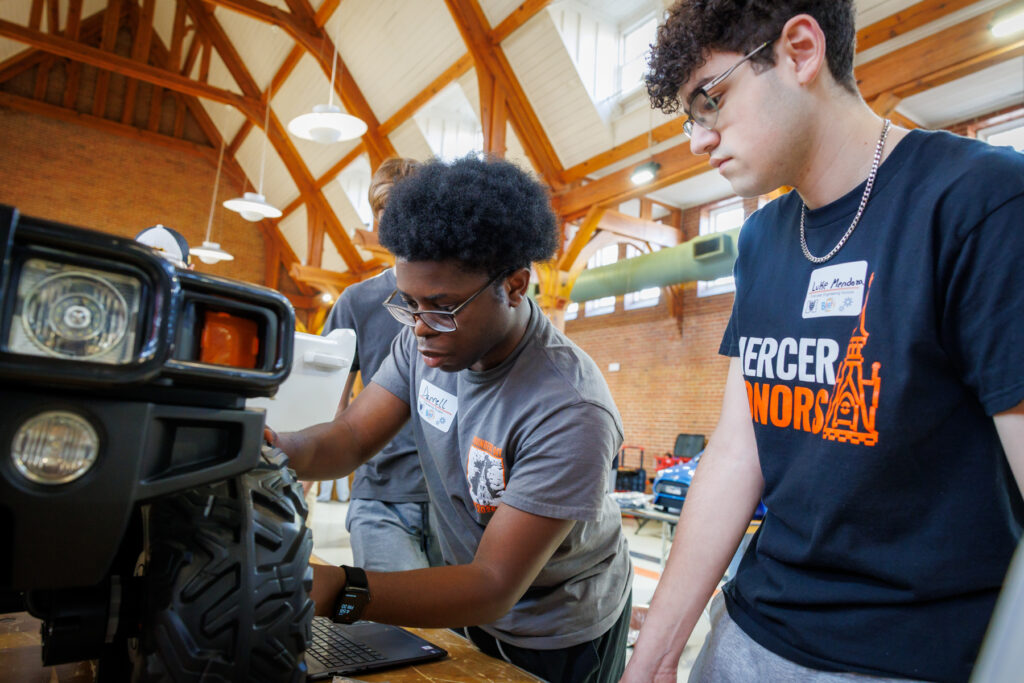
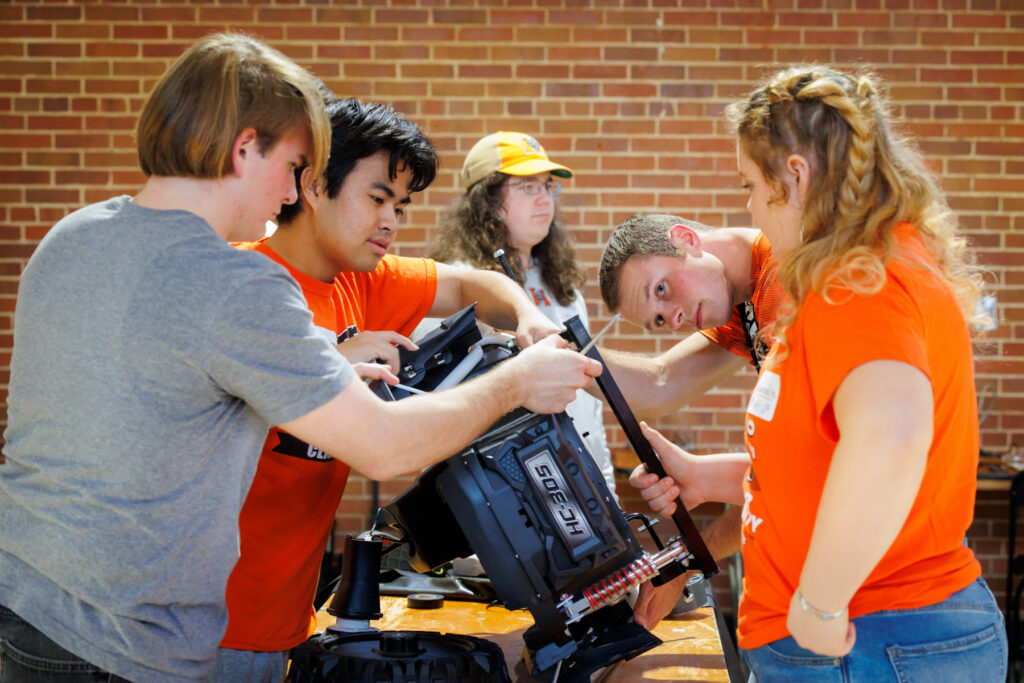
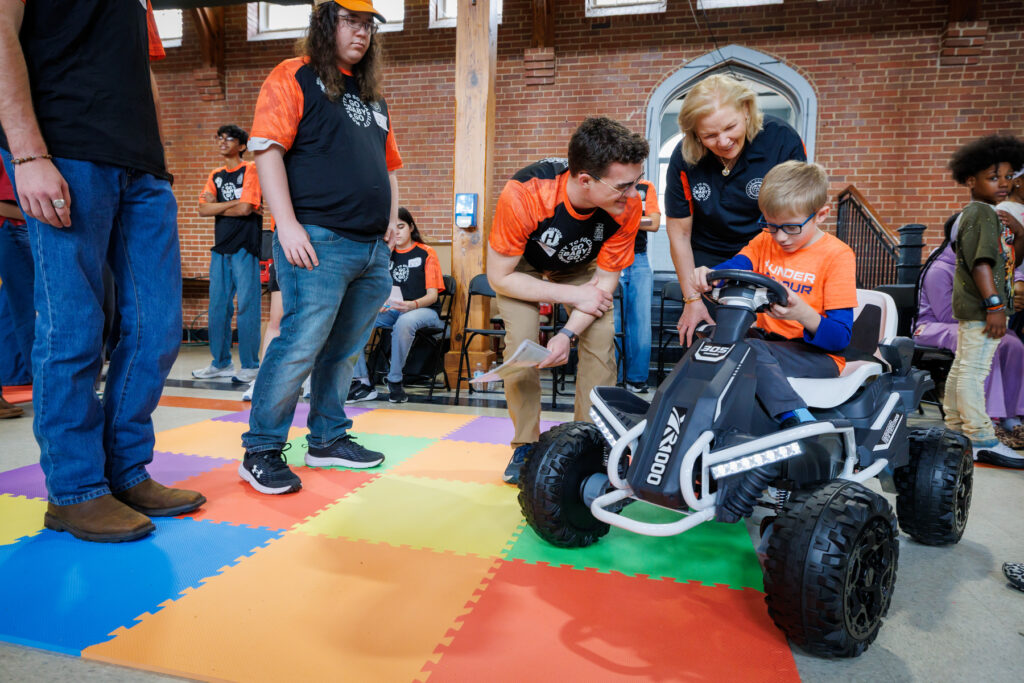
Corinne Fournier, the mom of a child who isn’t able to walk, has participated in Go Baby Go two times. Fournier said the vehicle has increased her daughter’s confidence and independence, allowing her the ability to control the direction she wants to go. It also has been a lifesaver to Fournier, who is less able to carry her daughter as she grows.
“In the beginning, we thought this was wonderful. We thought that it was cute, and it would be something fun for her. But now we’re in a position where we are older. I had heart surgery last year, so carrying her place to place is now more of a reality. This may be something she does not grow out of, and we need backup,” said Fournier.
“Some of these kiddos are on a track that they’re going to need a wheelchair, and that’s sort of where life is taking them, and that can be hard for a parent to accept,” said Dr. McCreanor. “Often, when they see the change in their child from the mobility, it becomes a little more palatable to the parents that this isn’t the end of the world.”