Life as we knew it was greatly challenged over the past year-and-a-half due to the COVID-19 pandemic. As events were canceled and stores closed down, higher education institutions were also greatly affected by the first wave of the pandemic during the spring of 2020.
Although Mercer paused in-person operations for the last half of spring semester 2020, the University worked hard to create a safe environment for faculty and students. Beginning in the second summer session of 2020, in-person classes returned with the addition of protocols based on CDC guidelines, as well as an on-campus COVID-19 testing laboratory. Mercer began administering vaccines on its campuses in late March 2021, and the availability of effective vaccines allowed for a new set of University protocols to provide glimpses of a return to normalcy.
Starting in the fall semester of 2020, College of Liberal Arts and Sciences faculty in all disciplines returned to teaching in-person, following safety protocols such as wearing masks in class and distancing student seating. Departments such as theatre, foreign languages and art, as well as the sciences, found ways to use technology to complement in-class work to enhance engaged learning.
THEATRE
The Theatre Department, in particular, was disrupted greatly by the virus. Frani Rollins, assistant professor of communication studies, reminisced on the theatre hosting shows while simultaneously being a study space, hangout area and creative hub for theatre majors and non-majors alike before COVID-19 struck.
“We produced four productions a year, which would vary between 70-150 patrons per show in the building,” Rollins said. “We always had people in and out of the building for things like that, but we’re also a Mercer Theatre family so we would do social things like have lunch together. We were in that space a lot.”
Students, faculty and staff were preparing for an upcoming play completely unaware of the harrowing news that would turn their world upside down.
“The Friday we received the notice, all of our hearts sank,” Rollins said. “It was something we worked really hard for during the school year. We recorded ourselves running through it one last time because the seniors had their production canceled, which was a bummer.”
Theatres shut down across the globe from Broadway to college stages. Students were instructed to leave campus to resume online classes at their homes, leaving their hard work behind as a shroud of what could have been.
“When we came back for the beginning of the fall semester of 2020, everything was up in the theatre the way we left it,” Rollins said. “It was crushing to walk into this production that never happened.”
As the fall of 2020 rolled around, Rollins looked to the theatre industry and other surrounding institutions for inspiration on how to conduct productions in an environment of untreaded waters.
“The interesting thing about our field was that it wasn’t just Mercer that shut down; everyone was affected,” Rollins said. “Everyone was only going to and from class, and that was it, and for us creative theatre people it wasn’t enough.”
Mercer Theatre decided to produce Zoom plays, known as “Z-4: In the Zoom Room,” a virtual alternative to full-length productions in fall 2020. Shows would typically last 10 minutes, and “studios” were created inside the theatre to separate actors from one another in adherence with CDC guidelines. The actors were also prompted to sanitize their areas when completing a scene.
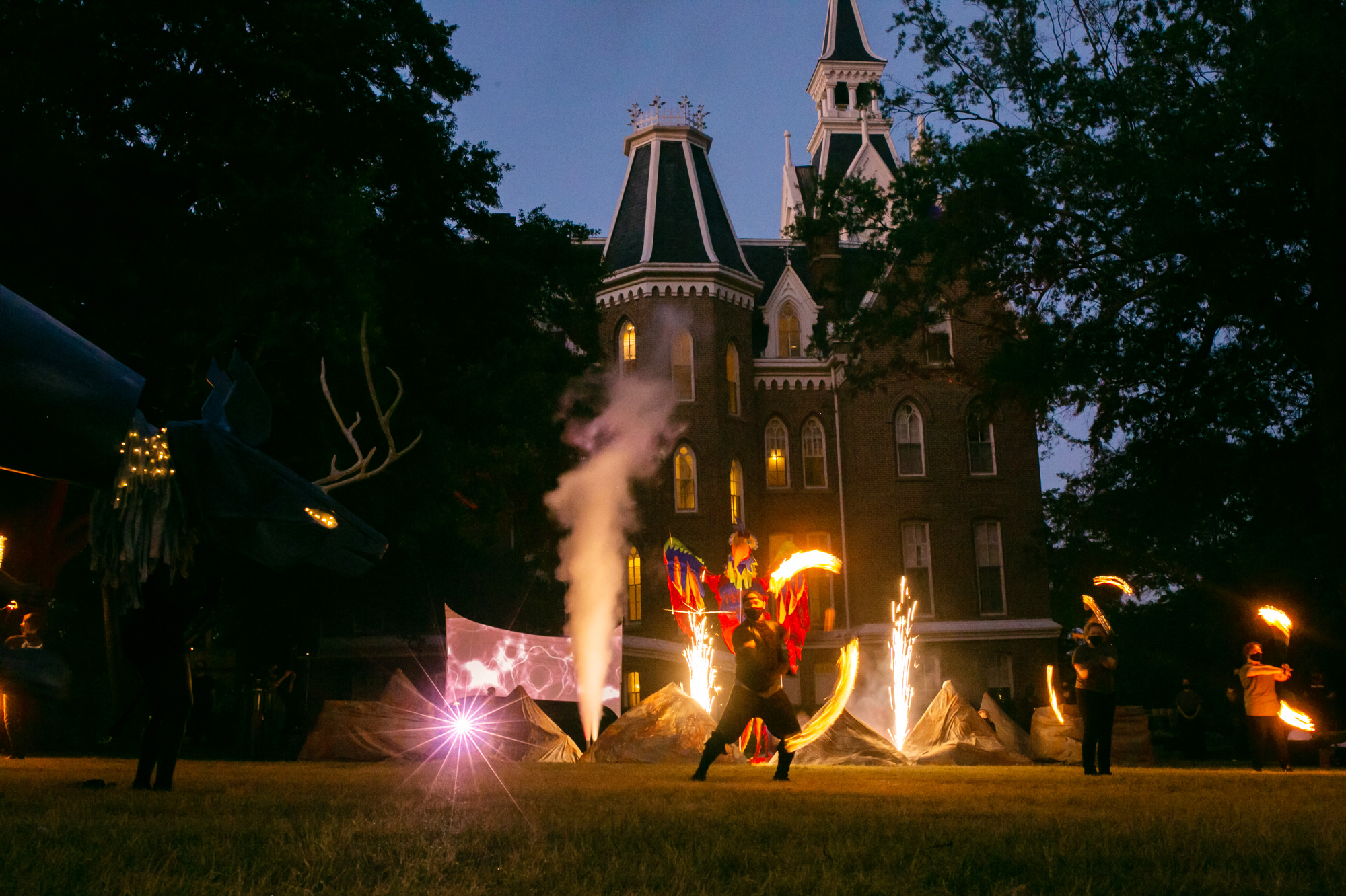
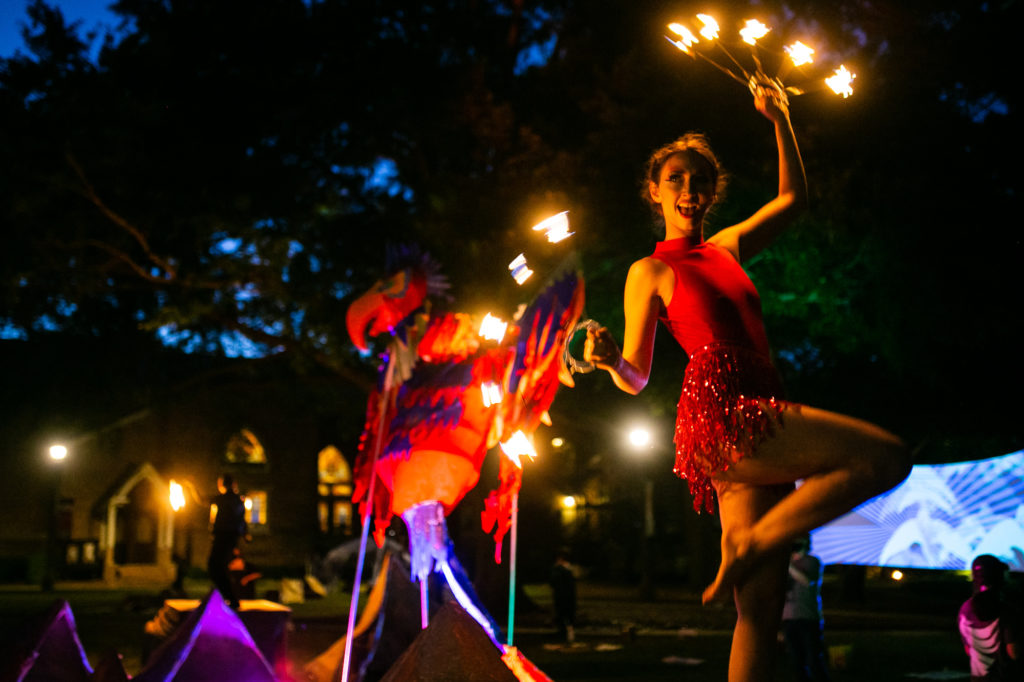
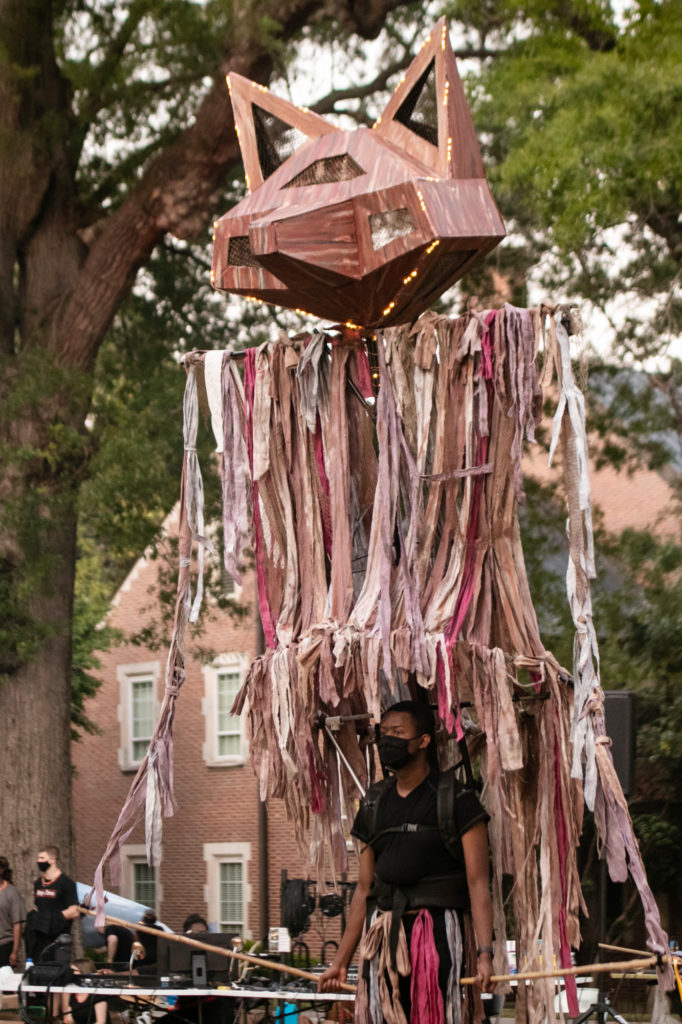
However, in spring 2021, the CDC began to inform citizens that it was safe for fully vaccinated individuals to congregate outside. This prompted Rollins and Scot Mann, theatre department director, to create an outdoor performance to commemorate their rough year while making a strong comeback to the stage. The production centered it around the mythical creature known as the Phoenix.
“We needed this renewal, this rebirth just like the Phoenix, and working with large puppetry was something we wanted to implement in the story,” Rollins said. “Being masked outside was also something we did to keep people safe. It was very clear people wanted to get back to performing; it was magical.”
Although the overall journey was overwhelmingly relentless to the Theatre Department, the spirit of ingenuity and togetherness was kept alive through the motivation of serving the students.
“Thinking about the students first and what we could provide for them in a safe environment, that was number one,” Rollins said. “I think the second part of that is that we’re artists and we love creating. Not only are the actors and crew a part of the family but faculty and staff as well; we needed that community.”
Although the pandemic’s presence can still be felt, Rollins believes the forecast for the future of the Theatre Department is bright and applauds the department for its unwavering loyalty to the craft.
“We are planning on incorporating outdoor theatre into our seasons moving forward,” Rollins said. “Also, the students did an amazing job navigating the pandemic. These students were greatly separated from one another and told to socially distance, and it made me appreciate how strong, flexible, motivated and dedicated our students were even in the face of COVID-19.”
The first show of the current season, The Commedia Pinocchio, was a free outdoor performance held in Tattnall Square Park in late September.
FOREIGN LANGUAGES AND LITERATURES
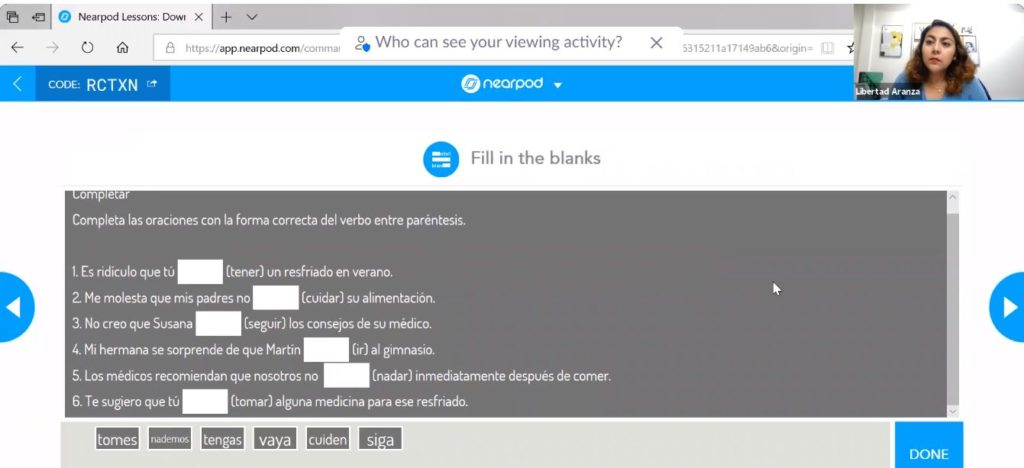
The Department of Foreign Languages and Literatures also experienced a shift in conducting classes and had to pivot its teaching methods to accommodate students.
Libertad Aranza, lecturer of Spanish, described her department as a highly interactive hub for learning new languages and cultures prior to COVID-19.
“Before the pandemic, there was a lot of interaction in the classroom, from board games to participating in groups and more,” Aranza said. “We didn’t take social distancing into consideration because it wasn’t a thing back then.”
However, the outbreak caused a great disruption in the otherwise highly collaborative environment and caused the department to consider how it was going to conduct its classes moving forward. Study abroad trips were also canceled.
“Once COVID-19 hit, we were all worried how we were going to accommodate the students both online and in-person,” Aranza said. “As a faculty member, figuring out how I was going to accommodate everyone was a difficult thing to deal with.”
The uncertainty did not hinder the department from finding new and innovative ways to instruct its students.
While online applications such as Zoom and Canvas were commonly utilized to complement face-to-face instruction, Aranza also integrated applications like Kahoot, an electronic multiple-choice quiz creator, Nearpod, an interactive software allowing students to view slideshows and participate in class-wide activities, and Conversifi, a website that allows students to connect and communicate to foreign language speakers in real time.
The department was also able to grow in its technology usage skills by learning from its younger generation of professors, allowing faculty to bond with one another on a collaborative level.
“We have faculty who have been here for over 15 years and some who have been here for three,” Aranza said. “The younger ones were able to assist the older. We were able to have fun and be creative with our teaching methods, as well.”
Aranza was able to draw many lessons from this experience, including the importance of being a point of encouragement for her students.
“If I’m not motivated, how will I be able to motivate my students?,” Aranza asked. “I want to make sure I’m in the right place mentally and physically to pass that energy on to my students. If they see that if I’m motivated, I’ll get at least one student to keep on going.”
ART

The Art Department was able to align technology and art in a way it has never done prior to the pandemic.
Ben Dunn, lecturer and director of the McEachern Art Center, recollected the busyness of the new facility that attracted students, faculty and community members to its convenient downtown location.
“We were often pretty packed. It really just depends on the exhibit and the nature of the show, but we often had over 100 people in attendance,” Dunn said. “We also host events for departments that need a place that’s not as formal and we host outside group meetings for institutions like Sundance Films and the Macon Film Festival.”
Although the Center’s hustle and bustle was paused by the pandemic, the department tried to adapt to the state of the world and use what it had to its advantage.
“I felt the same way as everybody else,” Dunn said, “which was not knowing what to do immediately.”
Typically, the Art Department hosts an annual graduation showcase that features the work of budding artists. Due to the pandemic, Dunn researched a virtual reality alternative called Artsteps that would allow the show to go on.
“It was an interesting dynamic because we still wanted to provide that experience that’s required of our students,” Dunn said. “We still got to do the show by the students uploading their work to the site. It was an early incarnation of VR galleries, and we had infinitely more viewers than a normal exhibition, so it was cool to see the extended online reach of their art.”
The department’s affinity for artistic exploration in the midst of a global pandemic motivated and inspired faculty and students to find new creative outlets.
“You learn that resilience is inherent to creativity because of the experimentation going on,” Dunn said. “We’re artists; we live in this; it’s just what we do.”
SCIENCES
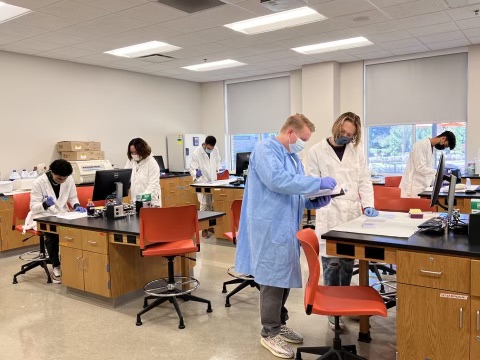
The College’s sciences programs were able to persist through condensing the overall classroom model and laboratory structure.
Dr. Linda Hensel, professor and chair of the Biology Department, recounts the busy schedules of both students and faculty in the department before the outbreak.
Dr. Hensel recalled students typically going to lectures three times a week and in most of those courses having active learning activities interspersed with the lectures.
After the virus’ initial wave, she realized that accommodating smaller class sizes would be the first order of business.
“It’s packed for them,” Dr. Hensel said. “We knew we had to adjust the capacity of the lab spaces in half because all of our classes are full. While we have the highest number of majors in CLAS, we also have the lowest student-faculty ratio in the college.”
Navigating a way to cater to all the students in the department would prove to be a challenge. Nonetheless, Dr. Hensel stressed the importance of implementing COVID-19 safety precautions as faculty and staff learned more about the virus.
“We had really good cleaning protocols like spraying the rooms before and after use, wearing masks and disinfecting markers and pens,” Dr. Hensel said. “At the time, we didn’t have a vaccine. With all of these limitations, it greatly diminished the students’ ability to learn in a group setting.”
Along with Zoom as a constant resource for many of the departments, Echo, a classroom streaming service, was used frequently across campus to allow students who tested positive for COVID-19 to remain engaged with the lectures.
Another, perhaps more unusual, impact of the COVID-19 pandemic on science classes was the lack of essential laboratory supplies.
“There has been a plastic pellet shortage that helps make micropipette tips and tubes,” Dr. Hensel said. “All the plasticware that we use for experiments is backordered until late November. In the meantime, we’re figuring out how to wash and reuse some of the plasticware to save the University extra funds as well as saving the planet.”
Within the hardest of times during the pandemic, Dr. Hensel found great motivation and joy in the passing of knowledge to the next generation of scientists and biologists.
“The answer to my motivation is the same reason why I teach,” Dr. Hensel said. “We love to see those ‘Aha’ moments when students understand the material that is taught to them. We all have to motivate each other, and my job as chair is to motivate not only my students but my colleagues.”
While Hensel is cautious about the future of COVID-19 and its effects on the classroom, she’s also hopeful for a day when students and faculty will be able to interact on a more personal level.
“I don’t think this is the last of it, but we know how to handle it, so I think it’s going to be fine,” Dr. Hensel said. “I’m just looking forward to seeing people smile again.”