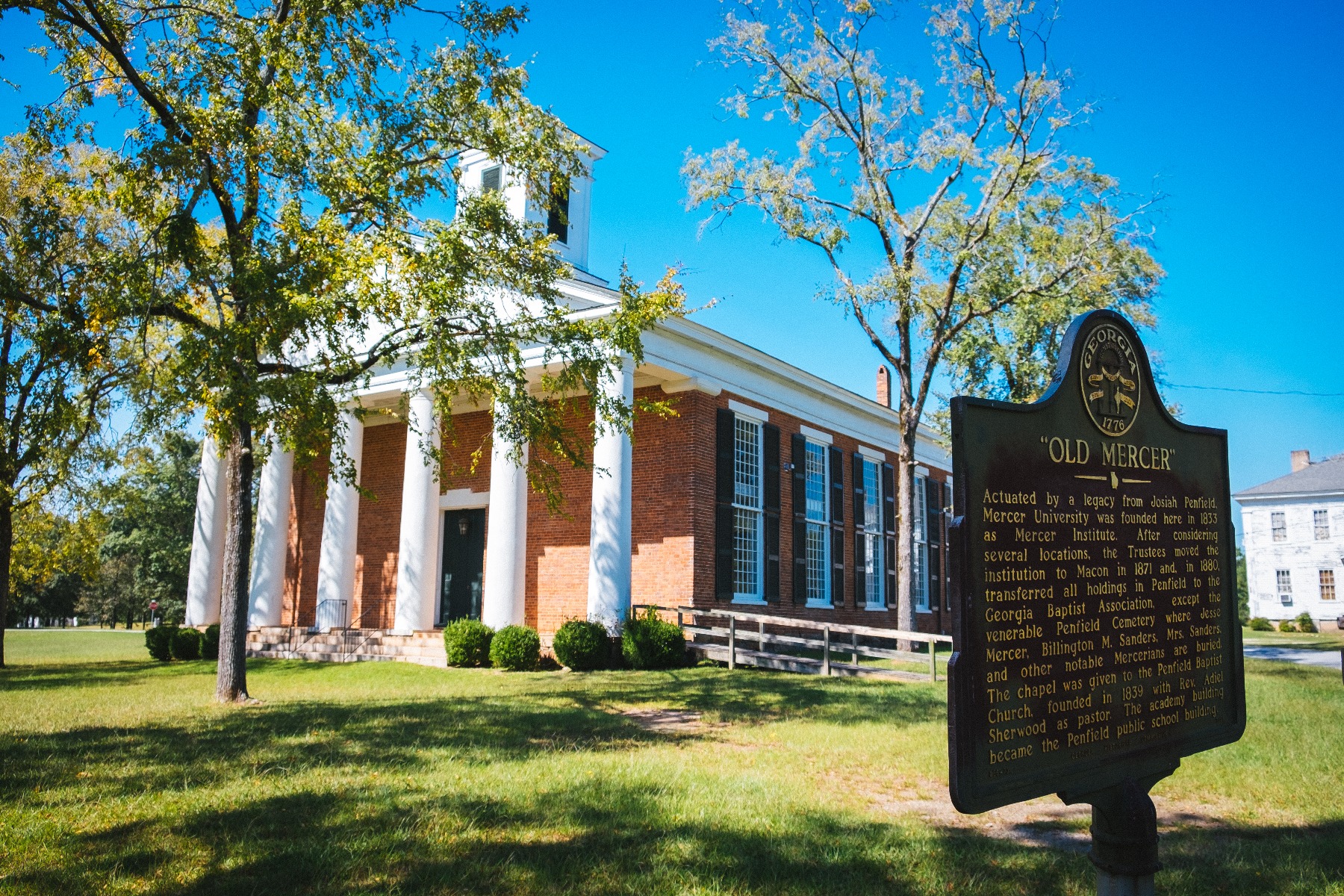
Since joining Universities Studying Slavery (USS), a consortium of schools dedicated to uncovering their participation in economies of slavery, three years ago, the Spencer B. King, Jr. Center for Southern Studies has undertaken a series of research projects to better understand Mercer University’s engagement with slavery in Penfield.
At the same moment we joined USS, Macky Alston, the sixth great-grandson of Mercer’s first president Billington Sanders, had undertaken the filming of a documentary to recount his families’ role in slavery. Summer Perritt, Mercer history alumna and current Rice University Ph.D. candidate, also had begun a master’s thesis that examined the Mercer founders’ role in slavery. Their work kickstarted our work in Penfield.
While filming in Penfield, Alston interviewed John Colclough, who had served on the three-member board of the Penfield Cemetery. He informed Alston that beyond the north wall, and just past the founders’ gravesites, lay a second cemetery largely unknown to the Mercer community. It held the remains of African American residents of Penfield.
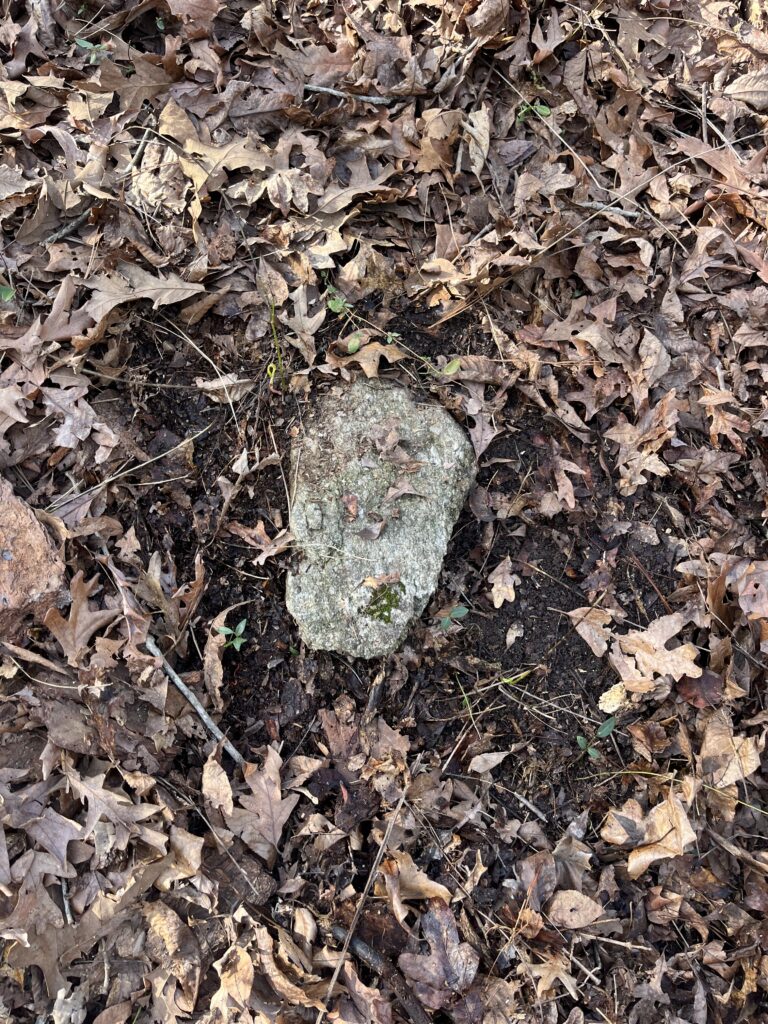
Covering more than four acres, the re-forested cemetery revealed burial sites in bits and pieces. Some 70-plus marked headstones exist, but they lack a coherent internment system. Or at least that is what we understood as we worked our way for two years cleaning the cemetery of fallen trees and debris. Fieldstones, some as small as a fist, lay under groundcover, but their pattern suggested more burials than were visible on the surface.
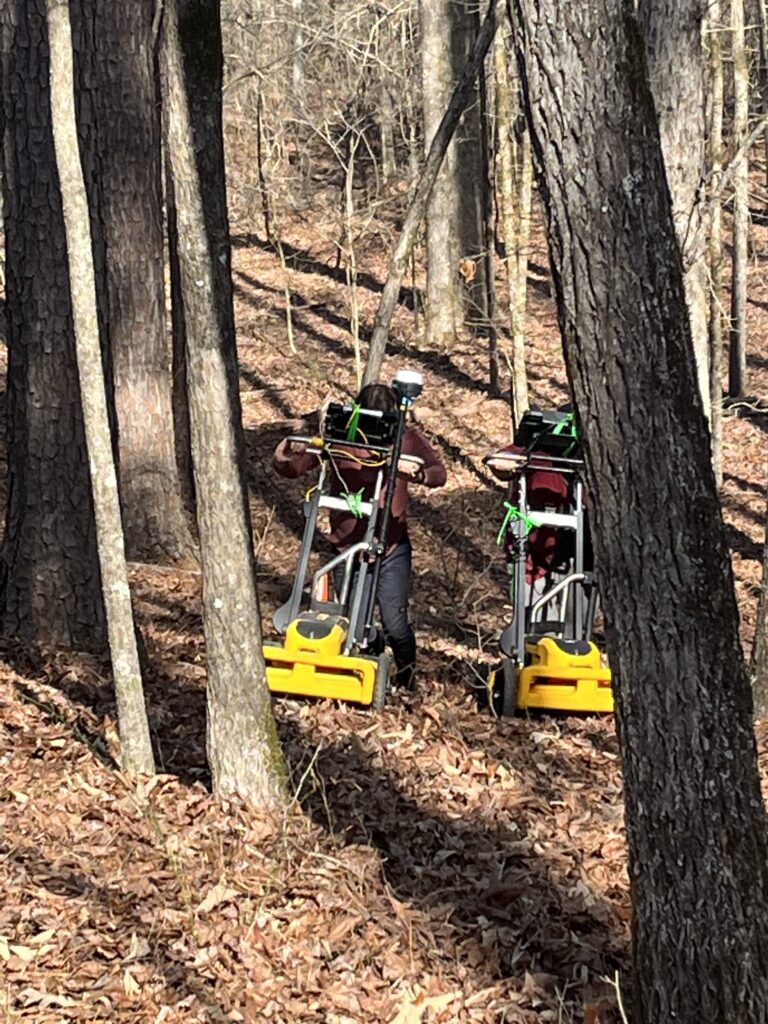
As we cleared sections, the King Center for Southern Studies paid for an archeologist to do ground-penetrating radar scans. The initial reading of the data revealed more than 1,000 individual graves. This past spring, we cleared the last section for scans, which indicated that there are at least 1,174 burials in that section of the cemetery. (Visit here and here to view the reports.)
While monthly cleanups and the scans occurred in the cemetery, as many as eight Mercer undergraduates have participated in research projects to better understand the number of enslaved people in Penfield and the community’s use of human capital as a factor in the school’s early success. History students have worked through church records and deeds to locate individuals in Penfield.
A couple of computer science students are helping construct a database and work in a transcription program that will allow us to scan and catalog thousands of pages of deeds, probate, inventories and court records. The plan is to develop a tagging system that connects people to one another and lets us tell a story across time and space as Mercer Institute began and then exploded into the town of Penfield and then receded with Emancipation and Mercer University’s move to Macon in the early 1870s.
In the next few years, we hope to take the database and open it to researchers across the country as well as build a digital footprint of Penfield as it grew and diminished to its present form. We will also continue to support efforts to restore the African American section of Penfield Cemetery and memorialize the people buried there for their contribution to building Mercer University.