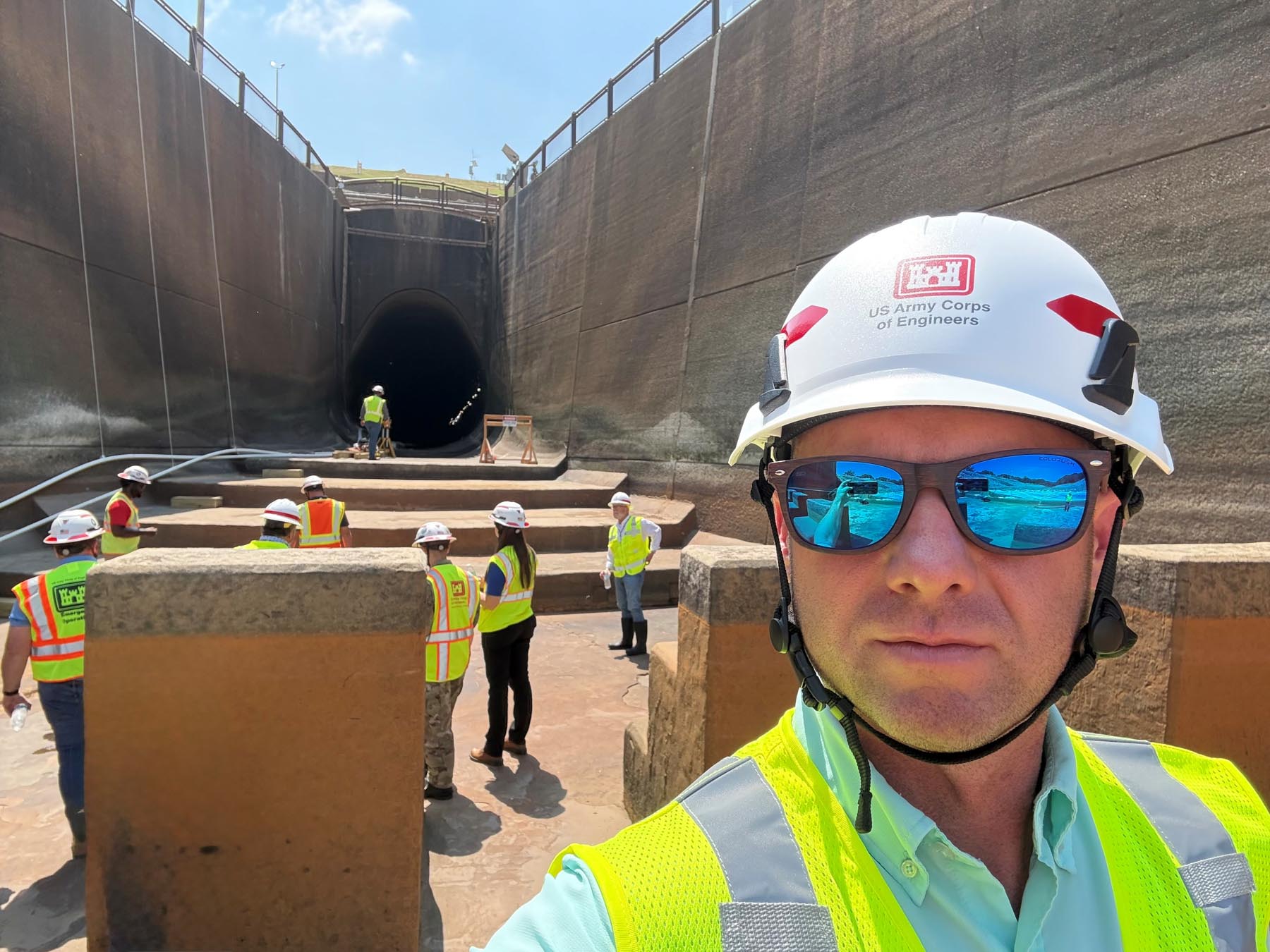
As a student at Mercer University, Rich Feibelman untapped his love for industrial engineering. He learned to look at projects in a more holistic and systematic way, an approach that he has applied throughout his career.
Earlier this year, Feibelman, EGR ’01, was appointed deputy district engineer for programs and project management for the U.S. Army Corps of Engineers Vicksburg District in Mississippi, making him the highest-ranking civilian official within this large district.
Feibelman grew up in Vicksburg but visited Macon and Atlanta often since he had family in the area. When it came to college, Mercer offered the right combination of what he was looking for: an NCAA Division I soccer program, a biomedical engineering program and a medical school.
He played on the soccer team for a year and studied biomedical engineering for 2 ½ years before realizing he liked the engineering aspects of the major more than the medical. He switched to industrial engineering and found himself especially interested in data and statistical elements, operations research and process improvement.
After graduating in 2001, Feibelman gained foundational experience as a process improvement engineer and production manager in the manufacturing industry for seven years, half of those with a textile and chemical manufacturer in Georgia and South Carolina. In 2005, Feibelman and his wife, Katie, moved back to their hometown of Vicksburg, where he took a job with a lighting manufacturer. In 2009, he began his career with the U.S. Army Corps of Engineers. He said he was drawn to the organization’s mission and the scale of the work it was doing.
“For anyone who doesn’t know what the Corps of Engineers does, I encourage them to look into it,” he said. “You can travel the world working for a premier engineering organization and really have a meaningful impact. We’re not just building projects; we’re solving problems for the nation.”
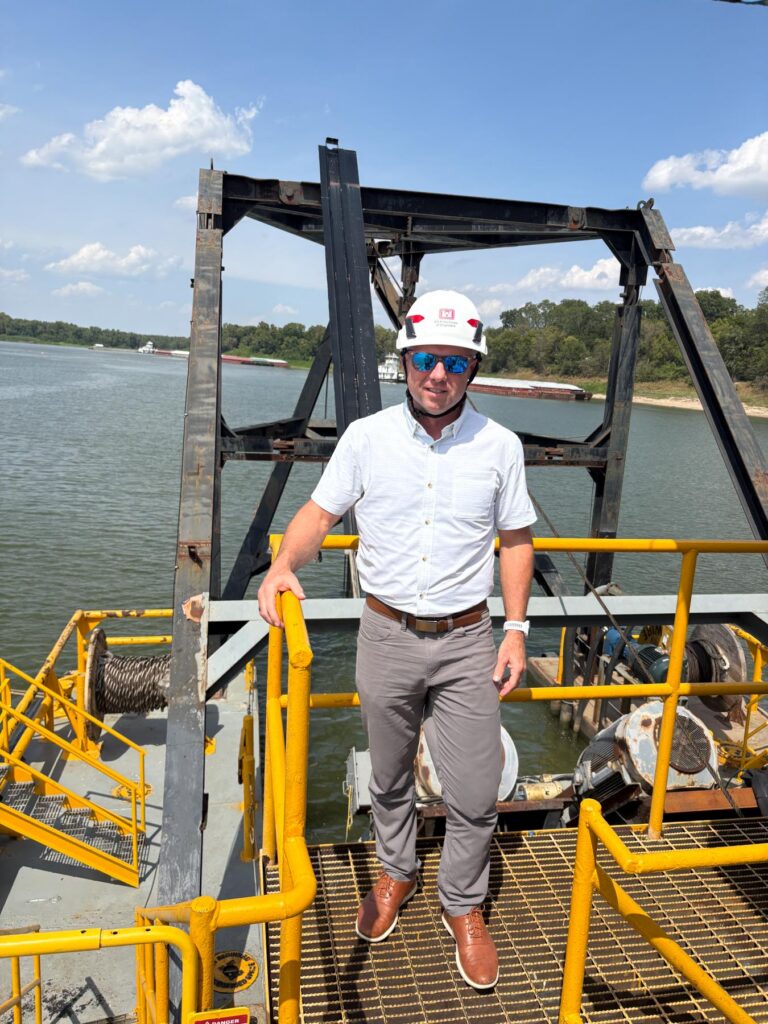

The Corps of Engineers is a military-commanded civilian workforce that has 44 districts across the world and four specialized centers and laboratories, the majority in the continental United States. Vicksburg, one of the Corps’ largest civil works districts, manages public water and infrastructure projects throughout a 68,000-square-mile area across Mississippi, Arkansas and Louisiana.
Feibelman spent five years in engineering and construction before becoming deputy chief for civil works integration for the Mississippi Valley Division Headquarters in Vicksburg, a role he held for seven years. Then, for four years he led the Civil Works Office of Strategic Engagement at the Corps’ headquarters in Washington, D.C. In February, he had the opportunity to return to the Vicksburg district as deputy district engineer for programs and project management.
“It’s full circle. This is a homecoming. I knew I ultimately wanted to get back to the district. This is where the delivery of projects really happens, at the district level. The stars aligned for me,” he said.
In his current position, Feibelman leads and supports a team of managers in executing water resource projects, which involve both new and existing infrastructure. The primary focus areas are flood control, such as levee construction and maintenance; navigation support, such as armoring riverbanks, dredging and building up channels to ensure efficient water movement; and ecosystem restoration, such as initiatives to improve water quality and protect habitats.
Feibelman also spends time traveling to work sites to understand the resources needed to deliver the district’s projects and then communicates those needs through the presidential administration and Congress.
“I see my job as to help turn our mission and our resources into (completed) projects, making sure that we are efficiently delivering quality projects on budget and on time to our nation and to our partners in this geographical area,” he said. “My primary goal is to accelerate project delivery for this district and for the Corps of Engineers and ultimately for the nation. We really have a massive responsibility to the public to optimize the federal resources that we’re given.”
Feibelman said he fully embraces the motto of the Corps of Engineers — “build infrastructure, not paperwork” — and has incorporated it into his professional goals for the organization. He wants to enhance risk-informed decision-making; leverage data more in decisions; maximize transparency; eliminate barriers to project execution; and build a culture of continuous improvement.
Among his many projects over the years, Feibelman is especially proud of his involvement in creating a new performance measurement standard for the Corps and how it has become woven into the organization’s culture. On a more local level, he is honored to have played a role in ongoing efforts to protect the Yazoo Backwater Area in west-central Mississippi, and he’s excited to see that work continue.
Feibelman encouraged future engineers to work hard and keep learning.
“Even as I have gotten to this position, I continuously realize how much I still have to learn,” he said. “I have found a great deal of success in combining technical competency with awareness and with my people skills. Learn to listen to people who see problems different than you do. An engineer that can solve a problem and bring people together around that solution can really and truly make waves throughout any organization.”