Since graduating from Mercer University five years ago, engineering alumna Holly Wells has been working toward a single goal: to safely launch astronauts into space. On April 1, she and her team played a key role in doing just that for the Artemis II mission crew bound for the moon.
Wells, a cryogenic systems engineer for contractor Amentum, works on the liquid oxygen system team for NASA’s Artemis program. Liquid oxygen, combined with liquid hydrogen, is what fuels the rocket for launch.
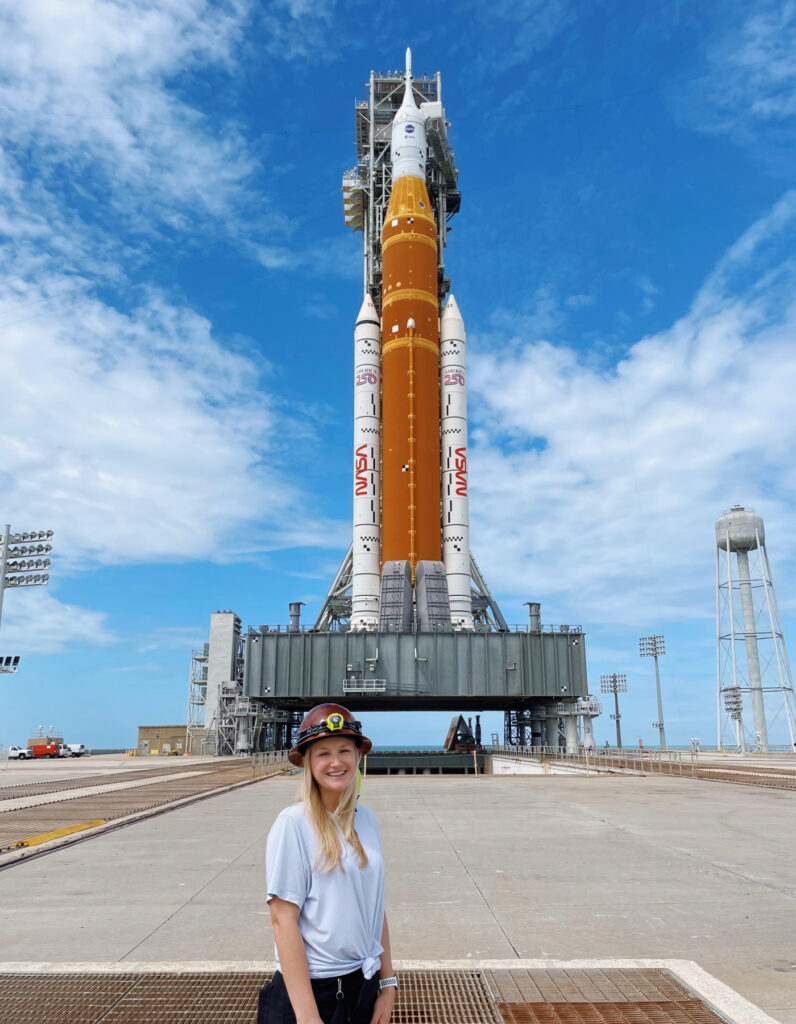
“Our main job is to help get it off the ground and into space safely,” she said.
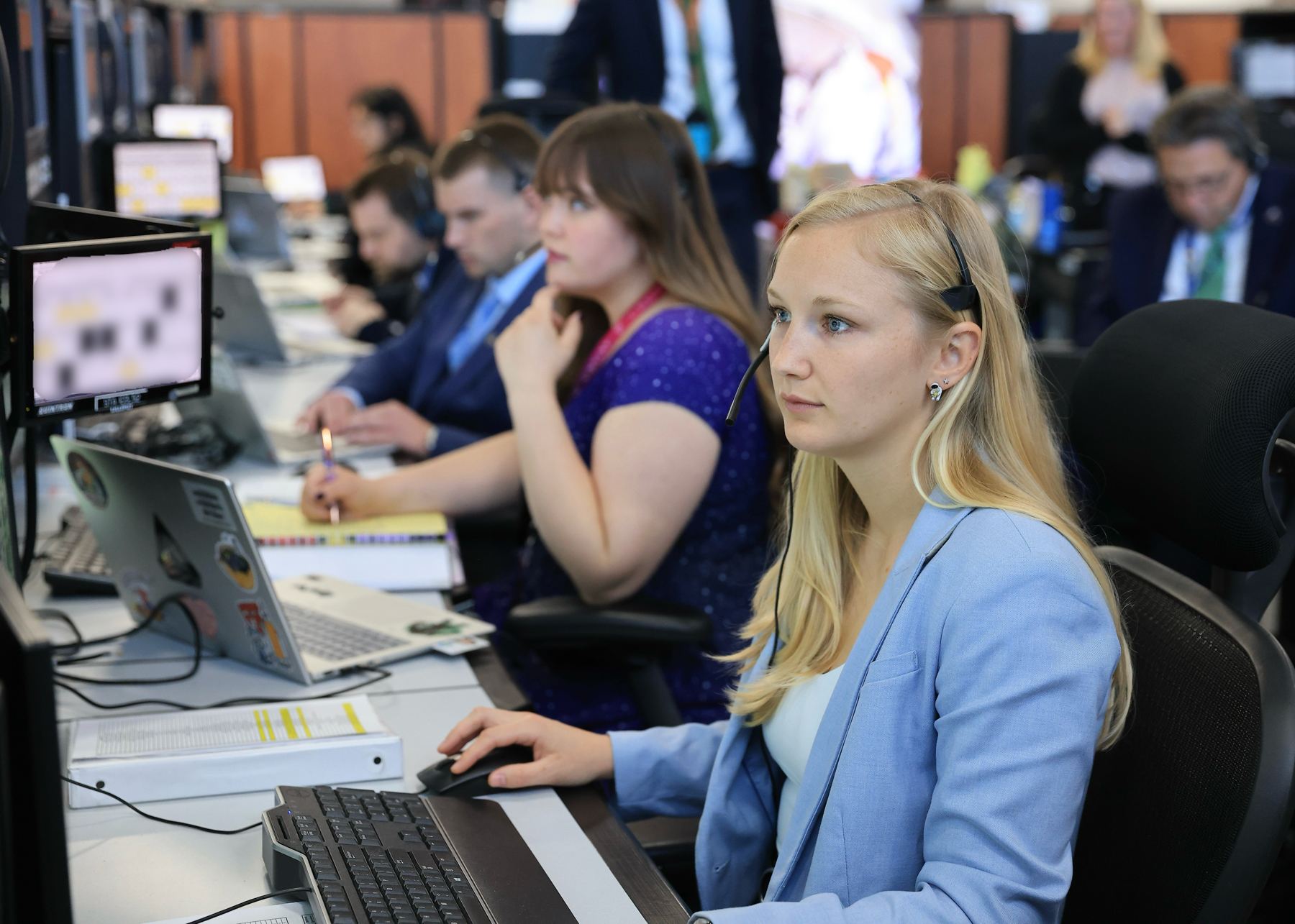
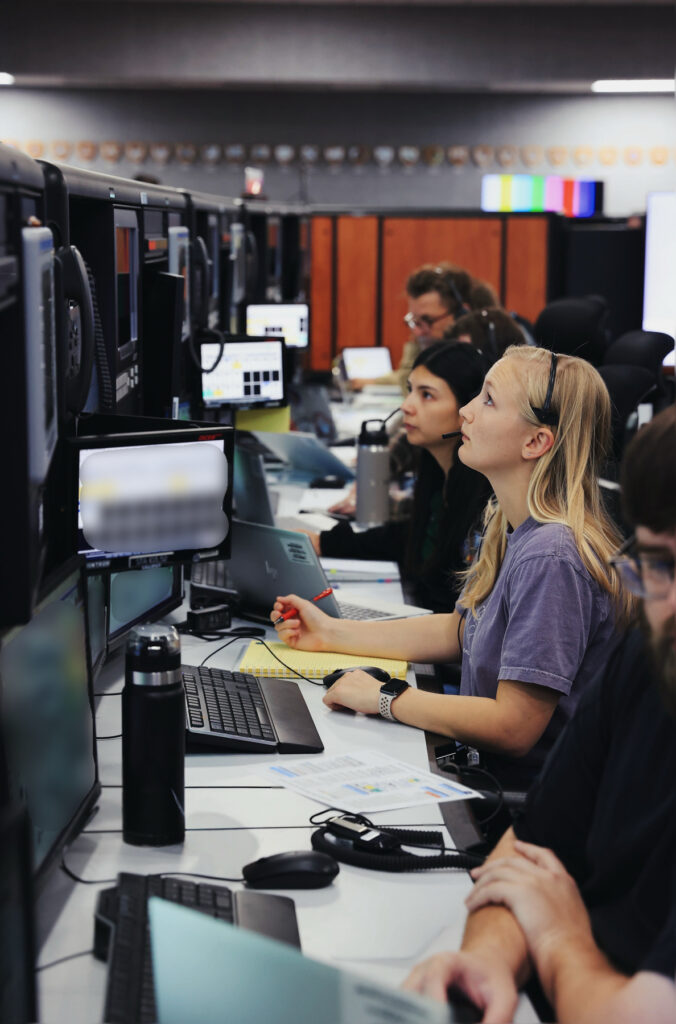
On launch day, Wells sat at a console in Firing Room 1, where launch operations are supervised and controlled, at Kennedy Space Center in Florida. Her job was to work with her team to fuel the rocket remotely.
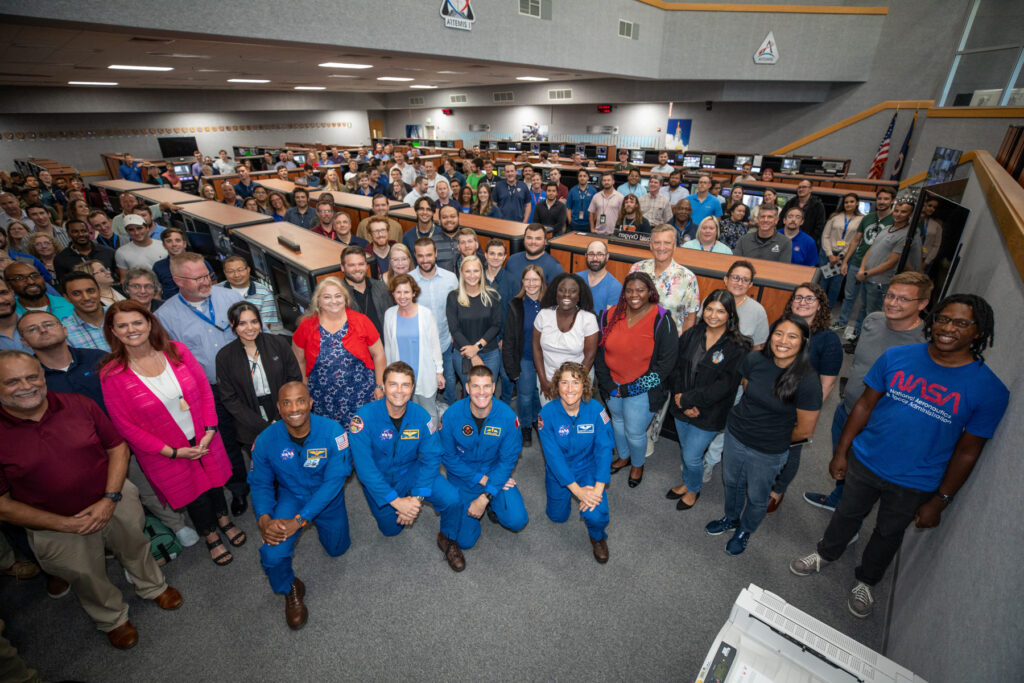
Ten minutes before the launch, the astronauts spoke to the Artemis program team and the nation. Wells recalled astronaut Jeremy Hansen saying that they were embarking on the mission “for all humanity.”
“Hearing that and you’re 10 minutes away from launching, we all teared up in that moment because that’s when it really hit us that we’re about to do this, and it’s about to be the most incredible thing,” she said.
The successful Artemis II launch was the result of years of preparation by countless engineers, scientists and personnel since NASA received a national call in 2017 for humans to return to the moon.
A Double Bear, Wells joined the Artemis program in 2021 after graduating from Mercer with her master’s degree in engineering management. She earned her bachelor’s degree in mechanical engineering from Mercer in 2020.
Wells works on a 17-person team that is responsible for storing, maintaining and testing the liquid oxygen system, as well as transferring liquid oxygen to and from the launch pad storage facility and space launch system. They jokingly call themselves “glorified gas station attendants,” she said.
The team is split into hardware and software, and Wells works with the hardware.
“We’re the ones with the technicians out in the field, turning the wrenches and testing the system,” she said.
The liquid oxygen system is stored on the ground and can be connected to a rocket for launch. Fuel is pumped into the core stage of the rocket — the large orange cylinder — which contains a tank for liquid oxygen and a tank for liquid hydrogen. The fuel, which is also pumped into to the upper stage of the rocket, must stay extremely cold to remain liquid.
The first launch that Wells worked on was Artemis I, an uncrewed moon-orbiting mission, in 2022. The April 1 launch was the first Artemis mission with astronauts on board, bringing the program one step closer to placing humans on the moon for the first time since 1972. Another launch is planned for 2027.
Now, “we’re gearing up for the next one,” Wells said.
The ‘right place’
Wells grew up in Tampa, Florida, about two hours away from the Space Coast. She could see the shuttle launches from her house, sparking an interest in space and aerospace. After her freshman year at Mercer, she visited the Kennedy Space Center Visitor Complex with her parents.
“After that, all I wanted to do was work at Kennedy Space Center,” she said. “I had two aerospace-related internships. Then, the summer between my senior year and my graduate year, I just started applying to space jobs. Once I got to my junior and senior years, it was all I wanted to do.”
She recalled watching Artemis II astronaut Christina Koch go on a spacewalk in 2019.
“I remember seeing that, thinking that was so cool, and I never knew I would be meeting her and part of the team that put her in space, which was really, really cool,” Wells said.
Her first week on the job, she saw her first launch from the Kennedy Space Center.
“It was a SpaceX Falcon 9 launch, and it was from just across the water, so three or four miles away,” she said. “I remember seeing that and thinking, ‘This is awesome. I’m working in the right place.’”
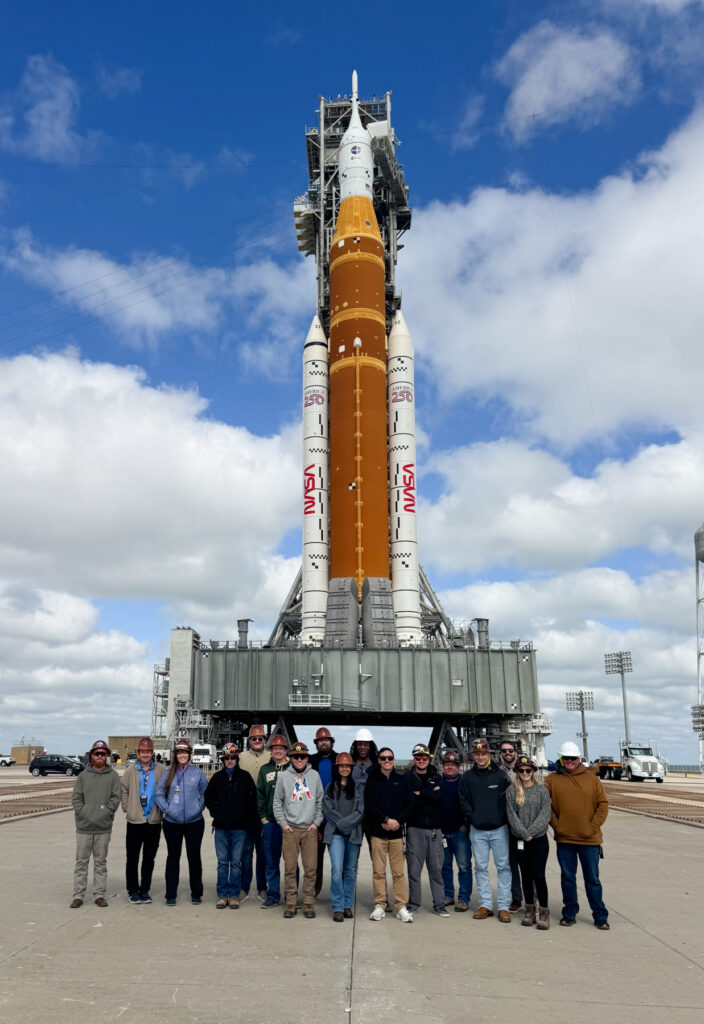
Now she’s seen hundreds of launches, primarily by private companies, and she doesn’t watch every single one. But “when we’re all at work, we’ll still go outside to watch them, and it’s funny because it’s like we’ve never seen one before, but it’s a really unique thing to see in person,” she said.
Wells earned her bachelor’s and master’s degrees through the School of Engineering’s 4+1 Integrated Degree Program, which allowed her to start graduate work as a senior and earn her master’s after only five years of school. Her Mercer education helped her tremendously, she said.
She enjoyed the small class sizes that allowed her to get to know her peers and professors. Through these relationships, she learned how to study effectively and benefited from friendly competition among her classmates. As a participant in the Mercer On Mission program in Vietnam, fitting amputees with prosthetics, she saw how engineering could help change the world.
“I’m so glad I went to Mercer,” she said. “I would not have it any other way.”