A Mercer University alumna helped bring NASA’s Artemis II mission into the homes of millions of people.
From the launch on April 1 to splash down on April 10, it was hard to escape NASA’s live coverage, which was carried on most, if not all, major streaming platforms. It even made a top 10 list on Netflix, allowing many viewers to discover NASA content that they might not seek out otherwise.
“That’s the goal, making sure that people don’t have to go digging for NASA, but NASA is there because it is such a big part of culture and the future of science and space and exploration,” said Katie (Atkinson) Konans, who graduated from Mercer in 2019 with a Bachelor of Arts in journalism.
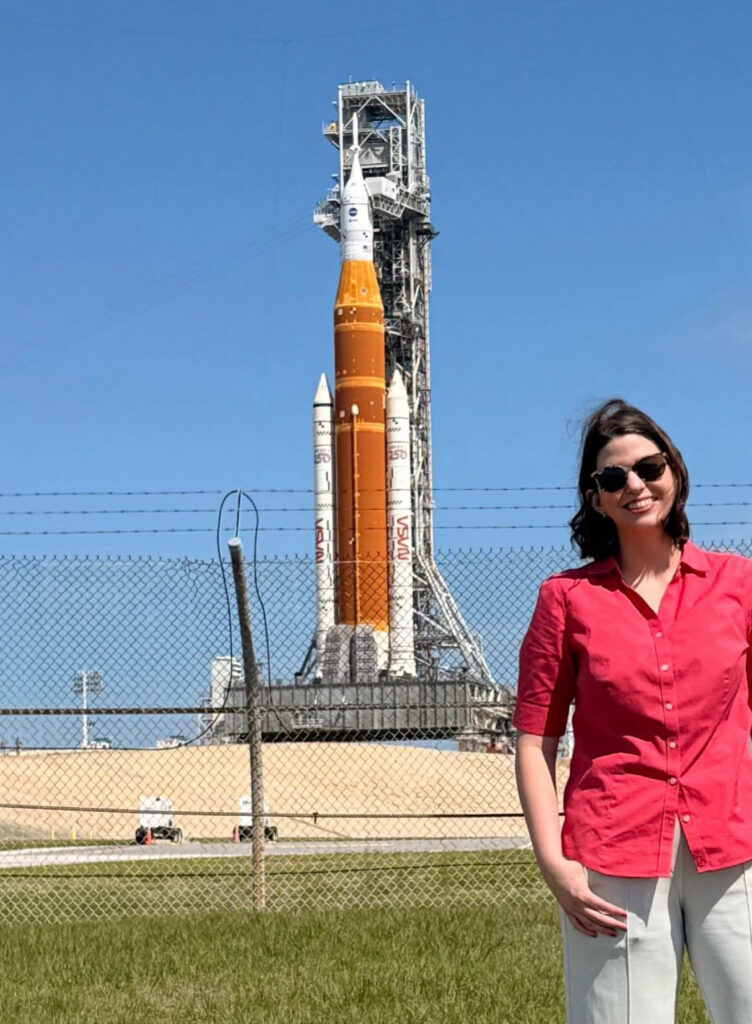
For the past eight years, Konans has devoted her career to telling NASA’s stories. In her current role as a contractor with Astralis, she supports the Office of Communications, shaping how those stories are told and how they are distributed across the global media.
A key focus for her is reaching people who don’t know what NASA is doing or understand why NASA’s story matters to them. She recalled a time early in her career when she met a small-town reporter who said he thought NASA went away after the shuttle era.
“This was years ago, but I always think about that person, and so I really work to meet people where they are,” Konans said. “I think that’s something that NASA’s Office of Communications overall does a wonderful job at, and it’s really awesome to be a part of it.”
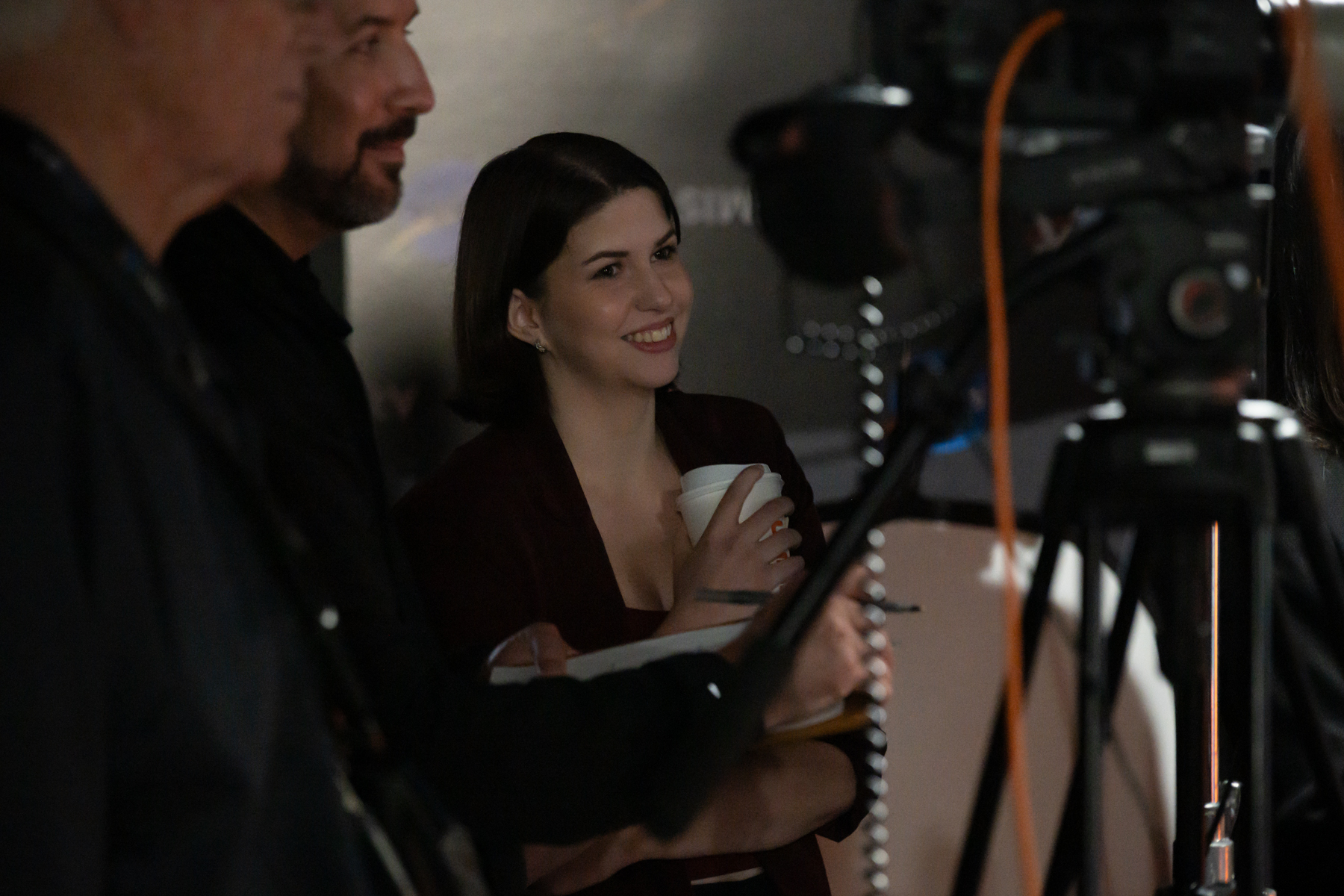
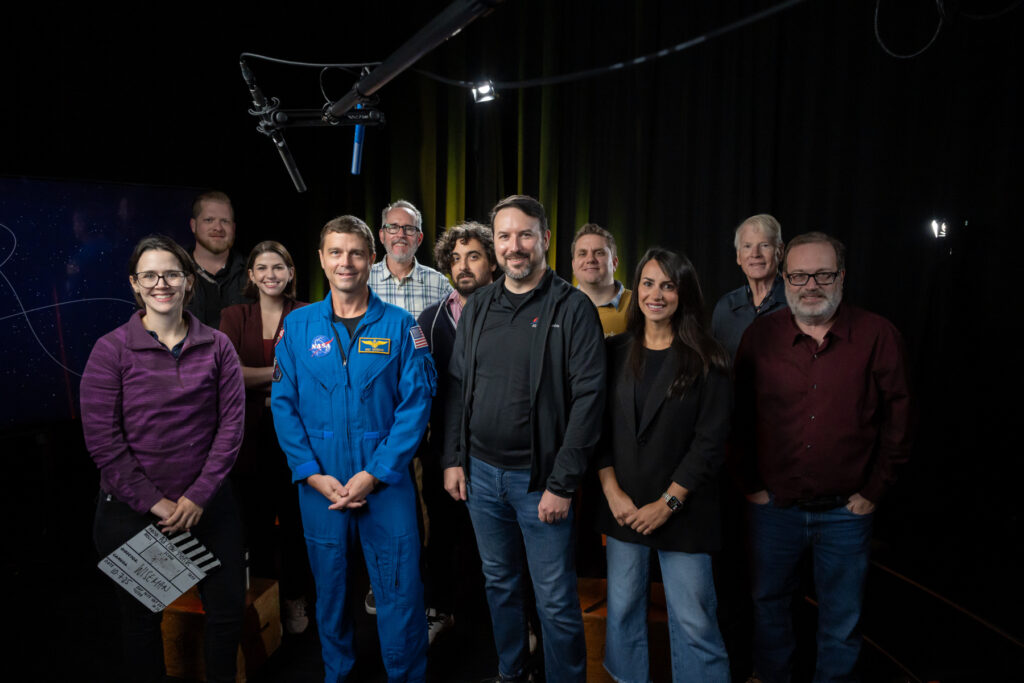
For Konans, that means telling stories about the people involved in NASA. For the Artemis II mission, her team conducted in-depth interviews with the crew for nearly two years leading up to the launch.
“For a mission like Artemis II, it’s so much about the mindset and why we persevere and why we innovate,” she said. “I think the people who work at NASA are really selfless and also mission driven, so it’s really important to capture their perspectives and also — in addition to their hopes and dreams and aspirations — some of their fears and doubts and the sacrifice that they’re making in leaving their families for 10 days in a high-intensity environment. It can be scary, and you can hear that in their voices.”
Those interviews were used on NASA’s Artemis II Podcast and the official Artemis II broadcast, which Konans helped distribute among media partners.
“I’m always thinking about who are the folks who don’t already follow us who may be scrolling through Netflix on a Monday night, and they see the lunar flyby. Or maybe they’re looking for their next favorite podcast,” she said. “I work a lot with our editorial partners to suggest content that NASA has developed and say, ‘Hey, you might want to feature this, not just because this is a science achievement and a space flight achievement, but this is a major cultural moment.’”
Konans began working at NASA as an intern in summer 2018 and continued to freelance for the space agency during her senior year. She joined full time in 2019, developing NASA’s strategy for audio storytelling and launching the agency’s flagship podcast, “NASA’s Curious Universe” in 2020.
She has received the NASA Early Career Achievement Medal, multiple Webby Awards, and the Robert H. Goddard Award for her team’s contributions to NASA’s public engagement and communication. In 2023, she was named to the Forbes 30 Under 30 in Media list.
Konans, who has served on Mercer’s National Journalism Advisory Board since 2022, said the University’s Reg Murphy Center for Collaborative Journalism gave her a strong foundation on which to build her career.
“Convergence journalism, media studies, graphic design — those were the areas of focus for me as a student at Mercer, and that combination is exactly what this moment in media really requires,” she said. “We can’t separate the story from how it’s packaged anymore. They’re one and the same. And we also have to think about framing and how people might respond, and so that mix of disciplines that I studied when I was at Mercer really trained me to think about both of those from the start.”