Three Mercer undergraduate students spent their summer immersed in research at the University’s medical school campus in Columbus. The projects were supported by the Mercer Undergraduate Research Scholar (MURS) Training Initiative, through which students work on innovative projects full-time for 10 weeks under the direction of faculty.
Every summer, MURS opportunities are offered by professors in the College of Liberal Arts and Sciences, School of Engineering, College of Health Professions, College of Pharmacy and School of Medicine. This year, three projects were led by School of Medicine biomedical sciences faculty members in Columbus, allowing undergraduate students the rare chance to conduct research on this graduate-level campus.
“We definitely need the help of students to do this research, and it’s wonderful when we can have them,” said Wendy Walker, Ph.D., associate professor. “(We) hope to have more students who are contributing because I think it’s super important to involve students in research. It’s something that I find very rewarding to be a mentor here at Mercer and help these students to succeed so that they can get the experience, publications, poster presentations and things like that that will help them to go into a career in science or a related field.”
Sepsis and sleep
Hana Youssef, EGR ’29, spent her summer in the labs of Walker and Assistant Professor Ahmed Eltokhi, Ph.D.
“I’m grateful I chose that lab because I was able to get hands-on experience on stuff that I never thought I would actually like because I was very close-minded,” said Youssef, a biomedical engineering major. “I was very interested in immunity and how our body behaves when it comes to cells. It turns out immunity was way beyond what I had imagined.”
The main summer research initiative, led by Walker, related to sepsis, a life-threatening medical condition in which the body has an extreme reaction to infection. It’s the leading cause of death in hospitals, Walker said. Patients who survive sepsis often experience lingering symptoms and impairments, including sleep issues, anxiety, depression, brain fog, muscle weakness and continued organ dysfunction. The project, which is ongoing, is looking specifically at sleep disturbance, which may exacerbate the symptoms of post-sepsis patients.
“We want to be able to figure out what’s going on so that we can design new medicines to help them so that after they recover from sepsis, they can go on and live a more normal life,” Walker said. “So we are investigating this using mice as a model. We induce sepsis in the mice, and then for the survivor mice, we go on to test how they are sleeping and whether they are exhibiting signs of anxiety and depression and things like this.”
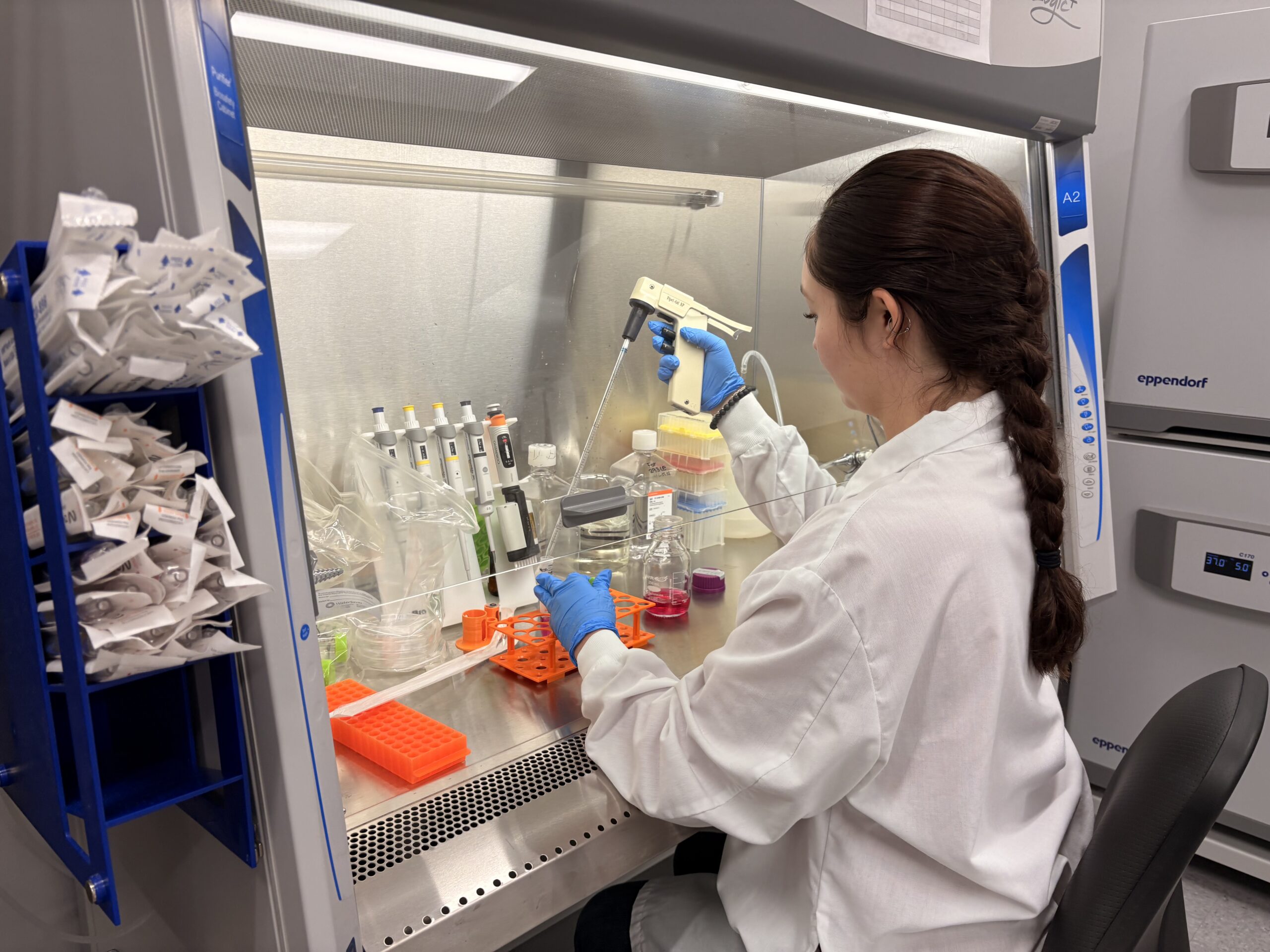
In Walker’s lab, Youssef measured anxiety levels by running dark/light tests. For these tests, mice are placed in a box with a dark side and a light side, and more time spent in the dark indicates higher anxiety. Then, with Eltokhi, she conducted behavioral analysis on the mice. Walker said the preliminary data they gathered this summer suggests their hypothesis — that sleep disturbance in sepsis survivors worsens their symptoms — might be correct.
“Now, we need to add more mice to the study to adequately power it, but should this trend continue, it would suggest that the mice exhibit the same kind of anxiety-like symptoms that human sepsis survivors have reported, which I think is really exciting because it enables us to go on and study a little bit more about what the mechanism is,” she said. “Our goal is to see if sleep disturbances experienced by sepsis survivors exacerbate these kind of anxiety-like symptoms and what is going on in the brain.”
Youssef also conducted additional, separate research with Eltokhi related to sleep interruption in mice. People with neuropsychiatric disorders — nervous system conditions that affect the mind and behavior — often have sleep problems, and the project aimed to see if those problems worsen the symptom profile of a disorder, Eltokhi said. Youssef built upon data previously collected in Elktokhi’s lab, investigating the neural effects of a specific protein called c-Fos. The research is being submitted for publication, with Yousseff listed as a co-author.
“It was very evident which (mice) were sleep interrupted and which were not sleep interrupted,” Youssef said. “We could notice a difference. It was very interesting to look at the results in the end.”
Eltokhi said they were surprised to see different behavioral results from the male and female mice. In response to sleep interruption, the female mice showed reduced cognitive ability and memory activity. The males, however, exhibited enhanced memory function up to a certain level of sleep interruption before declining neuron activity. This could explain the higher prevalence of certain neuropsychiatric disorders among one gender.
“So this means that male and female brains are different, and they actually respond differently to different stress or sleep interruption,” Eltokhi said.
Huntington’s disease
Viraj Kantipudi, CLAS ’29, worked with Assistant Professor Young Mi Oh, Ph.D., whose research lab specializes in neurodegenerative diseases. Their summer MURS project focused on Huntington’s disease, an inherited brain disease that slowly damages a person’s cells and results in loss of movement, memory and thinking ability, Oh said.
“Right now, we don’t have any treatments that can stop the disease,” she said. “One of the earliest problems in Huntington’s disease is that brain cells lose the ability to clean themselves. Normal cells use a process called autophagy to remove damaged protein. In Huntington’s disease, that process doesn’t work very well, so a protein called mutant huntingtin (mHTT) builds up inside the cells. Over time, those protein clumps damage the neuron and eventually cause them to die. So our goal is to understand why this happens and to find a new way to restore that cleaning system.”
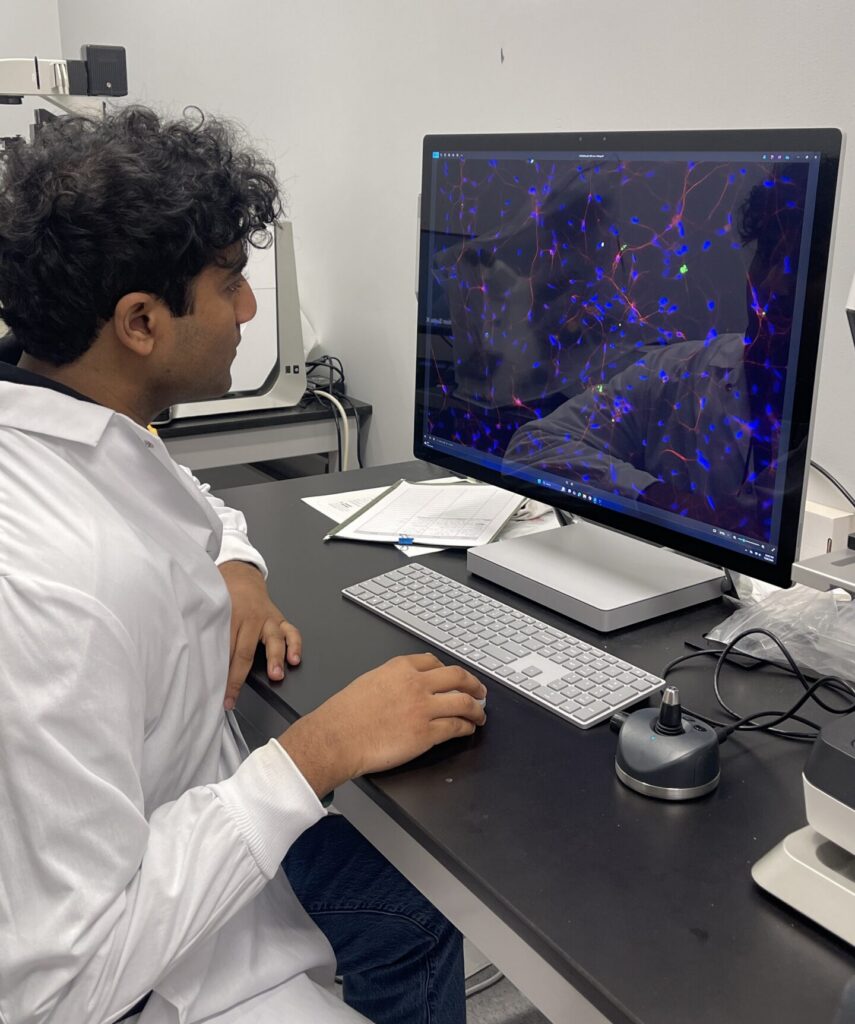
Oh’s research lab previously identified a new drug peptide — or small protein — called Peptide X. Kantipudi, a neuroscience major on the pre-med track, explored its potential as a Huntington’s disease treatment this summer. He was involved in growing cells, running experiments, collecting data and interpreting results, Oh said.
Early studies suggest the peptide improves function of the lysosomes, which act as the brain’s cellular recycling system. Oh hopes the summer research will help pave the way for clinical trials in the future.
“We are hoping that if the lysosomes work better using the peptide drug, the cell can remove the mutant huntingtin more efficiently and stay healthier,” she said. “Developing new therapy takes many years, but every discovery moves us one step closer to developing the final treatment. Then just as importantly, I hope Viraj leaves feeling confident and curious and excited about science.”
Oh said the MURS program provides an opportunity for Columbus faculty members to meet Mercer undergraduate students and introduce them to their research. Kantipudi said the project was his first exposure to lab research and to the Columbus campus.
“Being in the lab working there is amazing. I love it,” he said. “It’s getting me a lot of hands-on research into something that I’m really interested in. It’s giving me that experience, but it’s doing so in a way that is able to ease me in and make it so I’m being able to be included in every step of the process. I get full hands-on learning for every part of the research.”
Aging and ALS
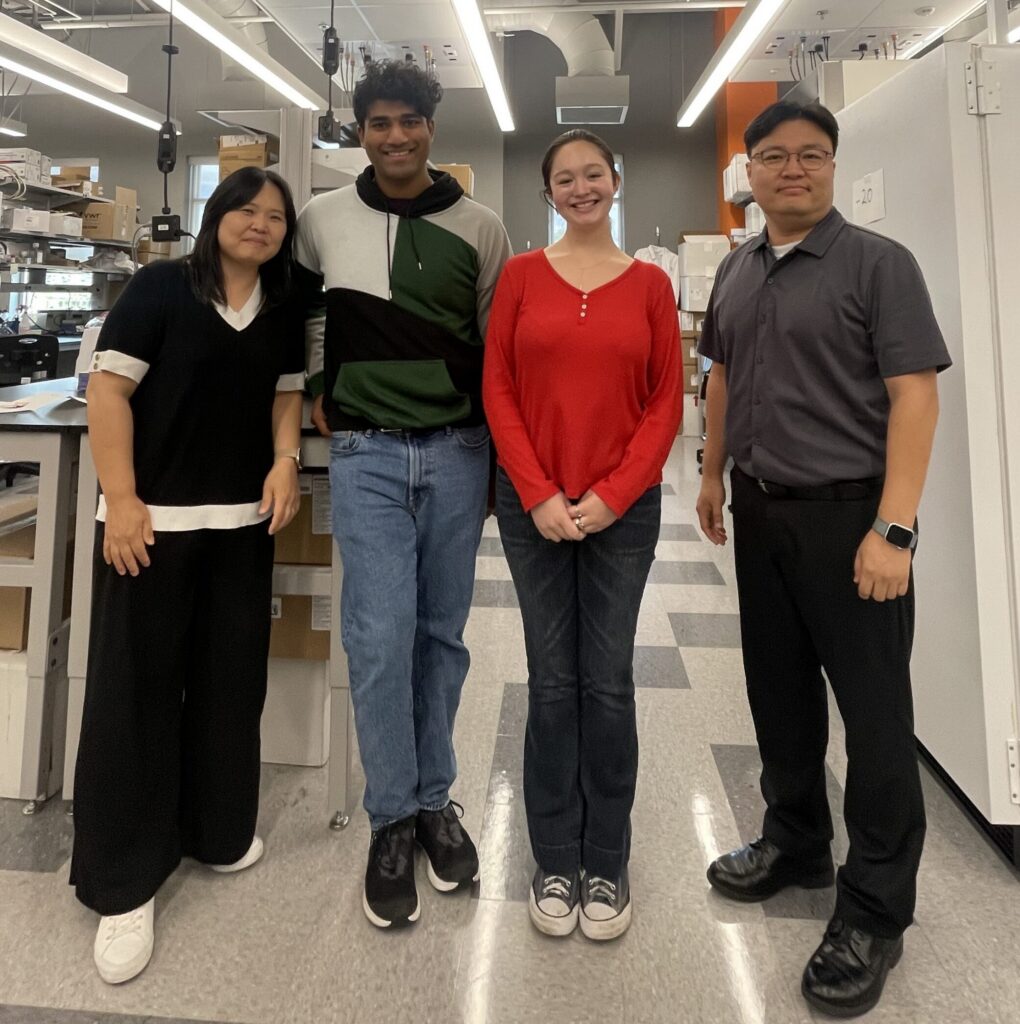
In the lab of Assistant Professor Seong Won Lee, Ph.D., neuroscience major Lily Choy contributed to research related to aging and ALS, a neurodegenerative disease that affects motor neurons in the brain and spinal cord.
“It seemed to me like the most useful and fulfilling way to spend my time,” said Choy, CLAS ’29, on joining Lee’s lab. “I wanted to learn as much as I could from it and change my perspective on things, because I’ve never been in an (experimental) lab before this. (I was driven by) my passion for helping people and wanting to learn more about neurodegenerative disease at the same time.”
Lee’s research focuses on identifying key factors and biological mechanisms that control how neurons age and understanding what causes them to become dysfunctional over time. His lab has been comparing neurons from younger and older people, as well as those from people with neurological diseases and healthy individuals, he said.
This summer, he and Choy tested whether the previously identified Peptide X can help restore the body’s cellular cleanup process, thereby preventing or reducing nerve cell death in the motor neurons of ALS patients. If proven successful, Peptide X could be a potential treatment for ALS and other neurodegenerative diseases.
Choy conducted tests on three distinct types of cells, repeating each test four times; organized and analyzed the data; and gave a presentation on the research. She said the summer experiments showed promising preliminary results for Peptide X.
“Peptide X was highly effective at reducing protein aggregation (or buildup). Protein aggregation essentially creates a lot of toxicity in the cells … and then it essentially causes cells to die,” she said. “So reducing the protein aggregation essentially saves the cells from dying. It was very interesting, very statistically impactful for the disease.”
Choy said she gained valuable lab experience and a better understanding of neurodegenerative diseases, and she enjoyed being able to meet and work with other researchers. Lee said he plans to gather additional data on Peptide X and submit the research for publication.
“That kind of experience for Lily definitely helped her future career. I’m very happy to support that kind of experience for her,” Lee said. “I will keep supporting everything in research for the Mercer undergraduates. Lily showed me she’s very passionate (about research). I hope she can do research in the future.”