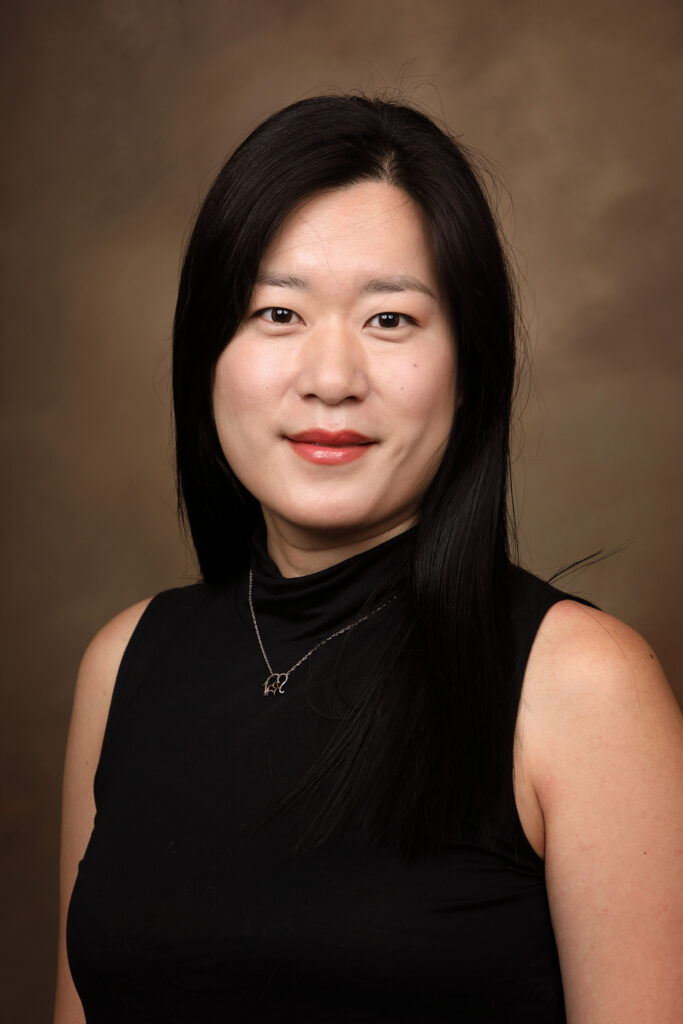
Games and simulations are a tradition in the courses taught by Phoebe Moon, Ph.D. A longtime lover of video and board games, the political science assistant professor helps her students better understand complex topics and keeps them engaged through unique activities.
Moon first started incorporating these types of learning exercises as a teaching assistant for various political science courses at University of California-Irvine while pursuing her Ph.D.
“That was a big university, and there were limits to what I could do. Whereas at Mercer, the classroom sizes are smaller,” she said.
Since joining the Mercer faculty in 2022, she has continued that momentum by adding games or simulations to the curriculum of most of her classes. She has taught a variety of courses in her department, including introduction to international relations, political psychology and international relations, East Asian politics, Korean politics, international security and conflict, Model United Nations, political science research methods, and INT 301: Engaging the World.
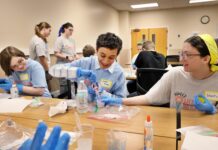
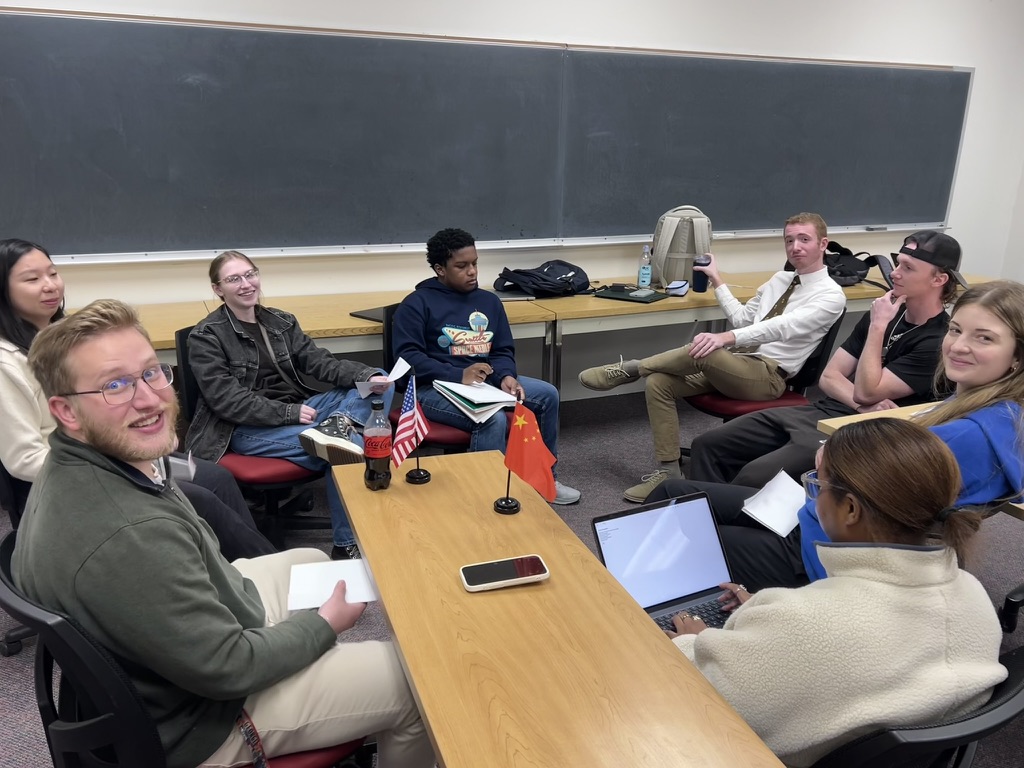
In introduction to international relations, Moon explains the concept of the prisoner’s dilemma — which is two parties acting in their own self-interest may come to a joint decision that is worse for both — by having her students participate in a simulated United Nations crisis negotiation. Each student is secretly given a blue card, indicating they will cooperate during the talks, or a red card, indicating they will defect and betray. Then, they see how negotiations play out in those circumstances.
“The point of this activity is to understand why it’s hard to trust other countries in the international system and what would allow countries to cooperate,” Moon said. “Sometimes, students will say it’s impossible to trust other countries. But sometimes, they will say having a contract or knowing other country members on a personal level helps. That leads to further discussions on how we achieve peace in the international system.”
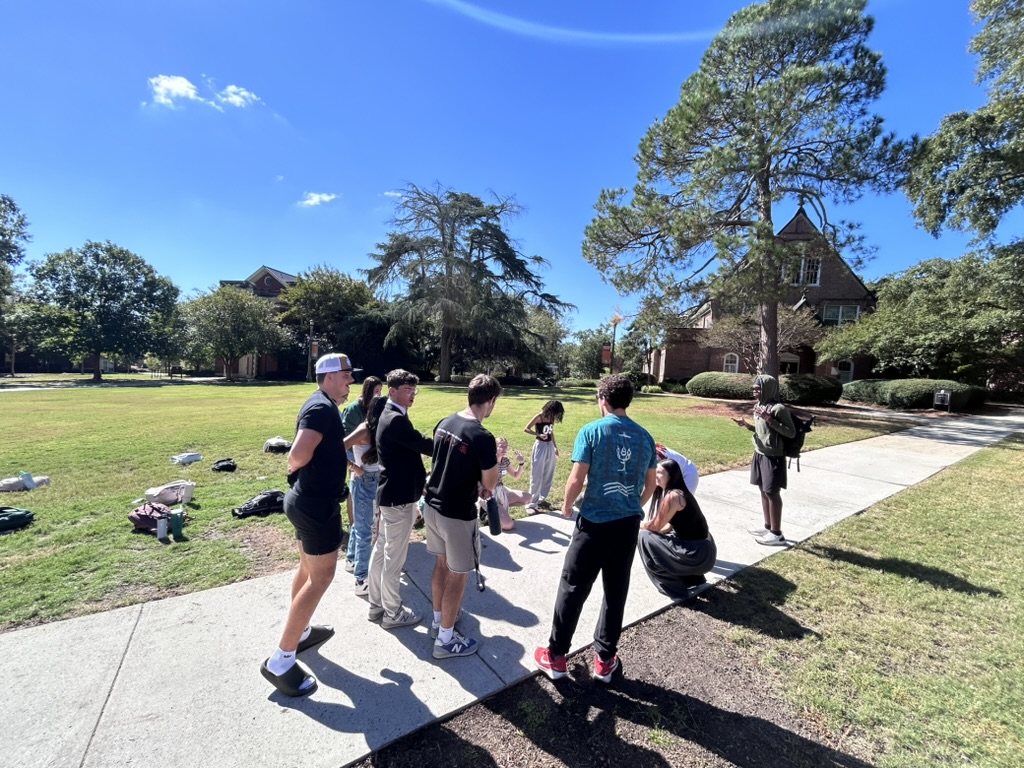
In the same class this semester, she is also leading an activity with plastic fish to explain tragedy of the commons, when individuals use a shared resource for personal gain until it is depleted and no one can use it. The students must decide whether they will take only as many fish as they need or take more to make a profit, at the potential detriment of their village.
Moon has her INT 301 students use on an online game platform to act as politicians for their own countries and make domestic and international decisions. They can also meet physically with the other politicians — their classmates — to work out secret deals. This demonstrates how, because of limited resources, leaders may have to choose between spending money on an issue at home or one with a neighboring country.
“So students, by actually acting on these simulation scenarios, can really understand and see for themselves it’s not as one dimensional as they thought,” she said. “There’s a lot more additional calculation going on, and of course there’s an additional layer of, ‘I don’t like this person,’ or, ‘I don’t like this country,’ for whatever reason. While lecturing gives students some base knowledge, actually doing things helps students to grasp the concepts.”
In Moon’s East Asian politics course, a negotiation activity helps break down the North Korean nuclear issue. She assigns students to different countries and gives them a list of their policies and the goals they need to reach. As they talk and negotiate with the other countries, they learn about varying policies and political stances and gain historical context.
For her international conflict and security class last semester, Moon had her students do mock trial sessions based on just war theory — a moral framework that analyzes when wars are justified and how justified wars are fought. Half of the students served on a global jury, and the rest were divided into groups that presented evidence in support of and against the decision to start the 2003 Iraq war. The exercise required students to do their own research, and they became invested in their arguments, all of which helped them to better comprehend the concept.
“Students are definitely engaged. That’s how they learn, in a more fun and interactive way. That’s really important to me,” she said. “When it’s fun, you want to know more, and that’s what I ultimately want to do. I want students to want to learn, not learn because I tell them they need to know this.”
Moon said students in her classes often already know each other, and that creates interesting dynamics during the simulations. It also helps bring them together, especially in classes like INT 301 where students come from a variety of majors.
“It’s almost like community building within the classroom, and I know we really value that as well (at Mercer),” Moon said. “If you’re taking my class, then you’re almost guaranteed that you’re going to have that level of interaction with other students, where they really get to know each other and sometimes betray each other, and that’s all very fun and memorable for them.”
Rowan Carter, MUS/CLAS ’27, is currently taking her fourth course with Moon. She said her favorite game so far was modeled after the board game Risk but instead featured Mercer campus territories that she and her classmates competed to gain control of. Her favorite simulation was a model diplomacy activity in which students discussed the future of Taiwan while acting as various East Asian countries with individualized goals.
“Dr. Moon’s simulations and games helped me understand not only how difficult international relations and communications between countries can be but also helped me learn the material better,” said Carter, a music and international affairs double-major. “The beginning of each semester starts with Dr. Moon explaining different theories that tie into the fundamentals needed for each class. The simulations help us interact with those theories and deepen our understanding of the material. I wish more of my classes used simulations or similar activities when teaching.”
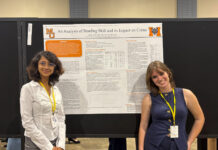
Moon is working to share these teaching and learning methods with other educators. Over Labor Day weekend, she gave a presentation about some of her classroom exercises during the American Political Science Association Conference in Boston.
In addition, she and Cameron Kunzelman, Ph.D., assistant professor of communication studies and theater, are collaborating on research with the goal of creating a cohesive “how to” guide on teaching with games and simulations. Moon has also begun to incorporate artificial intelligence into her activities, allowing her to create more in-depth and individualized prompts and scenarios for her students.
“In liberal arts, we not only teach some content, but we also try to incorporate oral communication, written communication, negotiation skills, critical thinking, all that good stuff. Simulations and games directly help that process, making our learning more multi-dimensional,” Moon said.