Over the past six years, Mercer University teams have helped improve clean water access for 860 families in the El Cercado region of the Dominican Republic.
This Mercer On Mission program was initiated by the late Dr. Michael MacCarthy, associate professor of environmental and civil engineering, and has been continued by Dr. Natalia Cardelino, associate professor of environmental and civil engineering.
The Mercerians work in partnership with the El Cercado Federation of Water Committees, a grassroots collective that builds and maintains water systems in rural farming communities outside the city limits. Since 2021, 75 students have participated in the program, and water systems have been installed in the communities of Los Canos, Sabana Bonita, Capacito, Majagual, Barrio Lindo and Cuerro de Puerco. Dr. Cardelino hopes to one day reach all 57 communities.
“The women and children will travel sometimes up to a mile to a spring. They go six or seven times a day to bring water to their homes for drinking, cleaning, cooking. And so, we build the infrastructure to get that water to their homes,” Dr. Cardelino said. “The women tell us about how they used to have neck problems and back problems from carrying water day after day. Their health is improved. The children now can go to school. It’s really just overwhelming to see how excited they are (about) how their lives have changed for the better.”
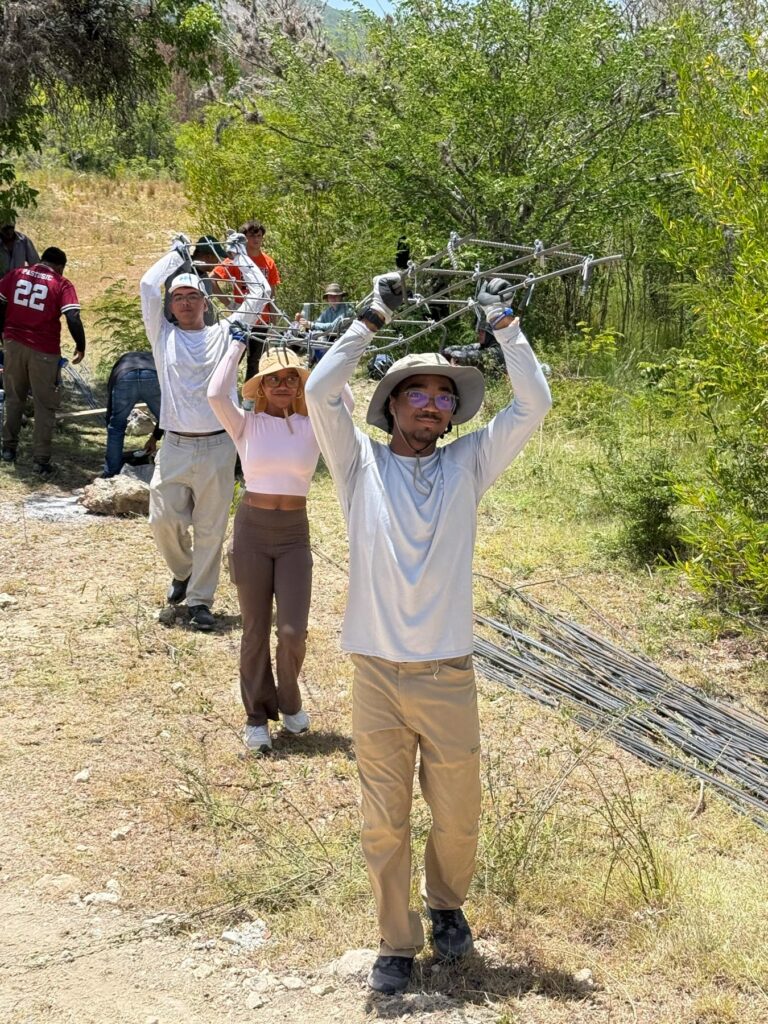
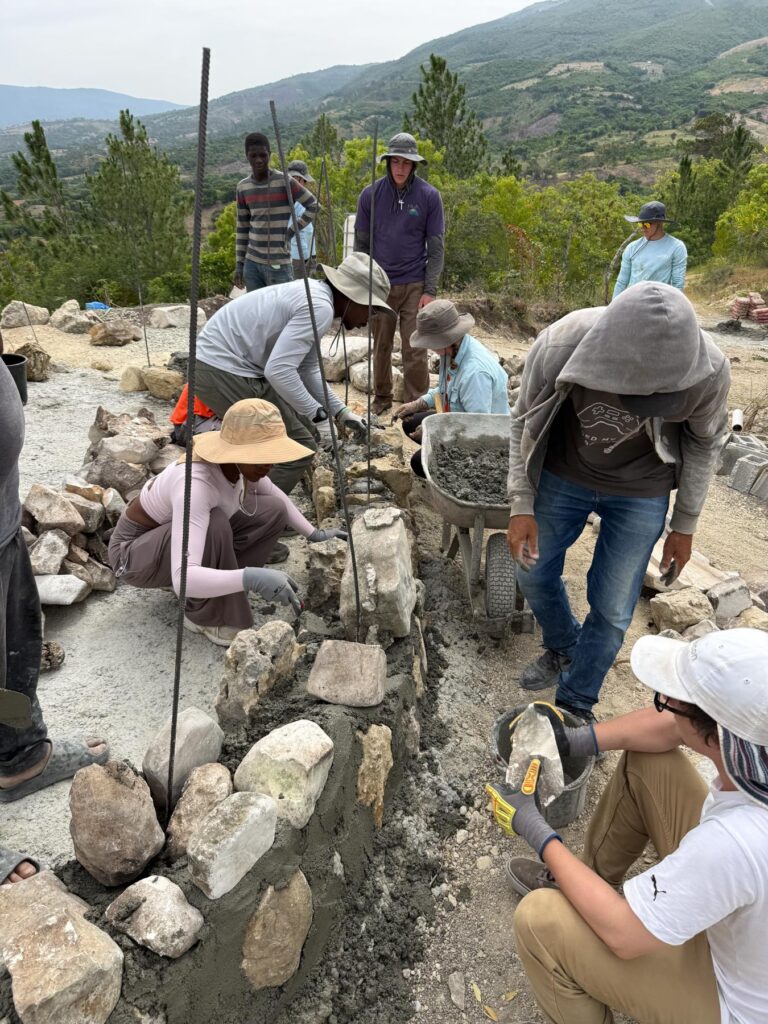
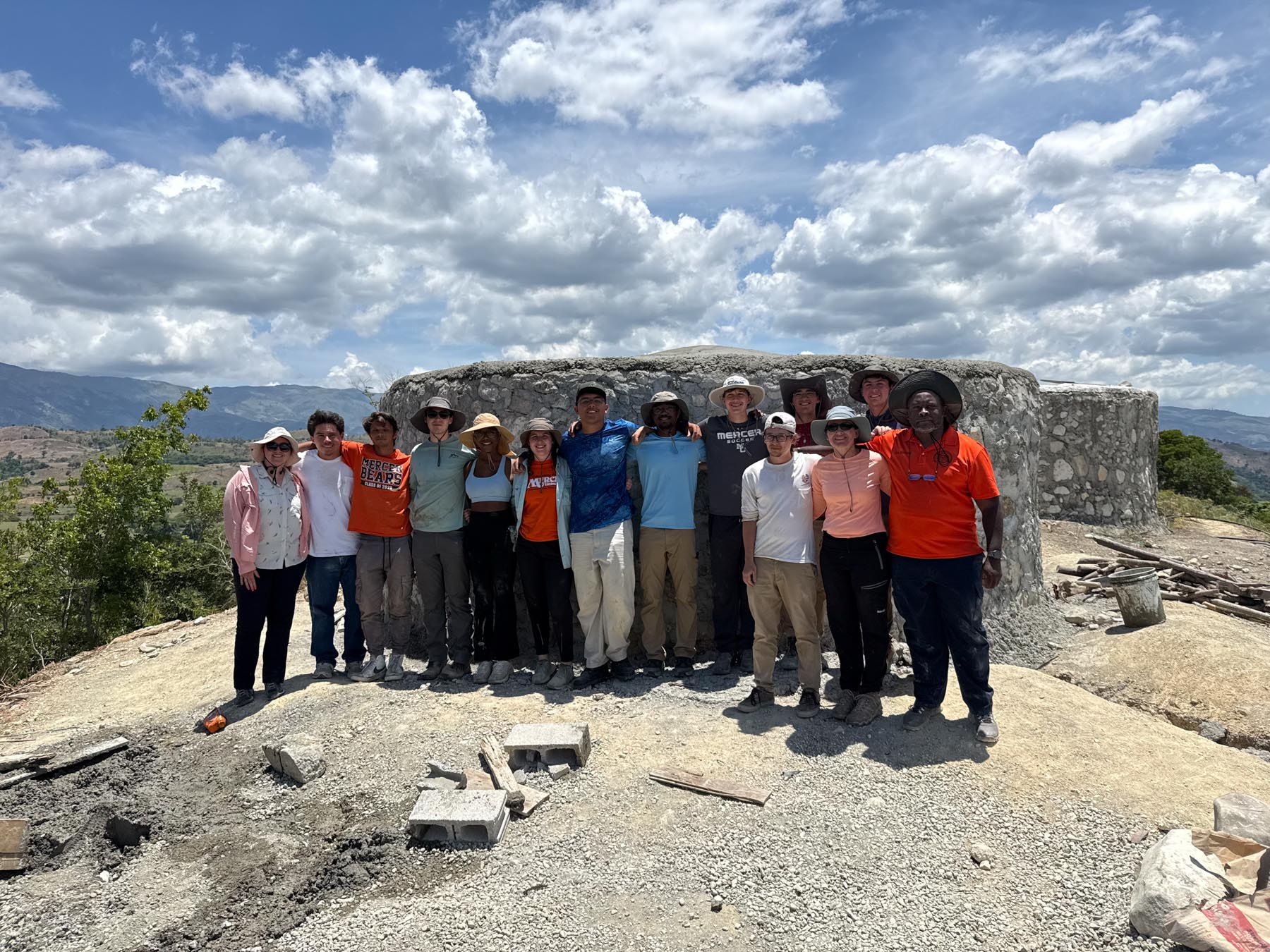
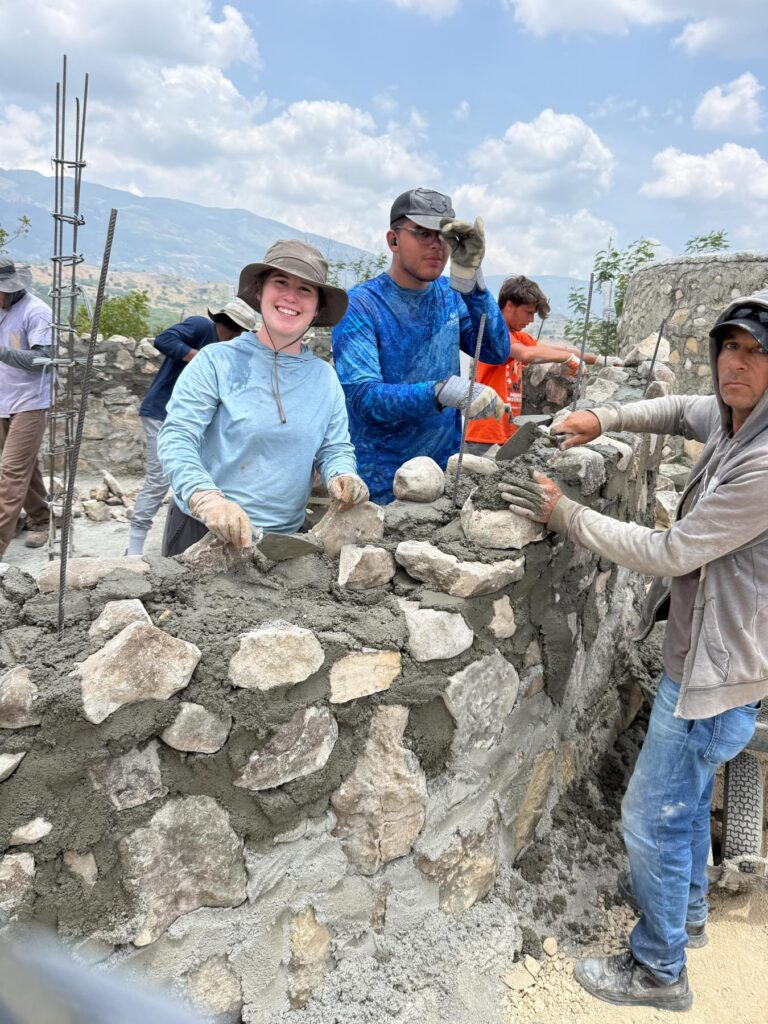
Together, Mercerians and community members use local materials to build spring boxes that protect the community’s water source and tanks for water storage and treatment. They also dig trenches and lay piping that transports the water from the spring box to the water tank to taps on individual homes.
“The Mercer people and the local people have their picks and shovels, and everybody works together as a family,” said Joana Peterson, who moved to the Dominican Republic from the U.S. more than 40 years ago and serves as the staff assistant for the Federation’s executive committee. “It’s amazing how dedicated the people from Mercer are. The students are not just coming to get course credit or for a trip to another country. It’s really a spirit of vocation, of service. People are really keen in observing that the students are not just here to have good time. They’re here to work, but not just to work but to exchange culture.”
Sometimes, existing water systems are repaired or improved, rather than starting from scratch. Part of the Mercer team’s work this summer involved building a second water tank to improve shared water access between two neighboring communities, Dr. Cardelino said. Local residents are expected to complete the project soon. Santiago Montero, a resident of Cuerro de Puerco, said water currently only arrives at his house twice a week, and the second tank will make a huge difference.
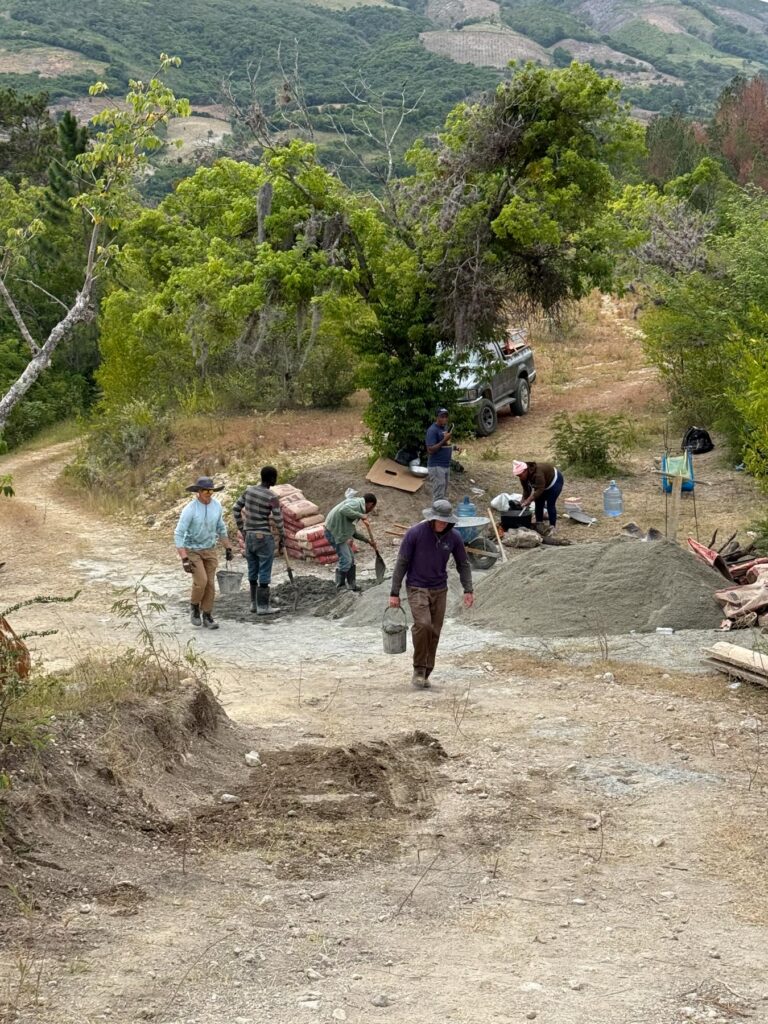
“It was a good and very important experience, as we learned from one another,” Montero said of working with the Mercerians. “I was truly happy to work with you all, and we cannot thank you enough.”
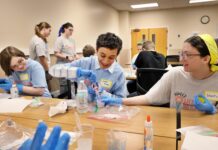
Water samples are collected at the water tank sites and analyzed for heavy metals, bacteria and other water quality parameters. Then, recommendations are provided on what treatment changes are needed to keep the water safe for consumption, said Dr. Michael Fleming, assistant professor of environmental and civil engineering, who led the water quality testing this summer.
“The experience was kind of humbling in the sense when you realize how dire the need is for clean water in certain parts of the Dominican Republic,” Dr. Fleming said. “The Mercer students gained a new perspective, especially coming from a first world country where we have access to clean water from a tap. They learned the importance of engineering from a teamwork perspective. They learned how communication plays a role, how hard work plays a role, how design plays a role.”
Another aspect of Mercer On Mission program has been accessibility and mobility engineering, initially requested by Dr. MacCarthy and carried out by Associate Professor and Chair of Industrial Engineering Dr. Laura Moody, who is retiring and went on her last trip this summer. The Mercerians conducted 125 oral surveys about attitudes toward disability and the needs of community members with disabilities.
They designed and built a wheelchair extension for a young man and a more accessible entrance for a nearby senior center. They also created plans for wheelchair ramps at the compound where they stayed, and local residents will install them later this year, Dr. Moody said.
“(Mercer On Mission) is community-led and based on community needs,” Dr. Moody said. “Aside from what students learn that is related to their programs of study, it teaches students about rooting design in the context of the community you’re working with — that it is what they need and where they are that is most important, not what you think you can do.”
The students see how engineering can be used for humanitarian projects, Dr. Cardelino said. Since they construct everything by hand, they have to be resourceful and creative and learn to solve problems, which will make them better engineers in the end. Dr. Cardelino loves watching the students’ blossom and grow as people and engineers during the trip.
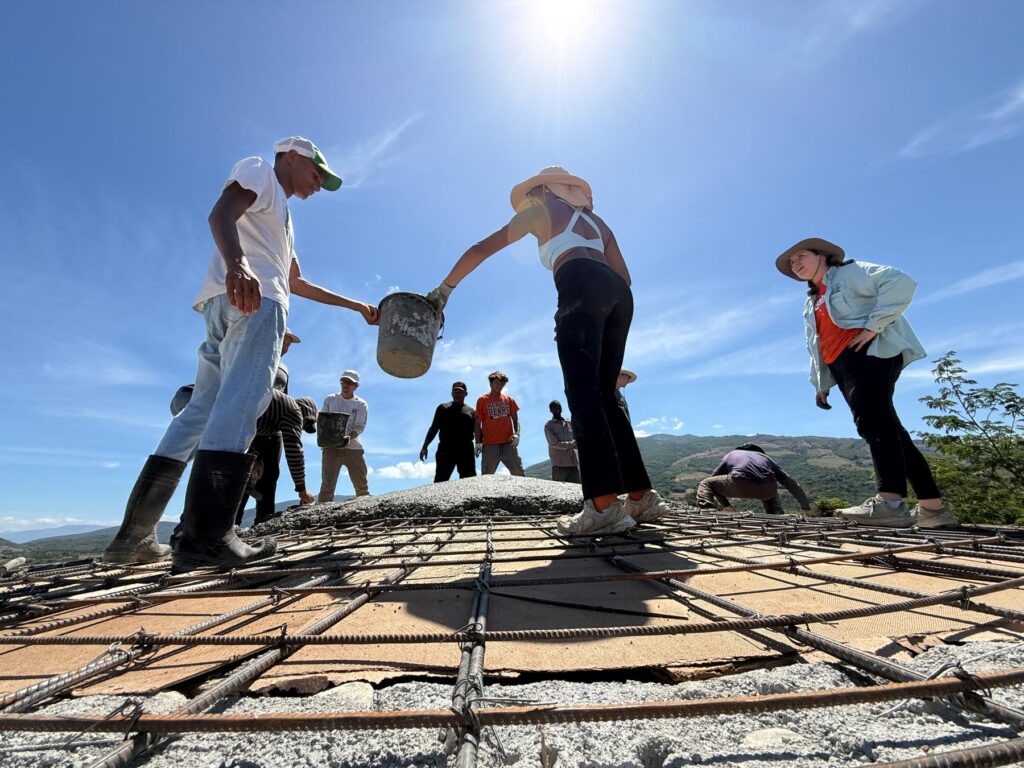
“It’s such a unique experience to be a part of that and actually have something that you have built by hand, and then it is used for a community to better their livelihood. I can’t think of anything better than that,” Dr. Cardelino said. “The Dominican people have just been so kind and so appreciative. It’s just really impactful for myself and the students to see all their hard work pay off and to be appreciated for it.”
Alumna Sarah Fenimore, EGR ’26, EGR ’27, said watching the Dominicans’ technical expertise during the 2025 trip showed her how important field experience is in engineering.
“I really like how I was able to apply my engineering knowledge to something real. I liked the program’s goal,” said Fenimore, a Science, Mathematics and Research for Transformation (SMART) Scholar who will join the engineering team at Robins Air Force Base next year. “For me, this is what I want to do. I want to do something that’s meaningful and impactful.”
Fenimore also enjoyed being able to interact closely and connect with people from another culture.
“You can see the bonds that are made in three weeks,” Peterson said. “It’s like they knew each other all their lives. When they have to part, it gets pretty emotional. (The Dominicans) don’t see them as tourists; they see them as people who come to help. They see how hard they work when they come.”
The Mercer On Mission program was one of the main reasons Grace Artz, EGR ’29, chose to attend Mercer, and she chose the 2026 Dominican Republic trip so she’d have an opportunity to do hands-on engineering work. It was her first time watching a construction project unfold, which allowed her to better understand the building process and how foundations work.
“I think it’s broadened my view of the world and the way I can affect the world,” Artz said. “Before, it kind of felt like, the world is so big, so what can I do? But after three weeks, we built a tank that provided clean water to 98 families. It made me realize that I could take my degree and, in the future, I can do something to (make a difference).”