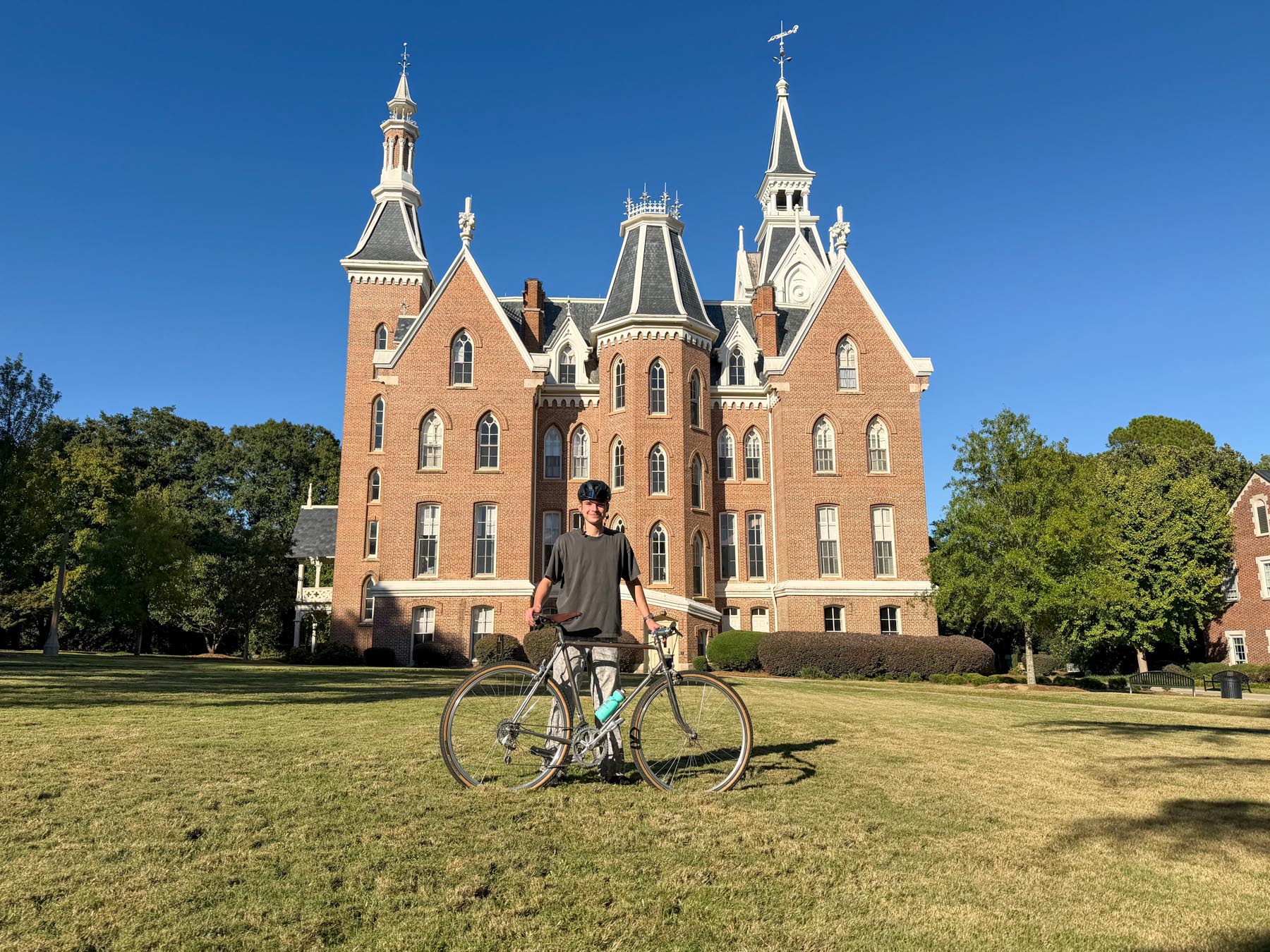
A professional project that Ayrton Ortega, EGR ’29, has been working on since the summer combines his passions for engineering and cycling. The mechanical engineering major is building a testing mechanism for PNW Components, a major manufacturer of bicycle parts.
Ortega, a Sacramento, California, native and avid gravel biker, made connections with PNW in high school while working at a local bike shop. That led to a job at the company’s Sacramento warehouse in summer 2025, right before he came to Macon to start his classes at Mercer University. Ortega worked as the company’s service specialist, repairing and rebuilding bike dropper posts, which are height-adjustable seat posts controlled by a lever.
He remained in contact with PNW, and the company offered him a 2026 summer internship, which turned into an engineering contract job. This time, he was asked to build a destructive test rig — a device that applies extreme force to a component to measure its full strength — specifically for handlebars and pedals.
“They are an international bike component manufacturer, and they needed a test rig to compare themselves against competitors, to see how they stack up. From the get-go, safety was the No. 1 consideration, making sure everything that’s moving or that could cause injury was discovered,” said Ortega, who works as a mechanic at Bike Tech in Macon during the academic year.
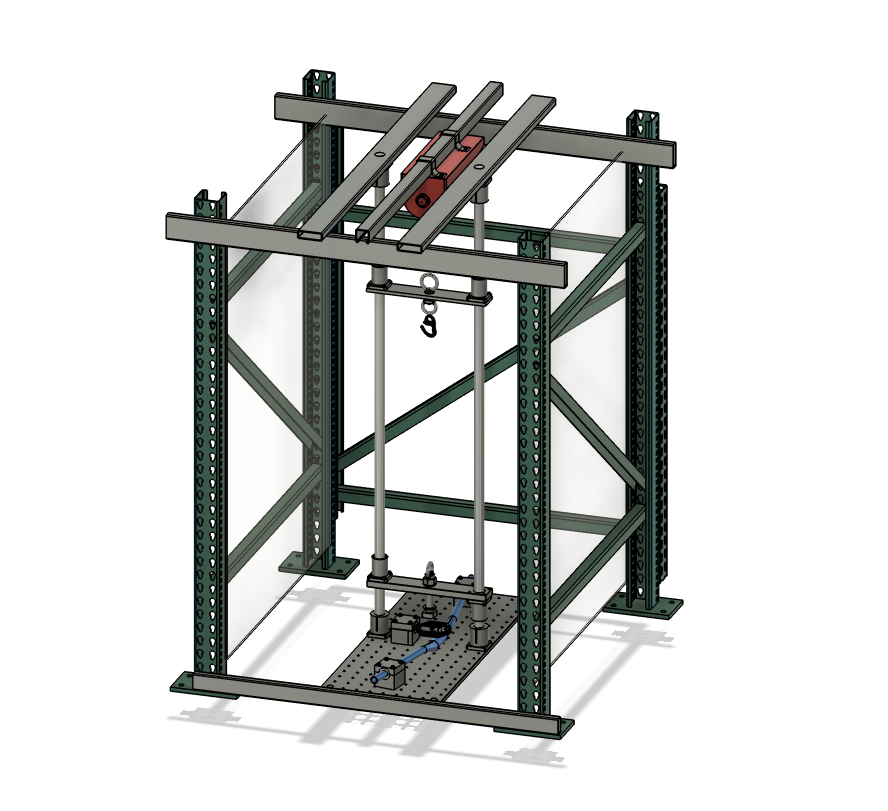
Ortega has designed a large upright system with an internal mechanism that picks up and drops weight onto the handlebar or peddle that’s being tested.
His design takes into consideration safety elements, such as plexiglass and safety switches, on the test device itself; as well as the variety of materials that bike parts are made of, such as aluminum, titanium and carbon fiber for handlebars. Each of these materials performs differently under testing, and the machine must be constructed in a way that accommodates that, which has been tricky, Ortega said.
He took measurements in the company’s warehouse over the summer and has been working on the design project remotely since then, first at home and now at Mercer.
“Being here at the University has been fantastic to resolve any of the questions I’ve had,” he said.
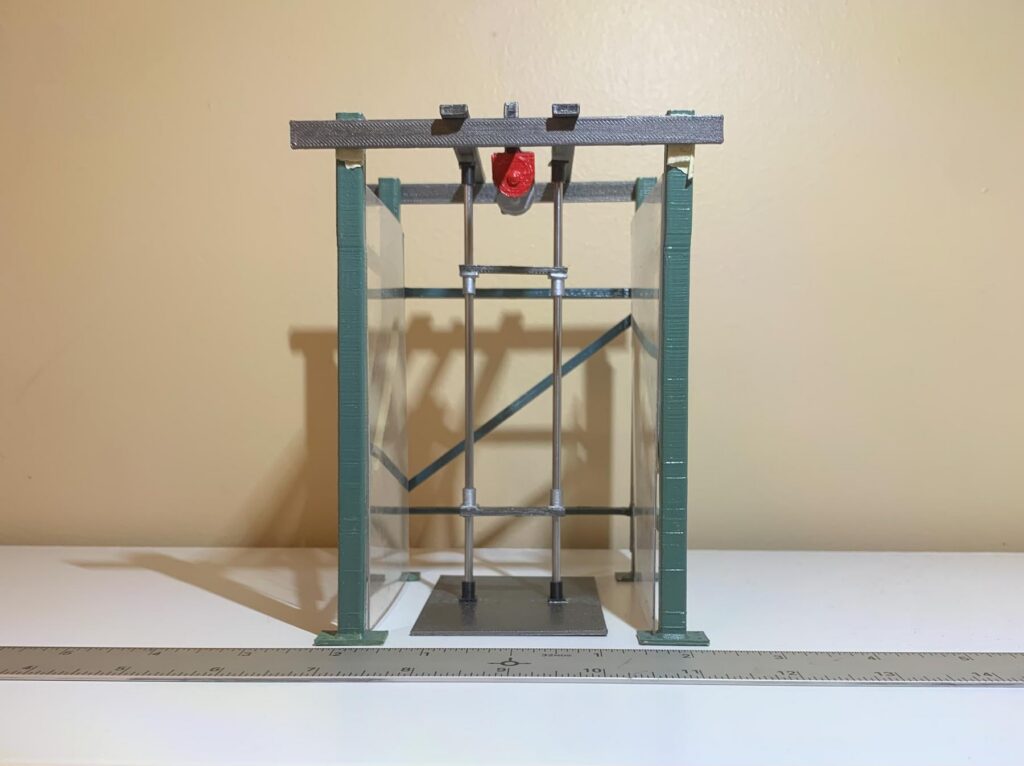
Ortega has already printed a 1/10th scale model of his design and presented it to his project manager. Now, with support from engineering faculty, he is finalizing some safety aspects of his design so he can build the parts for the full-scale model. Ortega’s goal is to finish by December, so he can take the parts back home over the holiday break, assemble the device at the PNW warehouse, and test it.
“From the beginning, I thought of what this project could do for me in the future, and for my career as well,” he said. “I am calling the project Project PE — potential energy — mainly because the drop weight uses potential energy to drop the force, but also for the potential it has for me as an engineer. From the get-go, I’ve just been so thankful, so excited. I stayed up way too late over the summer dedicating time and energy to this. It’s such a phenomenal experience.”