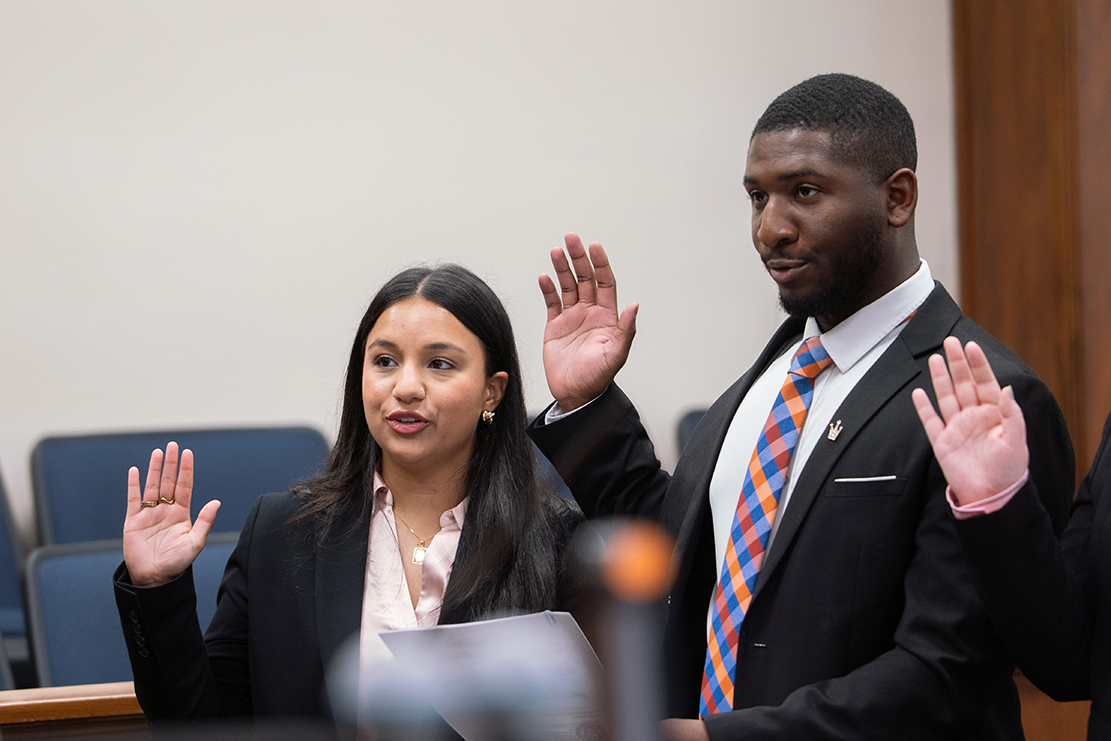
Samar Khan, a third-year student at Mercer University School of Law, is the recipient of the 2026 State Bar of Georgia’s Mike Monahan Law School Excellence in Access to Justice Award. The honor recognizes a law student who has made an outstanding contribution to civil pro bono or legal aid work, whether through direct service or by developing programs that address unmet legal needs and extend services to underserved populations.
For Khan, LAW ’27, a legal education is about more than learning to practice law. It is about making sure people, especially children, have someone willing to stand up for their rights. Her commitment to advocacy is deeply personal, shaped by learning that she was adopted internationally when she was just one day old.
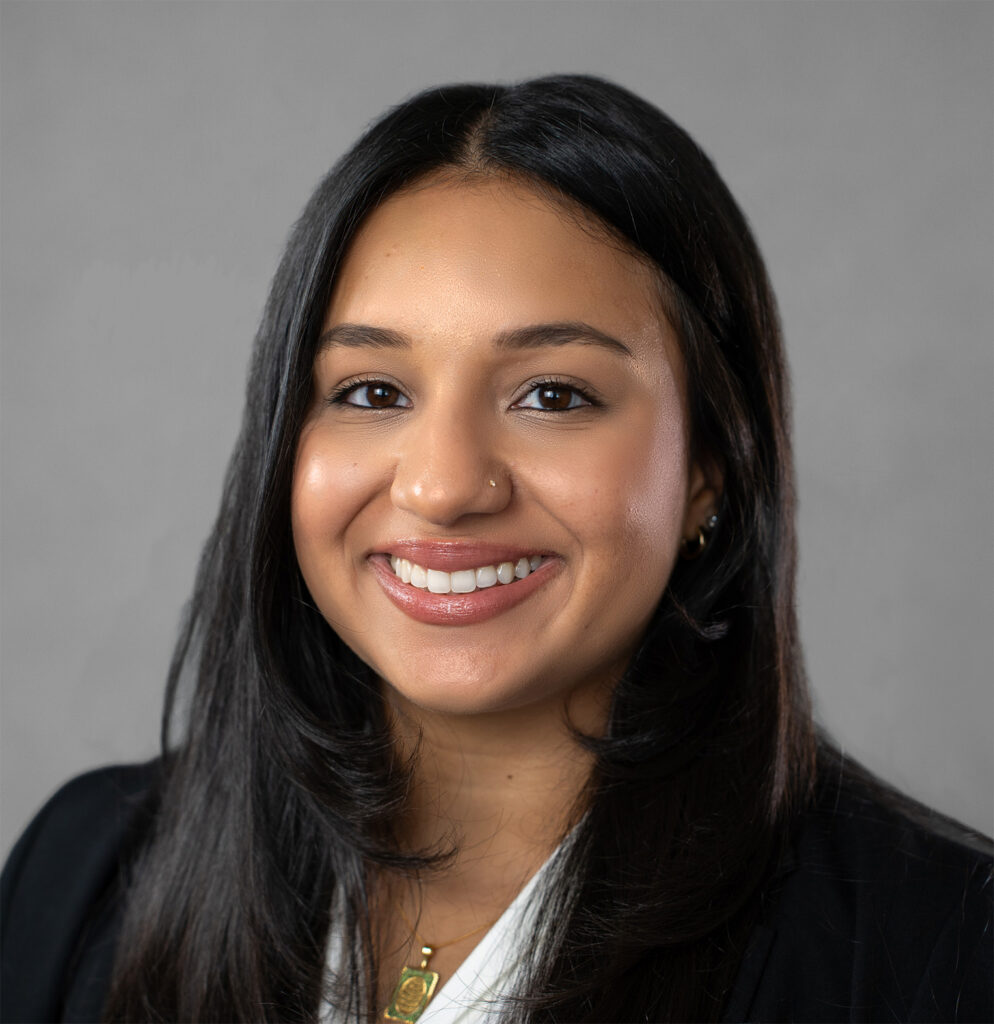
“My adoption story not only shaped who I am today but also inspired my desire to pursue a legal career dedicated to serving vulnerable children and families,” Khan said. “My journey began as a child whose future was shaped by the advocacy of others, and today, I am working toward a career that will allow me to provide that same advocacy for children and families in need.”
That commitment has guided her work in juvenile courts, child advocacy and family law, where she has gained hands-on experience representing children’s interests and learning how the legal system can help protect vulnerable families.
After her first year of law school, Khan interned with Gwinnett County Child Advocacy and Juvenile Services, gaining experience in both dependency and delinquency proceedings. She found her calling in dependency law, which involves children who have experienced abuse or neglect. That summer, she also became a court-appointed special advocate (CASA), a trained volunteer appointed by the court to advocate for the best interests of children in foster care.
Through CASA, Khan advocated for a 6-year-old child, helping address his mental, physical, emotional, educational, medical, cultural and legal needs. The experience taught her that effective advocacy requires more than understanding the law. It requires listening to a child, understanding the circumstances affecting that child’s life and making sure the child’s needs remain at the center of the process.
“While (the child) may believe I made a difference in his life, he made an equally meaningful difference in mine,” Khan said.
During her second year, Khan interned with the Bibb County Juvenile Court, gaining a broader understanding of how juvenile courts, judges and attorneys work together to address the needs of children and families. She also served as vice president of Mercer Law’s Child Welfare and Family Law Society, helping connect fellow students with opportunities to support children and families.
One of her proudest accomplishments was organizing a charity pickleball tournament benefiting Central Georgia CASA. The event raised about $400 and attracted the most participants in the tournament’s history. The fundraiser reflected Khan’s belief that advocacy can take many forms, from representing a child in court to mobilizing a community around the needs of children in foster care.
Khan returned to Gwinnett County Child Advocacy and Juvenile Services for her second summer, this time gaining direct legal experience representing a 17-year-old in a private dependency proceeding under Georgia’s Student Practice Rule. Unlike state-initiated dependency cases, private dependency proceedings involve allegations brought by private individuals.
The opportunity allowed Khan to conduct a home study, perform a direct examination and counsel an older minor. It also reinforced the importance of ensuring that young people have a voice when decisions about their lives are being made.
“Most importantly, it strengthened my confidence in my ability to advocate for children whose voices may otherwise go unheard,” Khan said.
Now president of the Child Welfare and Family Law Society, Khan continues to build opportunities for education and service within the Mercer Law community. This academic year, she organized the organization’s first Domestic Violence Awareness Month tabling event at the law school, giving students outside the Domestic Violence Clinic an opportunity to learn about domestic violence, available resources and ways to support survivors. She also plans to organize a panel featuring attorneys who practice child welfare law, so students can learn more about the field and its career paths.
Her work in child welfare has also helped shape her current clinical experience. Khan is completing the first semester of Mercer Law’s yearlong Domestic Violence Clinic, where she has been sworn in under the Student Practice Rule and authorized to represent indigent petitioners seeking temporary protective orders in cases involving family violence, dating violence or stalking. Under the supervision of Associate Professor Bonnie Carlson, J.D., students in the clinic gain practical experience helping clients navigate the legal system during difficult and often frightening circumstances.
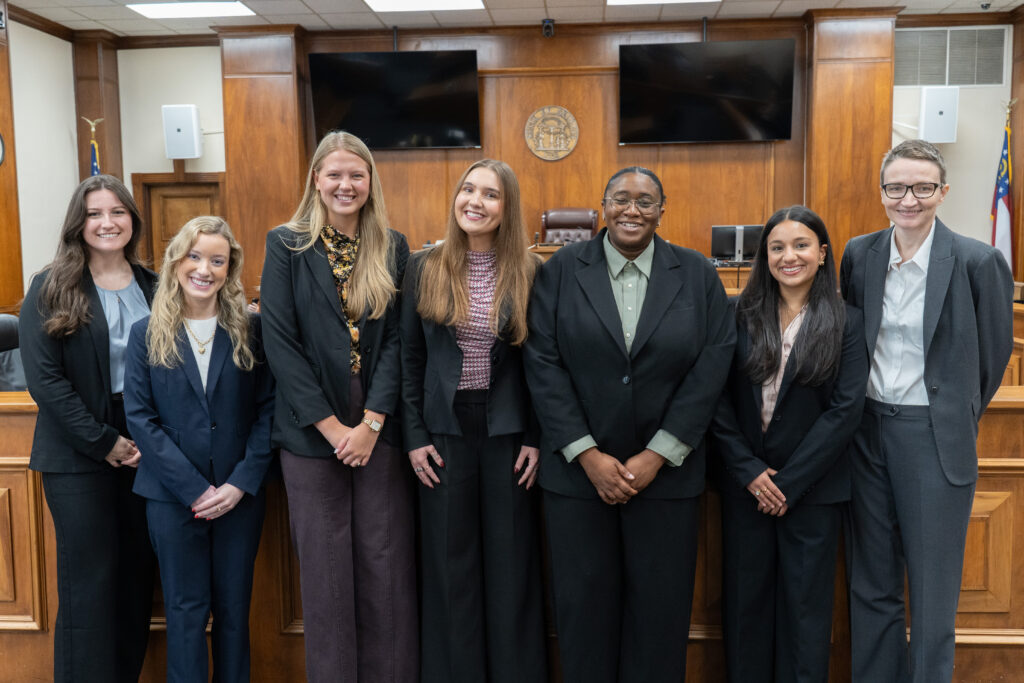
Khan said her work in juvenile court has shown her firsthand how domestic violence can affect children and families. Those experiences motivated her to extend her advocacy to adults experiencing abuse.
“Through the clinic, it is my goal to empower victims and survivors, help them navigate the legal system and advocate for the outcomes they seek,” Khan said. “I firmly believe that every individual, whether a child or an adult, deserves to live a life free from abuse and neglect.”
For Carlson, who also serves as director of experiential education, Khan’s commitment to public service is evident in both her direct work with clients and her efforts to engage others in the issues affecting vulnerable populations.
“Samar embodies the highest ideals of practicing law: serving others and ensuring access to justice for all,” Carlson said. “Her devotion to the field of child welfare and family law is evident from her roles as a Court Appointed Special Advocate and an intern in the juvenile court systems.”
Carlson also praised Khan’s leadership and initiative in creating opportunities for her peers to become involved in service.
“She is a leader among her peers, taking initiative to implement new programming as the president of the Child Welfare and Family Law Society,” Carlson said. “She is going to be an asset to the legal field, and her entire community, and I am so delighted she is being recognized with this incredible honor.”
Khan’s commitment to service extends beyond the courtroom and clinic. She volunteers at the Middle Georgia Community Food Bank, which serves 24 counties in a region where one in six people experiences food insecurity. She also serves as president of the Asian Pacific American Law Student Association, head representative for BARBRI, student representative on the State Bar of Georgia Professionalism Committee, and a member of the Association of Women Law Students. She is working toward Mercer Law’s Public Service Certificate, which recognizes students who complete designated public service coursework and at least 30 hours of pro bono legal work.
Dean Karen J. Sneddon, J.D., said Khan’s accomplishments reflect Mercer Law’s commitment to preparing students to use their education in service to others.
“Samar Khan exemplifies what it means to practice law with purpose,” she said. “Through her work in juvenile courts, child advocacy and legal clinics, she has put her legal education into action, serving children and families whose voices and needs deserve to be heard. At Mercer Law, we strive to prepare students not only to become skilled attorneys, but also to recognize the responsibility they have to their communities. Samar has embraced that responsibility throughout her time here. I am confident that the knowledge, practical experience, and commitment to service she has developed at Mercer will serve her well and, more importantly, will make a lasting difference in the lives of the children and families she serves throughout her career.”
Khan hopes to continue working in child welfare law after she graduates. Her experiences have strengthened her belief that meaningful advocacy begins with compassion, dedication and a willingness to listen to people whose voices are too often overlooked.
“Children shape our future, and I believe we have a responsibility to help shape theirs,” she said.
For Khan, that responsibility is both a professional calling and a personal commitment: to help children and families find their voices, understand their rights and receive the advocacy they deserve.