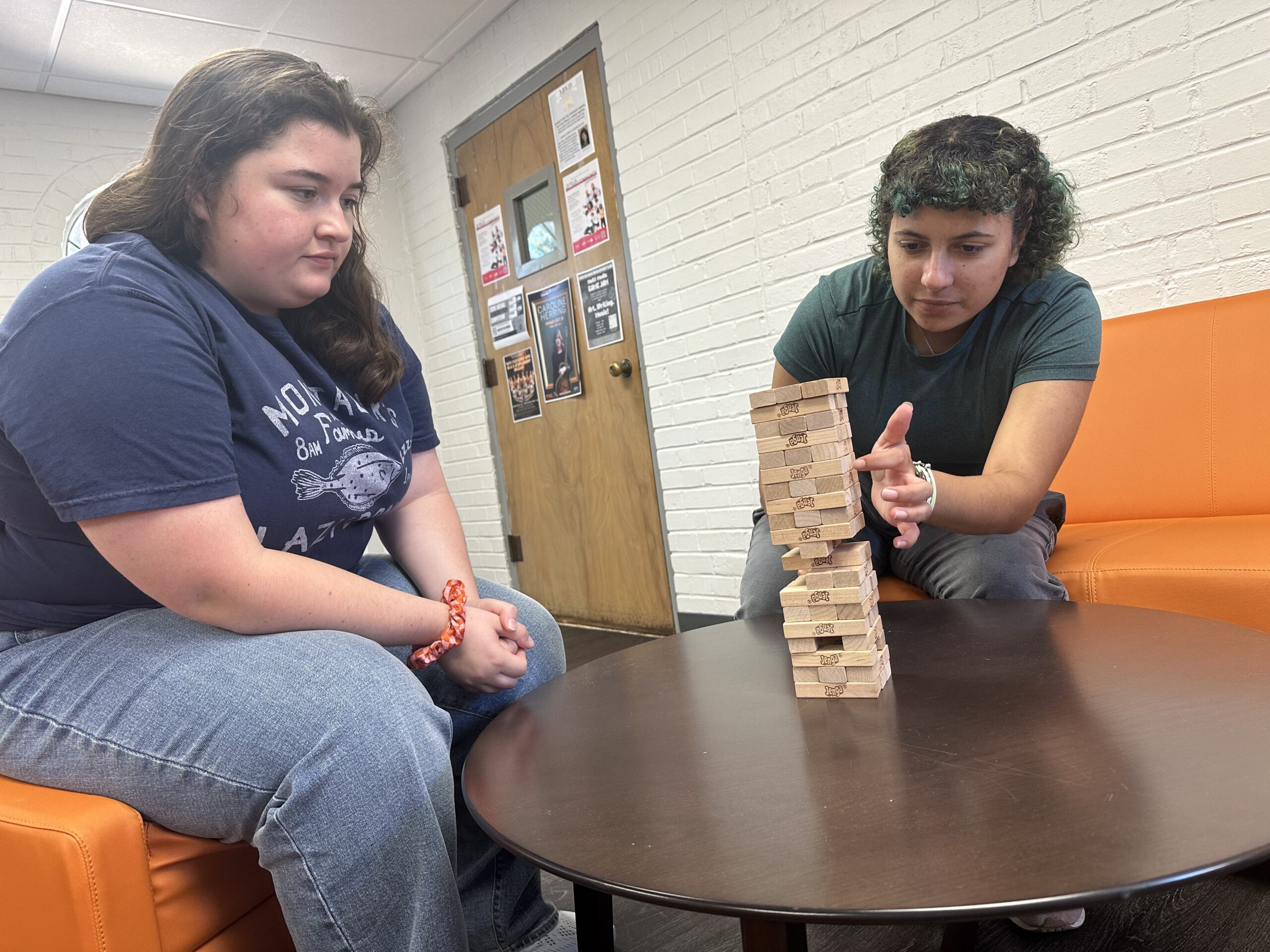
A new minor at Mercer University aims to equip students with tools, insights and experiences related to one of the world’s most successful media industries: games.
The game studies program launched earlier this fall and is led by Cameron Kunzelman, Ph.D., assistant professor of communication studies and theatre. The program is not about designing games but rather the analysis and understanding of games, both analog and digital. It dives into how games work, what they do, how people interact with them and what messages they convey, Kunzelman said.

“Games are the most profitable media industry on the planet,” he said. “It seems appropriate that we should be training students in how to think about them, and I believe that Mercer University is uniquely positioned to do so.”
The minor begins with an introduction to game studies class and ends with an advanced game analysis capstone course, in which students synthesize what they have learned across the minor. In between those, they take three classes in allied disciplines, such as English, art, computer science and history, that are relevant to the historical and current analysis of games. Kunzelman carefully curated this trio of courses after talking with department chairs across the University.
“Part of the goal of the program is to demonstrate that games are everywhere,” Kunzelman said. “Every liberal arts discipline has something to say about games, and we want to make sure that students are equipped with as much knowledge as they can so that they can understand the context and arguments of the games they are playing in their day-to-day lives.”
Games are inherently cross-disciplinary. The earliest known dice in North America date back to 12,000 B.C., and they are evidence of both craft and art in the earliest and simplest games. The predecessors of games like “Candyland” or “Monopoly” became popular in European courts in the 1600s as entertainment for royalty and aristocrats. The game studies courses in the minor help students understand the relationship between this deep history of games and the current moment.
“I want students to understand that the games they are playing have roots in older forms of play, “ Kunzelman said. “‘Grand Theft Auto 6’ has a lineage that stretches back before the printing press, and the design elements that make up our most popular games emerged in specific cultural contexts that we can trace, analyze and compare. How do games attract players? What elements are necessary to make people feel compelled to overcome difficulty or follow a story through gameplay? These are the questions game studies engages with in profound ways.”
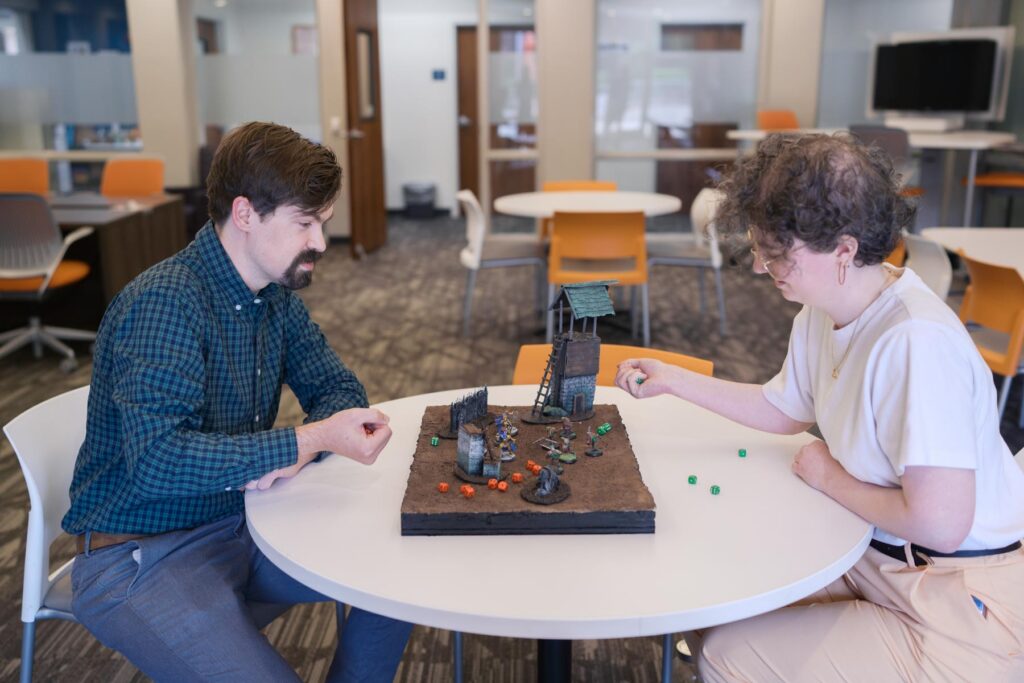
The minor is relevant to many majors, and it’s open to students in any undergraduate program. Kunzelman would love to have students from engineering, business and other disciplines get involved. Students who want to become more literate in games, or to enter into fields where play and games are becoming more central, would find particular value in the program.
Kunzelman said there has been a huge demand by students for game studies courses, and the ones he has taught so far have filled quickly. His goal is to have 30 students pursuing the minor by the end of the next academic year.
Computer science major Gabriela Fields, CLAS ’27, is currently taking introduction to game studies as well as a research studies class with Kunzelman, in which she is developing a horror survival video game. A longtime gamer, Fields has aspired to make her own video game for some time, and the minor supports her goal while allowing her to gain course credit.
“So many students, especially my age, have an interest in games, so I think having an access point to both studying it and practicing it as a career option interests a lot of people,” said Fields, who wants to be a video game developer. “And doing it in an academic sense legitimizes it as a career option. The analysis and understanding of games are going to help me a lot in developing my own.”
Kunzelman also hopes the program will help more Mercer students get involved with the games industry in Georgia and gaming events, such as the annual DreamHack in Atlanta. In addition, he thinks it will forge connections with student organizations like the Game Development Club and The Gaming Society.
“I hope that the game studies minor can be a hub for game-related activities that are happening here at the University,” he said. “If students who are interested in these things want to understand the academic study of it, or want to have some institutional affiliation to help them understand how to bridge into these other modes of study or engagement, the minor can facilitate that.”