Tens of millions of people rely on artisanal and small-scale gold mining to feed their families, but the use of elemental mercury in the process comes at a cost to their health and the environment. For over a decade, Mercer University has worked to make artisanal and small-scale gold mining safer through Mercer On Mission.
“Mercury in the environment is both highly toxic and highly mobile,” said Adam Kiefer, Ph.D., Distinguished University Professor of Chemistry in the College of Liberal Arts and Sciences. “It moves not only through the atmosphere, soil and water, but also through the food that we eat. It’s a major risk to human health.”
In artisanal and small-scale gold mining, mercury is used to separate the gold from the ore.
“You can take the liquid mercury and pass it over certain metals, in this case gold, and the gold seemingly dissolves in it to form an amalgam,” Kiefer said. “So how do you get the gold out? You hit that gold amalgam with a blowtorch, and you evaporate off the mercury. The mercury goes everywhere.”
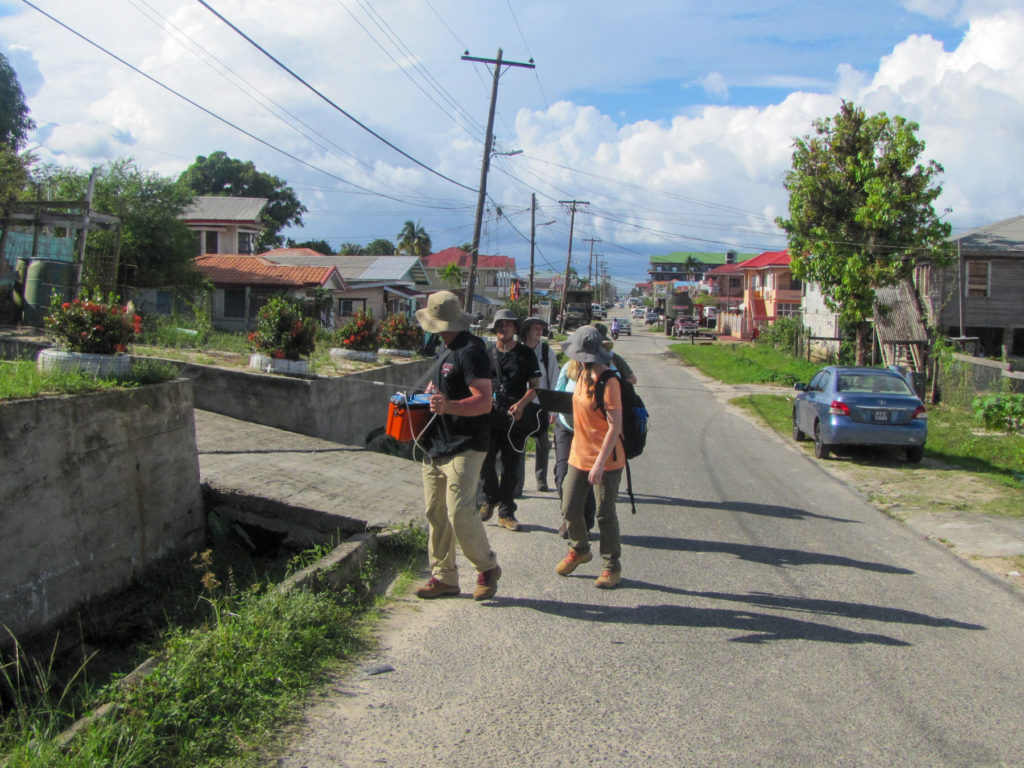
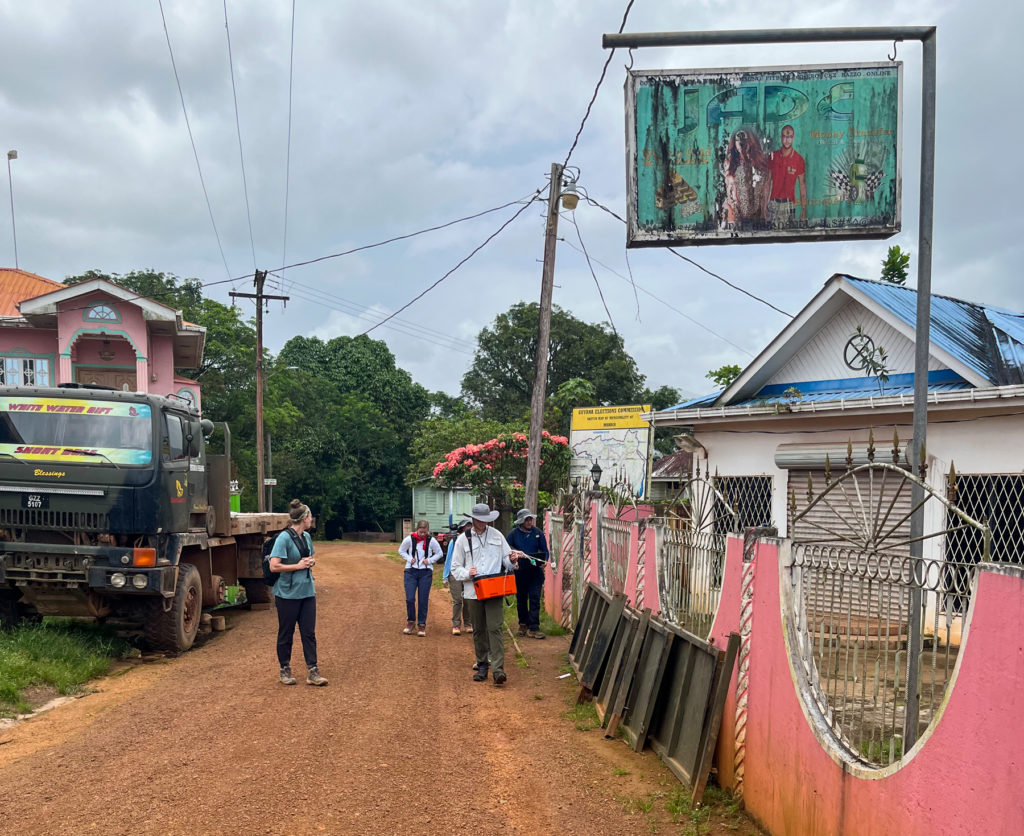
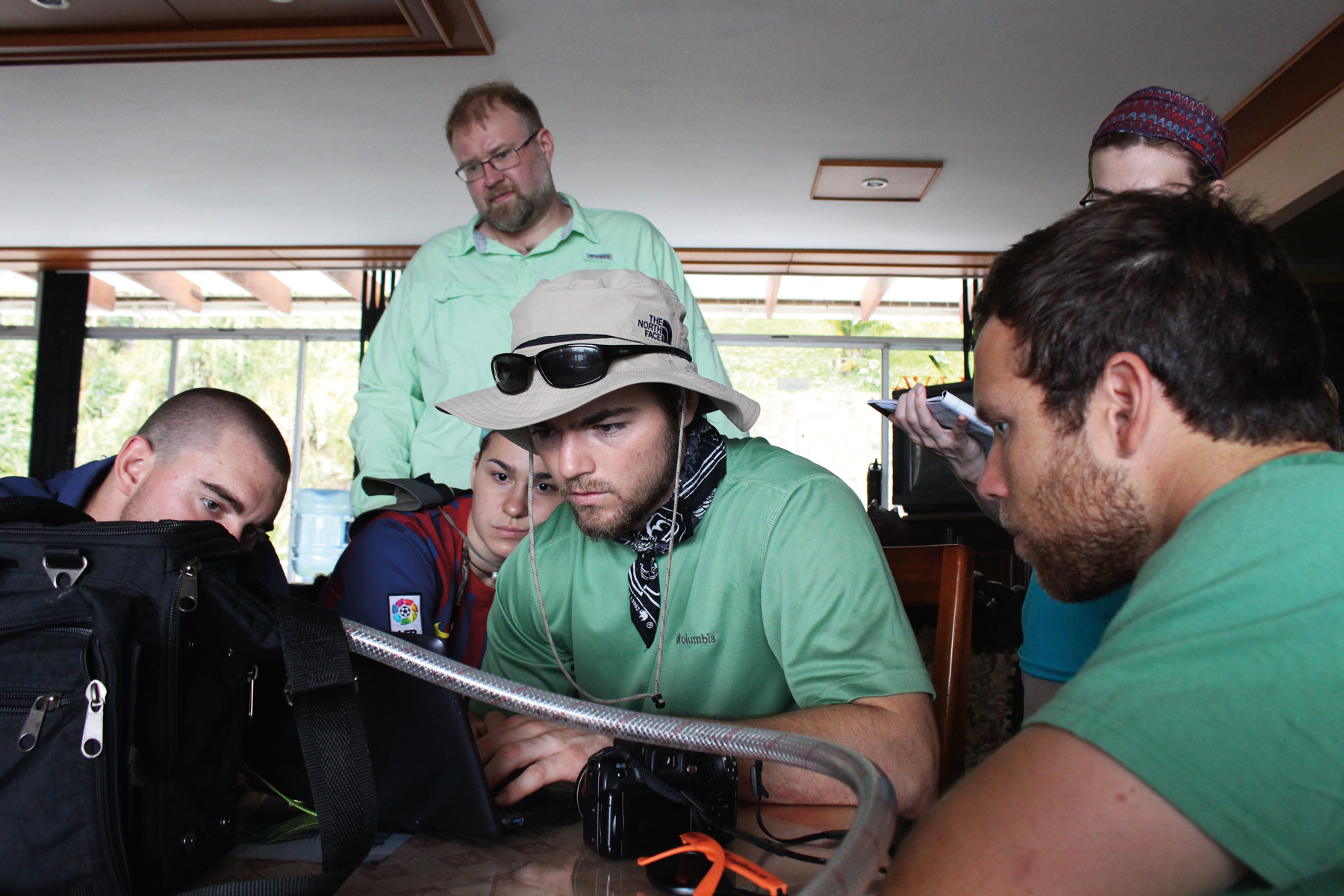
Since 2010, Kiefer has led Mercer On Mission teams to countries — including Mozambique, Peru, Ecuador and Guyana — where artisanal small-scale gold mining is present.
In collaboration with then-School of Engineering Dean Laura Lackey, Ph.D., Kiefer and students designed programs to monitor mercury contamination as well as systems for capturing mercury before it is released.
In 2019, Kiefer and Lackey patented their Mercury Capture System, which has been shown to reduce mercury emissions by over 95%.
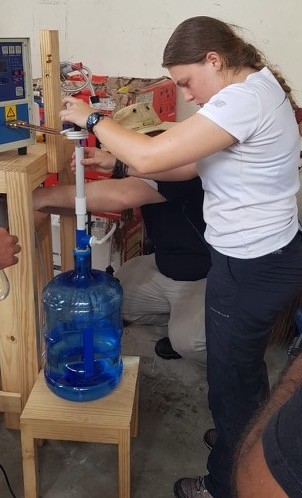
Leading up to the invention, Mercer students refined and tested various systems in the field during summer Mercer On Mission trips. Work at Mercer continued year-round.
“Although we are experts with respect to mercury reduction, we are never experts within the context of the community in which we work,” Kiefer said. “Our students’ engagement with the community, and the engagement of the community with the students is essential to any success.”
The Mercury Capture System worked because users could recapture and reuse the mercury, creating a financial benefit, he said.
“We ultimately ended up with funding from Conservation International Guyana to take a look at their entire supply chain for gold mining and determine whether we could actually bypass mercury altogether, and the Mercury Capture System got our foot in the door,” he said.
The Mercury Capture System has aided Guyana in its commitment to providing viable alternatives to reduce and eventually eliminate the use of mercury, said Lloyd Bandoo, head of the mineral processing department of the Guyana Geology and Mines Commission.
Working with Mercer was “a true delight and mutually educational experience,” he said. “Students bring with them an eagerness to both learn and teach, a passion for research and are generally respectful of persons and cultures. The projects and collaborations have led to lifelong friendships and productive professional networks.”
As a student, the experience was personally and scientifically rewarding, said Sammy (Brown) Craighead, Ph.D., CLAS ’21.
“You have a shift where now you’re almost a peer in a room full of experts,” she said. “We were in a room with members of the Guyana Geology and Mines Commission. They’re telling us what instrumentation they have, what kind of data they have and how they work with it, and their rules and their regulations, and we have to step up to the plate with our knowledge.”
Craighead, who double-majored in chemistry and neuroscience at Mercer, now holds a Ph.D. in chemistry from the University of Illinois Urbana-Champaign and is a patent agent at an Atlanta law firm. Mercer On Mission made her a better scientist and taught her how to communicate with and learn from different types of people.
“It is real work. It is real effort. It is real action and effect too,” she said.