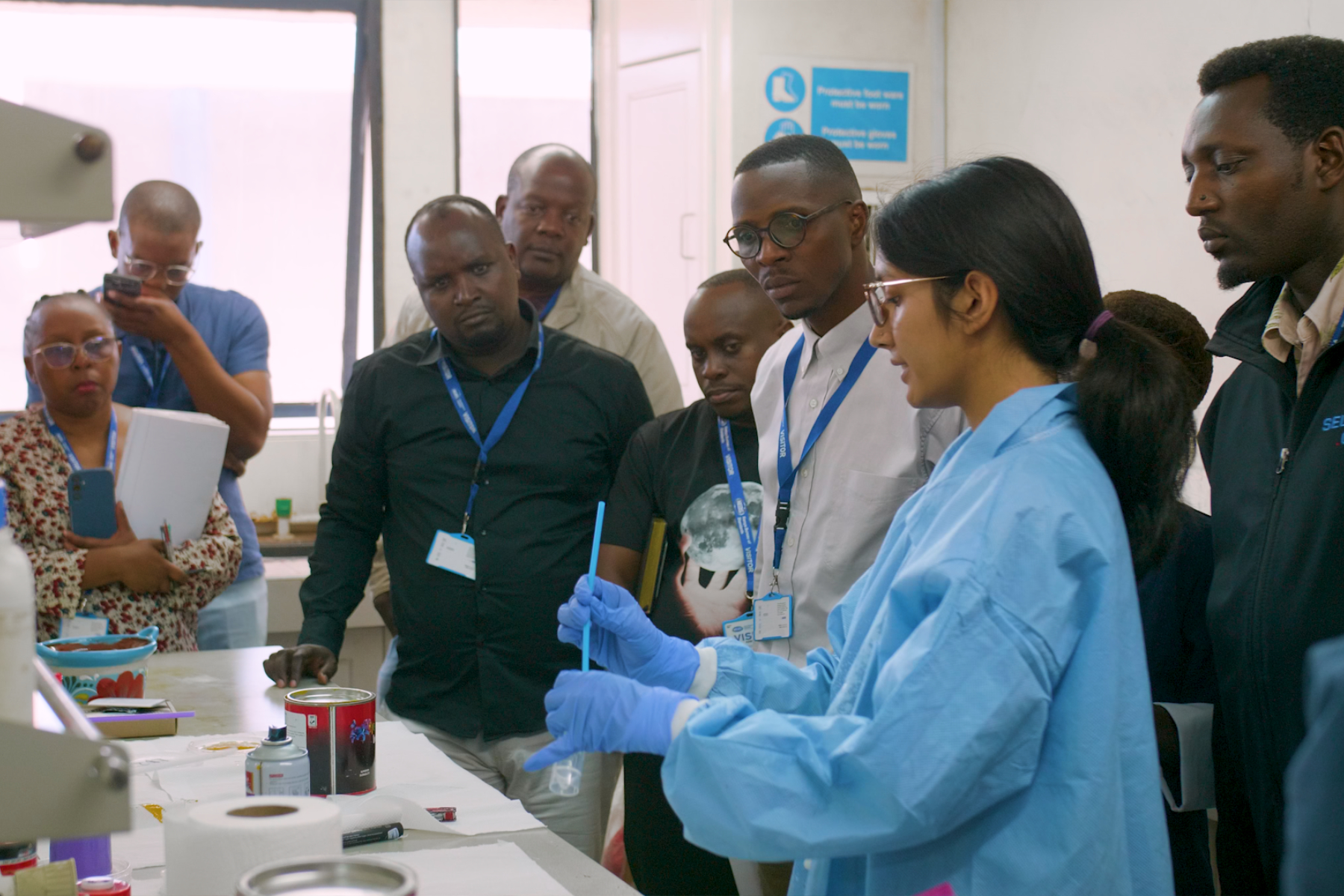
A team of Mercer University students and faculty trained representatives from six East African countries on low-cost methods to test for lead in new paint during a Mercer On Mission program in Kenya this summer.
The program aims to reduce the public’s exposure to lead in paint by increasing the capacity for low- and middle-income countries to test for the toxic heavy metal, which will allow them to identify and remove leaded paint from store shelves. Exposure to lead from paint can seriously harm a person’s health, and its effects are especially dangerous for children.
“Although we train labs from all over the world here in Macon, there’s a benefit to having regional training for Africa in particular, and we wanted to support that,” said Distinguished University Professor of Chemistry Adam Kiefer, Ph.D., who led 19 students in Kenya with Assistant Professor of Environmental and Civil Engineering Addie Buerck, Ph.D.
By going to Africa, the Mercer team was able to train representatives from not only Kenya but also Tanzania, Uganda, Zimbabwe, Burundi and Rwanda in the cultural and scientific environments they are used to, he said.
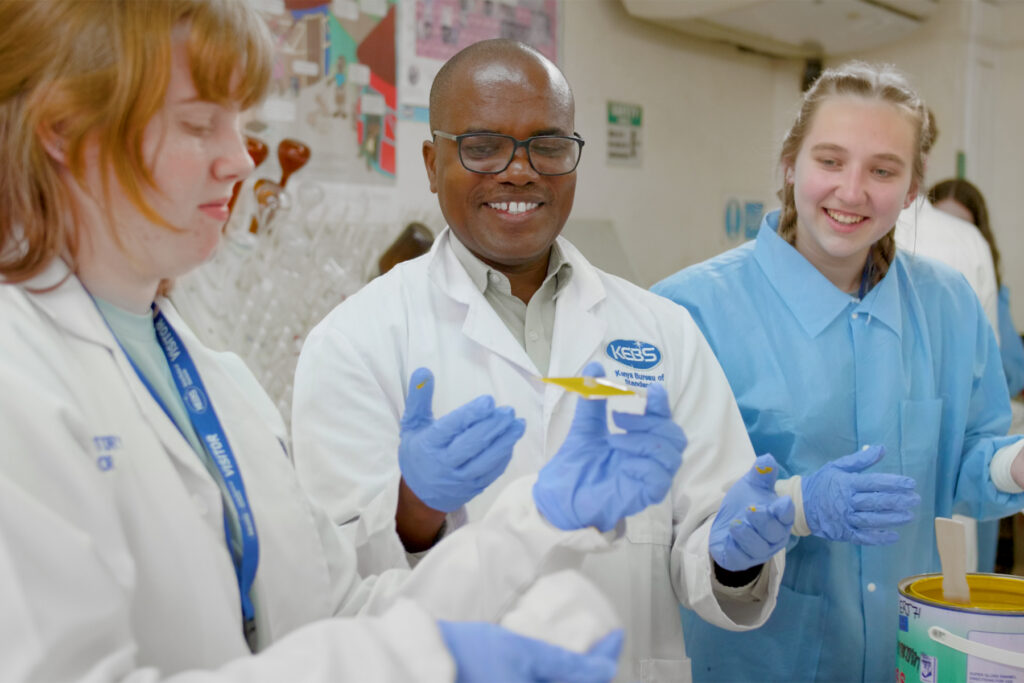
Training was held at the Kenya Bureau of Standards (KEBS), a government agency charged with safeguarding consumers and facilitating trade, with support from the Lead Exposure Elimination Project. It focused on best practices for analyzing lead in paint.
“We call it from cradle to grave, which is really from purchasing paint and then the individual steps: drying, grinding, homogenizing, digesting and analyzing,” Kiefer said. “Cradle is purchasing paints. Grave is basically making sure the data that is being collected is both reliable and disseminated.”
The recognized standard for lead in paint is 90 parts per million, he said. That’s 90 milligrams of lead for every kilogram of dry paint.
“Many countries either don’t have the capacity to do this level of analysis, or they don’t have the regulation on the books,” he said. “What we are working towards is developing capacity in labs around the world to combat lead in paint from this regulatory perspective.”
Kiefer has been globally recognized for his work in this field. He and Caryn Seney, Ph.D., professor of chemistry, developed a method for detecting lead in new, oil-based paint that has been approved as an international standard.
“Our goal is to do in minutes what typically takes weeks, and identifying these paint concentrations means the lab can save a lot of money and time by only analyzing paint samples with lead in them,” he said.
The Mercer method
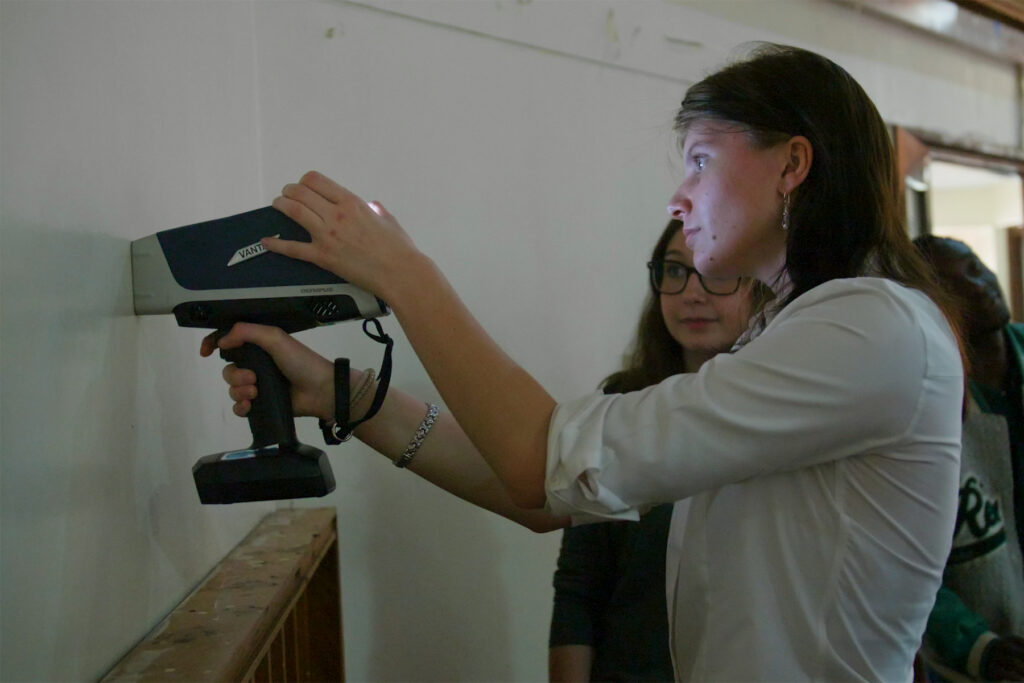
The Mercer method uses a relatively inexpensive device called an X-ray fluorescence analyzer, or XRF, to analyze dry, powdered paint samples. The XRF data is then standardized against a more accurate technique, resulting in a relationship that allows the user to accurately determine concentrations of lead in the paint.
Benji Ashtar, who will graduate with a chemistry degree in December, taught students and the African scientists how to use the XRF for analyzing paint.
“When everybody started understanding how the XRF could be used to screen paints this fast, it was like a lightbulb went off in their head,” he said. “It was really cool to speak with scientists from different East African countries and then help them understand how to use it. That’s where I kind of felt I was making a difference.”

In January, Kiefer led a training session on how to test for lead in paint at Mercer. Among the attendees was Jacob Hare, a senior laboratory analyst in the inorganic chemistry laboratory at KEBS. Since then, Mercer and KEBS have developed a collaborative relationship to help KEBS build capacity for additional testing of paint for lead, Hare said.
“Testing will inform enforcement because right now we want to move away from leaded paint to lead-free paint. As you know, lead is a toxic element and will affect especially growing children,” Hare said. “Enforcement is informed by accurate and reliable results. So, it is important that we are having Mercer in partnership with KEBS, kind of building capacity in KEBS and also regionally to ensure that now we move towards lead-free paint, so that now our children and the environment can be free from the toxicity of lead.”
Collecting samples
While in Kenya, Kiefer and his students also developed a new method for sampling spray paint, which has traditionally been a challenge. They brought home over 200 samples of spray paint to test at Mercer.
Lila Turbiville, EGR ’27, was one of the student leaders in charge of collecting paint samples, which included liquid paint and spray paint.
“This involved organizing routes to go on, coordinating with people at KEBS, the market surveillance team, to find locations where we would be able to get different brands of paint, different colors, and just getting a wide variety that represented a bunch of different price ranges and things that were accessible for people to buy in Kenya,” she said. “This involved driving all around Nairobi. I was lucky; I got the experience that not every student got during this trip. I just got to see a lot of different cultures and areas as we were driving around.”
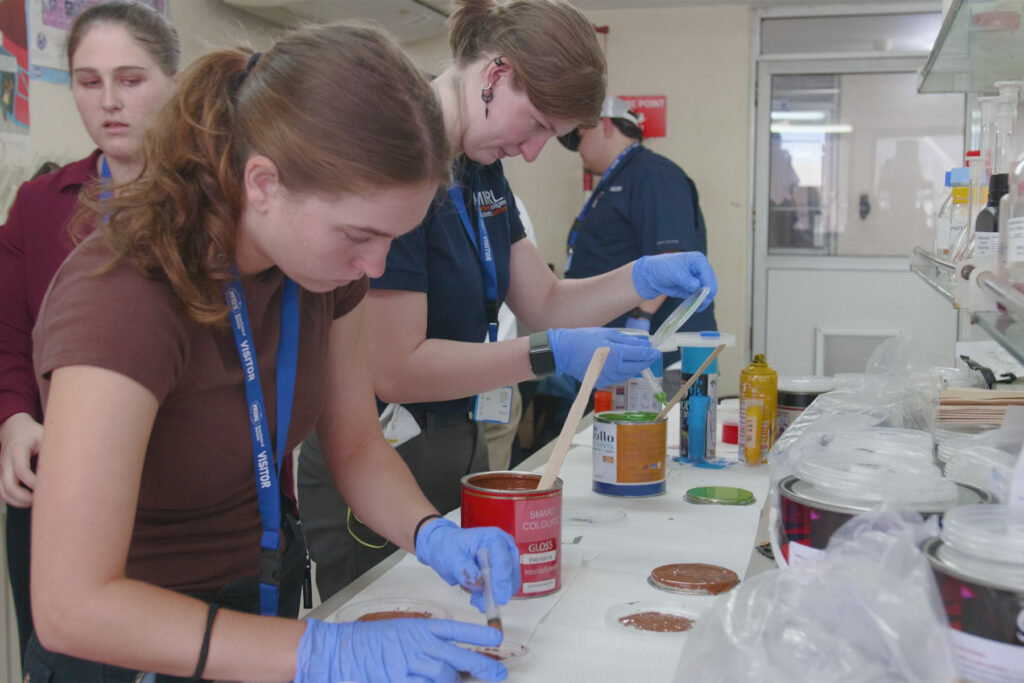
After collecting the samples, Turbiville, a biomedical engineering major, organized the data into spreadsheets, cleaned it up and linked it with the test results from the liquid paint sample lead analyses.
“Once those are connected, you can just directly see between the two, like which paints did have lead, and narrow down from there what needs to be done and who needs to be contacted,” she said. “And giving that information to KEBS was a really important part of it.”
Innovating in Kenya
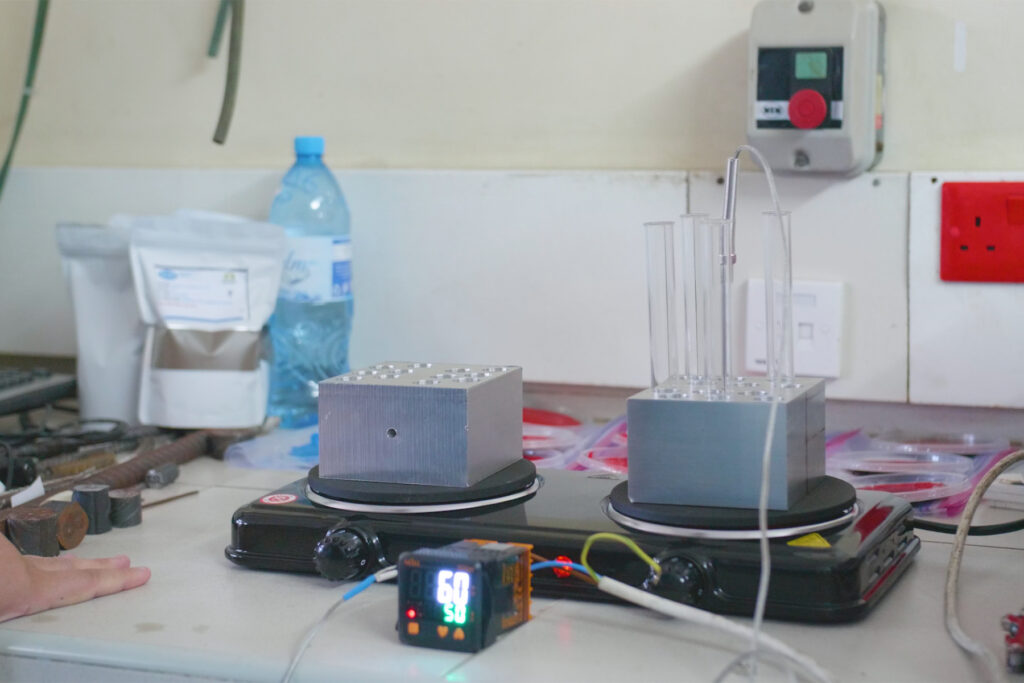
In addition, students created two inexpensive prototypes of a machine that can digest paint samples. Each prototype can digest 12 paint samples. The microwave digester at KEBS has limited capacity, causing long turnaround times, Kiefer said. While machines exist that can handle larger quantities, they are often expensive, he said.
Nikoletta Levasova, EGR ’29, was in charge of designing the prototypes based on an old scientific paper that Kiefer found. A mechanical engineering major, she generated documents using computer-aided design and went into Nairobi with other students to find the resources to build the prototypes and a machine shop to assemble them.
“I felt like I was doing something important for the country, but I also felt like the country was doing something important for me and helping me to learn. And that hospitality improved my skills as a person and my empathy as a person,” she said.
Under the guidance of Buerck, also director of Mercer’s Cecil Day Family Center for International Groundwater Innovation, students also tested water in Nairobi for lead. They designed the study, identified locations to get samples, decided what sampling procedure to use, and ran the analysis, which found no concerning levels of lead, Buerck said.
Ashtar said Mercer On Mission has made him a better scientist.
“Prior to any Mercer On Mission trip, I had no research experience, no experience out in the field, and it kind of helped me prepare myself for anything research related,” he said. “Also (I learned) how to handle myself and conduct myself in situations where I’m interacting with people from different cultures. It was a great experience.”
Katie Volz, CLAS ’26, contributed to this report.