Finalists named from College of Liberal Arts and Sciences, School of Law, College of Pharmacy and College of Professional Advancement
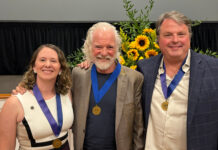
Dr. Philip McCreanor, professor and chair of environmental and civil engineering and director of the engineering track of the University Honors Program, is this year’s recipient of the Joe and Jean Hendricks Excellence in Teaching Award, which was presented at Mercer University’s Macon commencement on May 11.
The annual Hendricks Award recognizes a full-time teacher who best exemplifies the qualities that distinguished siblings Dr. Joseph “Papa Joe” Hendricks and Dr. Jean Hendricks as teachers and mentors to generations of Mercer students. These include challenging and inspiring teaching in and out of the classroom; actively engaging students in the process of learning, discovery and leadership; and providing caring mentorship to motivate students and junior faculty to achieve their highest aspirations.
“Dr. McCreanor exemplifies — consistently and authentically — the qualities that defined Joe and Jean Hendricks as transformative teachers and mentors,” School of Engineering Dean Dr. Laura Lackey said. “He enlarges student impact through transformative, high-engagement learning experiences that begin in the first year and extend well beyond graduation. He expands Mercer’s academic enterprise through interdisciplinary collaboration, externally funded scholarship, and nationally visible service-research initiatives.
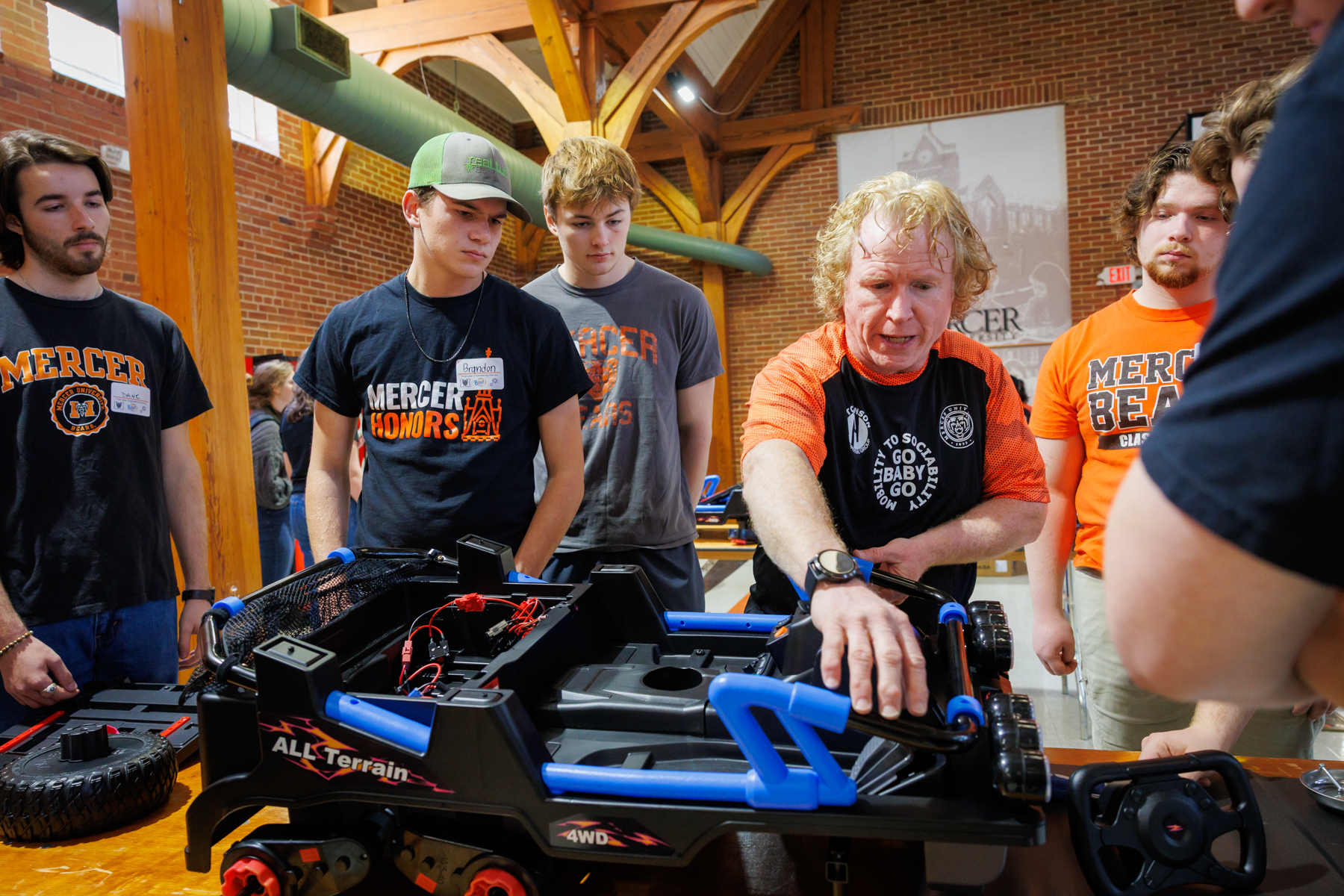
“And through programs such as Go Baby Go and his community-engaged research partnerships, he helps tell Mercer’s story in the most authentic way possible — through the tangible difference our students make in the lives of others.”
Under Dr. McCreanor’s leadership, Go Baby Go has provided more than 200 mobility solutions for children with disabilities. Students participating in the program learn not only the engineering skills needed to design and modify vehicles but also ethics and empathy.
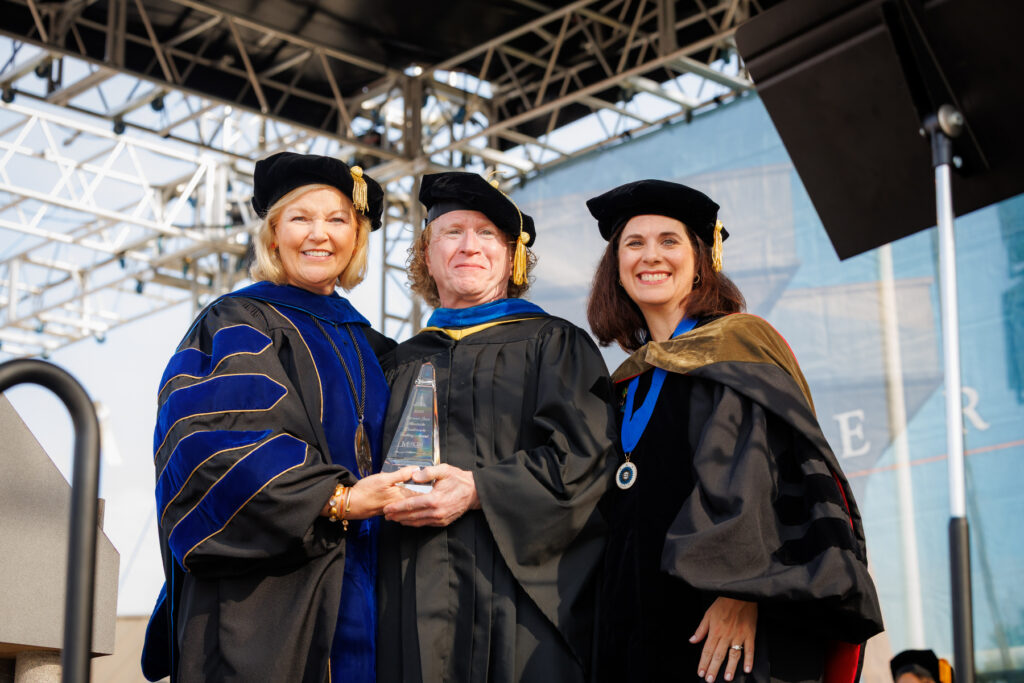
Dr. McCreanor has a three-pronged teaching philosophy: concept, practice and reflection.
“Students need to be presented with the concept, and then they need to practice the concept, and then they need to reflect on the concept,” he said. “The concepts can be delivered either through a reading assignment, an online lesson or a classroom lecture. But then, the students need to engage with that material. When you hear a faculty explain it, it all seems logical, but they have to sit down and make it logical for themselves.”
Dr. McCreanor noticed most students didn’t look at their homework after receiving it back with a grade, so he started making online assignments that were automatically graded, gave the correct answers and showed students common mistakes. Students then could redo the work and turn it in by hand with a statement about what they did wrong to receive full credit.
“That helps keep students moving along,” he said. “With engineering, you’re building students up with foundations — the first floor, the second floor. If they haven’t built a good foundation, the next concept isn’t going to take well.”
Practical projects also are important in giving students a comprehensive understanding of the material.
“We need to pick projects for students to work on that are going to challenge them but at the same time they’re likely to be successful on,” Dr. McCreanor said.
In his hydrology course, students design curb inlets, storm sewers and retention ponds based on precipitation data and prediction models. He emphasizes to students the importance of being able to check computer models with hand calculations.
“It’s critical to check yourself all the way along. Because if you make a mistake on your precipitation calculations or rainfall, everything downstream is wrong,” he said.
Jonas Lang, a Class of 2025 engineering graduate, said Dr. McCreanor challenges students to take responsibility for their learning and invests deeply in students as individuals.
“He pushes students to wrestle with complex problems before offering support. He expects persistence and independent thinking, yet he is patient and accessible, ensuring every student genuinely understands the material,” Lang said. “His courses are the ones I retained most clearly because he teaches for lasting comprehension rather than short-term performance.”
Dr. McCreanor earned his Ph.D. in environmental engineering and Master of Science in environmental science from the University of Central Florida and his Bachelor of Science in Engineering from the University of Miami.
He said he is humbled and honored to receive the Hendricks Award. He recalled reading about Dr. Joseph Hendricks in the book “The Stem of Jesse” by Will D. Campbell and found him to be courageous and forward-thinking.
“It has really made me think about what my next steps are to continue to be impactful in honor of Papa Joe Hendricks’ legacy,” he said.
As a recipient of the Joe and Jean Hendricks Excellence in Teaching Award, Dr. McCreanor will receive a $5,000 stipend. In giving the award, Mercer also remembers the two legendary siblings for their dedication to students and their ability to engage students in transformative learning and discovery.
Dr. Joseph Hendricks, a 1955 graduate of the College of Liberal Arts and Sciences, earned his Ph.D. from Emory University and taught for 32 years in the freshman seminar program, which he and his sister were instrumental in creating. He also founded the interdisciplinary studies department and taught for years in the religion department, both in the College of Liberal Arts and Sciences.
Dr. Jean Hendricks, a 1942 graduate of Tift College, earned her Ph.D. from Florida State University, served as chair of the psychology department in the College of Liberal Arts and Sciences, and was the beloved dean of the College of Arts and Sciences in Atlanta.
Hendricks Excellence in Teaching Award finalists
Dr. Keegan Greenier is a professor of psychology in the College of Liberal Arts and Sciences. He just completed his 30th year at Mercer and teaches introduction to psychology, social psychology, tests and measurement, group dynamics, and research methods and statistics II.
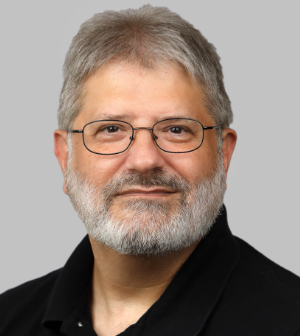
Dr. Greenier’s teaching philosophy is to be clear, organized and fair. His classes challenge and inspire students, and he takes the time to ensure they understand the course material. He has overseen more than 50 student research projects in recent years, and each semester he has students participate in his own research on schadenfreude — the pleasure people sometimes feel in response to the misfortunes of others. As a mentor, students find him approachable, which helps him build strong and trusting relationships.
He earned his Ph.D. in social psychology and Master of Science in psychology from the University of Georgia and his Bachelor of Science in psychology from Clarkson University in New York.
Ishaq Kundawala is a professor of law and Southeastern Bankruptcy Law Institute and W. Homer Drake Jr. Endowed Chair in the School of Law. He joined the faculty in 2021 and teaches bankruptcy law, contracts I and II, secured transactions and legal ethics.
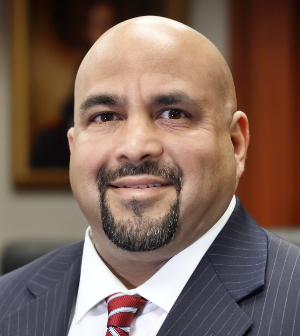
In the classroom, Kundawala uses a range of instructional strategies including the Socratic method, which promotes closer reading and engaged conversation; simulations and drafting exercises; and courtroom observations. Outside the classroom, he advises four law student organizations and engages students with the community through his award-winning Consumer Bankruptcy Externship Program. Mercer is the only law school in Georgia to have such a program. Through the program, students work directly with low-income clients under the supervision of an attorney, gaining practice-ready skills while helping expand access to legal services in the community.
He received his Juris Doctor from Tulane Law School in New Orleans and Bachelor of Arts in business administration from Austin College in Texas.
Susan W. Miller is a professor in the College of Pharmacy. She joined the faculty in 1979 and teaches integrated patient care I, ethics, geriatric pharmacy and pediatric pharmacy.
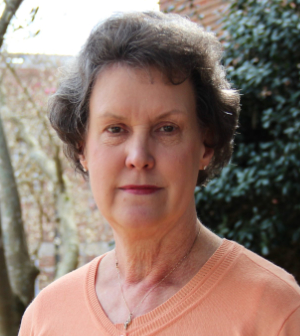
Miller is a transformative educator who consistently challenges students to move beyond memorization toward clinical reasoning, professional identity formation and accountability for patient outcomes. Her learner-centered teaching includes simulation-based learning, structured debriefing, case-based discussion and reflective practice. Outside the classroom, she engages students through the College of Pharmacy’s Professional Development Network, where she has served as a longstanding faculty advisor, helping students connect learning to leadership, service and professional growth.
A Double Bear, Miller earned both her Doctor of Pharmacy and Bachelor of Science in pharmacy from Mercer University.
Dr. Karen Rowland is a professor of counseling in the College of Professional Advancement. She joined the faculty in 2008 and teaches a range of courses in the master’s and Ph.D. counseling programs, including counseling skills and techniques, introduction to school counseling, theories of family counseling, counseling supervision, and crisis, trauma and grief counseling.
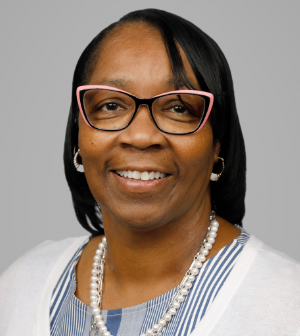
Dr. Rowland asks students to consider school counseling as both an art and science. She not only teaches students counseling theory but also how to think critically, creatively and ethically. In the classroom, students learn through case studies, role play, discussion, lecture, video and data-driven evaluations. Outside the classroom, Dr. Rowland mentors students as they conduct research and present at conferences. A leader in her profession, she has been recognized as Georgia Counselor Educator of the Year and has responded to calls from schools for assistance in crisis situations.
She earned her Ph.D. in counselor education from the University of South Carolina and her Master of Education in counselor education and Bachelor of Science in elementary education from the University of Maine.