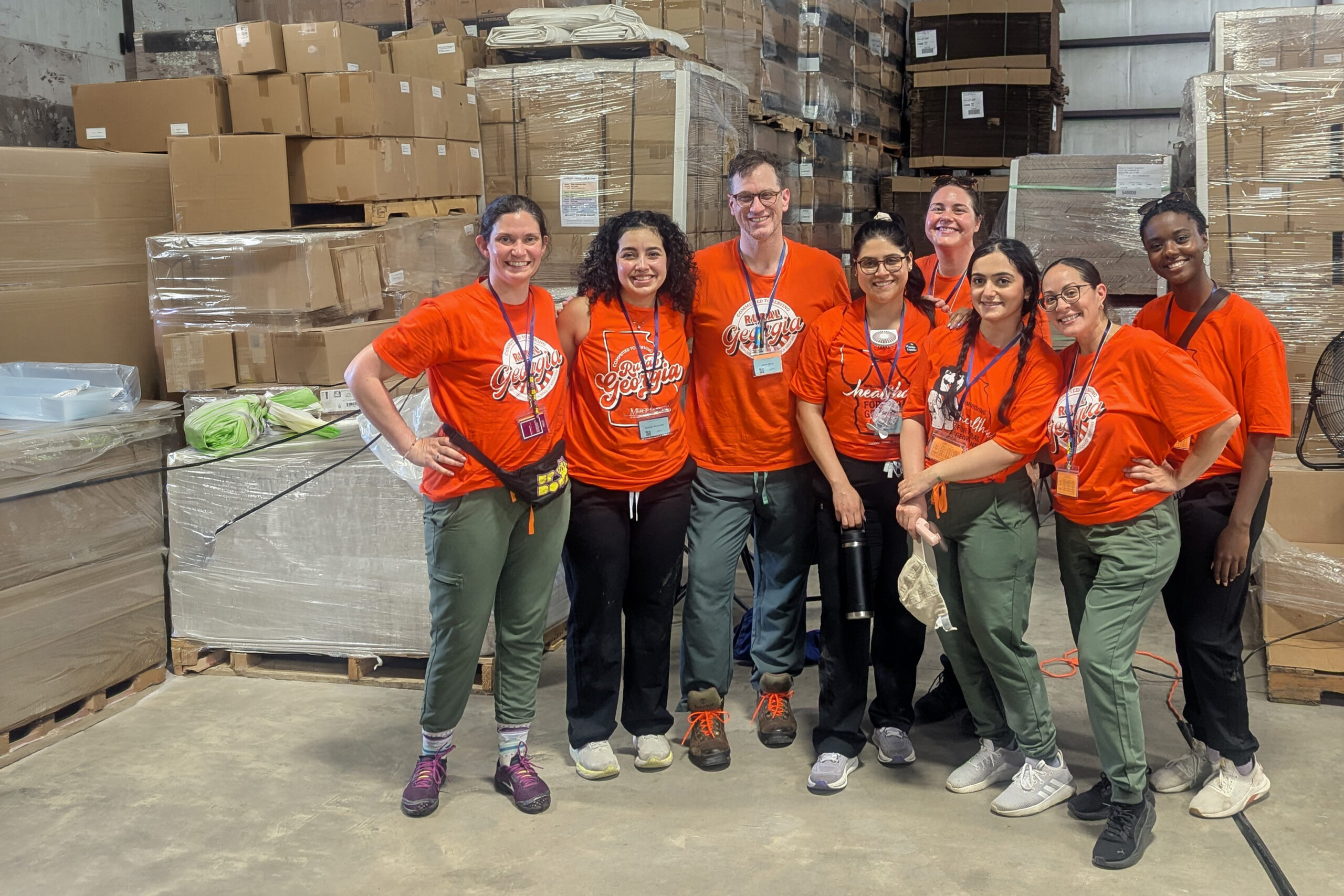
Earlier this summer, Mercer University School of Medicine (MUSM) faculty and Master of Family Therapy (MFT) students participated in the Georgia Farmworker Family Health Program, a service-learning initiative providing free preventative and episodic healthcare to migrant farmworkers and their children in rural Southwest Georgia.
The program prepares future healthcare professionals to deliver high-quality, culturally sensitive care by bringing together students from nursing, pharmacy, physical therapy, dental hygiene and other health professions across the state. Family therapy was the program’s only behavioral health discipline, giving Mercer MFT students the opportunity to help integrate mental and emotional health into an interdisciplinary model of care.
During the program, Mercer MFT students stepped beyond the traditional classroom to meet migrant farmworker families where they live, work and learn. They engaged children through play-based behavioral health screenings at a local elementary school. In the evenings, MFT students joined mobile clinics on area farms, where they offered behavioral health consultations, education, brief supportive interventions and connections to community resources to help those facing stress, anxiety, trauma, family separation and other challenges.
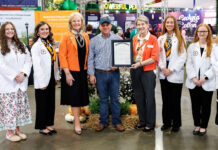
Four Master of Family Therapy students represented MUSM in the program. They were accompanied by faculty members Kimberly Roth, Ph.D.; Janine Chalk-Wilayto, Ph.D.; Adam Albrite, Ph.D.; and Jetlexis Carlos, Ph.D.
For family therapy student Madison Benavidez, the experience revealed the often unseen emotional realities of migrant farmworkers.
“Many leave their families behind to provide for their loved ones. Learning about their experiences highlighted the importance of providing access to mental health, especially given the isolation that these farmworkers often feel,” said Benavidez.
For the MUSM faculty team, the experience reinforced the importance of bringing services directly into communities where barriers to care often exist.
“Behavioral health services belong wherever people need care,” said Albrite. “MUSM’s mission calls us to prepare health professionals who will transform healthcare in rural Georgia. Whether providing care for children in a school or adults after a long day in the fields, we meet every patient where they are with integrity, compassion and hope.”
Equally impactful was the opportunity for students to learn from one another. Throughout the program, they participated in guided reflection sessions with peers, faculty and interpreters, discussing patient care, collaborating on treatment approaches and gaining a deeper understanding of how each profession contributes to comprehensive, patient-centered care.
“The magic of this opportunity is seeing students from different disciplines come together to achieve a common goal,” said Roth. “Research shows that interdisciplinary, collaborative care leads to the best patient outcomes, yet it’s difficult to recreate that experience in the classroom. I love watching students’ perspectives shift throughout this experience as they have ‘aha moments’ that deepen their understanding. They begin to see not only how their scope of practice intersects, but also how understanding one another’s perspectives leads to integrated care that truly honors the whole person.”
For Roth and Chalk-Wilayto, the experience was the latest step in a yearslong effort to improve the mental and behavioral health of Georgia farmworkers. In 2023, they received a Telehealth Equity Catalyst Award from the American Association of Medical Colleges (AAMC) to promote interprofessional learning across three Mercer health profession programs. The initiative culminated in an on-farm pop-up health clinic where farmworkers received mental and physical health screenings, educational resources and the opportunity to speak with a marriage and family therapy student.
Building on that work, the team has continued to expand its outreach and strengthen partnerships to better serve Georgia’s farmworker communities.
“There are a lot of great people doing great work across the state,” Roth reflected. “We want to bring awareness to the mental and behavioral health needs of this essential yet underserved population. Seeing our Mercer family therapy students thrive in this setting was extremely rewarding.”
Now in its 33rd year, the Georgia Farmworker Family Health Program has served thousands of migrant and seasonal farmworkers and continues to prepare future health professionals through immersive, community-based education. For MUSM students, the week reinforced that quality healthcare extends beyond treating illness — it begins with listening, building relationships and serving communities with dignity and respect.