Mercer University School of Medicine (MUSM) has been awarded the fifth annual Collaborative Cancer Research Seed Grant of $100,000 gifted by Georgia CORE (Center for Oncology Research and Education) to advance research aimed at improving treatment for one of the most aggressive forms of endometrial cancer.
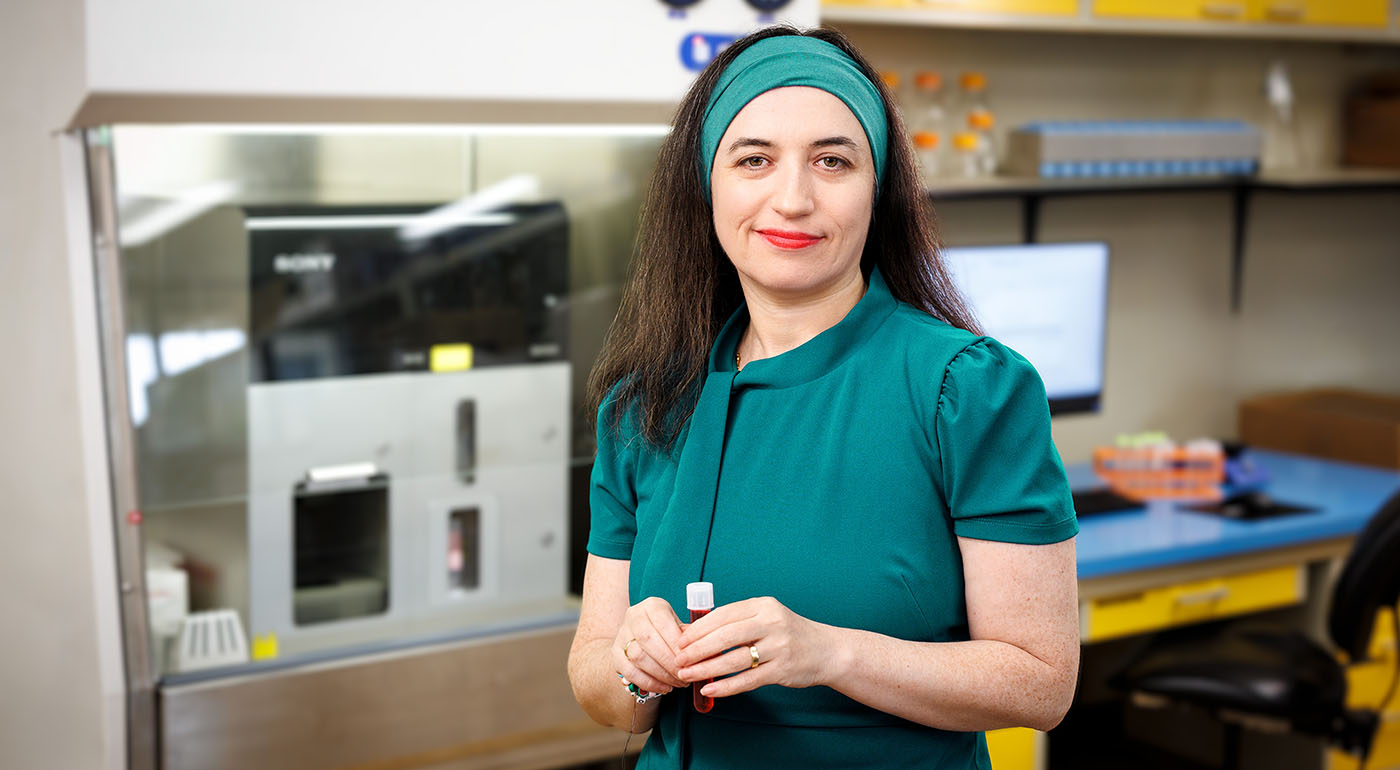
This grant will support a research project led by Ilana Chefetz Menaker, Ph.D., associate professor of biomedical sciences at Mercer University School of Medicine, in collaboration with co-investigators Regina Leonis, M.D., and Roland Matthews, M.D., gynecologic oncologists at Morehouse School of Medicine.
Their project, Characterization of CSC Population and Response to ALDH Inhibitors in Uterine Serous Cancer, seeks to identify new treatment strategies for uterine serous carcinoma (USC), a rare but highly aggressive subtype of endometrial cancer. Although serous endometrial cancer accounts for a relatively small percentage of endometrial cancer cases, accounting for about 10% of all diagnosed endometrial cancer, it is responsible for a disproportionate number of deaths from the disease. It has a particularly significant impact on minority women.
Endometrial cancer continues to show a troubling rise in both incidence and mortality rates, making it a leading cause of death among gynecologic cancers in the United States. The growing incidence is particularly concerning among minority women, with Black women facing a mortality rate twice as high as other populations. Despite recent advances in treatment options, including targeted therapies and immunotherapies, the ongoing increase in mortality rates underscores a critical gap in effective treatments. This emphasizes the urgent need for innovative approaches to better address the unique challenges of endometrial cancer.
“Uterine serous carcinoma is an aggressive subtype of endometrial cancer that is frequently diagnosed at an advanced stage, particularly in patients from rural areas who don’t have the same access to healthcare,” said Dr. Chefetz Menaker. “This work could lead to more effective treatments and help reduce the disparities in mortality rates.”
The impact of this research lies in its potential to identify new therapeutic strategies that could significantly improve survival outcomes for women by targeting the mechanisms that contribute to the aggressive nature of endometrial cancer, especially in chemoresistant cases. This project will utilize cancer cells derived from a patient’s tumor to identify personalized targeted therapies tailored to that individual’s disease. If successful, these findings could not only benefit endometrial cancer patients but also contribute broadly to the development of novel therapeutics for other gynecologic cancers.
The Collaborative Cancer Research Seed Grant supports innovative projects involving researchers from two or more Georgia institutions. By encouraging collaboration across the state’s research community, the program helps generate the preliminary data needed to compete for larger federal and national research grants while accelerating discoveries that may improve cancer prevention, diagnosis and treatment.
Awarded annually, the grant is made possible through the Georgia Cancer Research Fund, which is supported by Georgia taxpayers who choose to contribute through their state income tax returns. The fund is administered by Georgia CORE and provides seed funding for collaborative cancer research projects involving multiple institutions across Georgia.
For Mercer University School of Medicine, the award reflects its ongoing commitment to advancing biomedical research and partnering with institutions across the state to address pressing health challenges. By combining Mercer’s laboratory expertise with Morehouse’s clinical experience in gynecologic oncology, the research team hopes to lay the groundwork for new therapies that could improve outcomes for women diagnosed with uterine serous carcinoma.