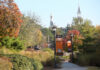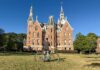
For decades, a historic house on College Street in Macon welcomed family and neighbors with open arms. Now a part of Mercer’s campus, the home’s legacy of warmth and community has continued as the location for the University’s Counseling and Psychological Services (CAPS).
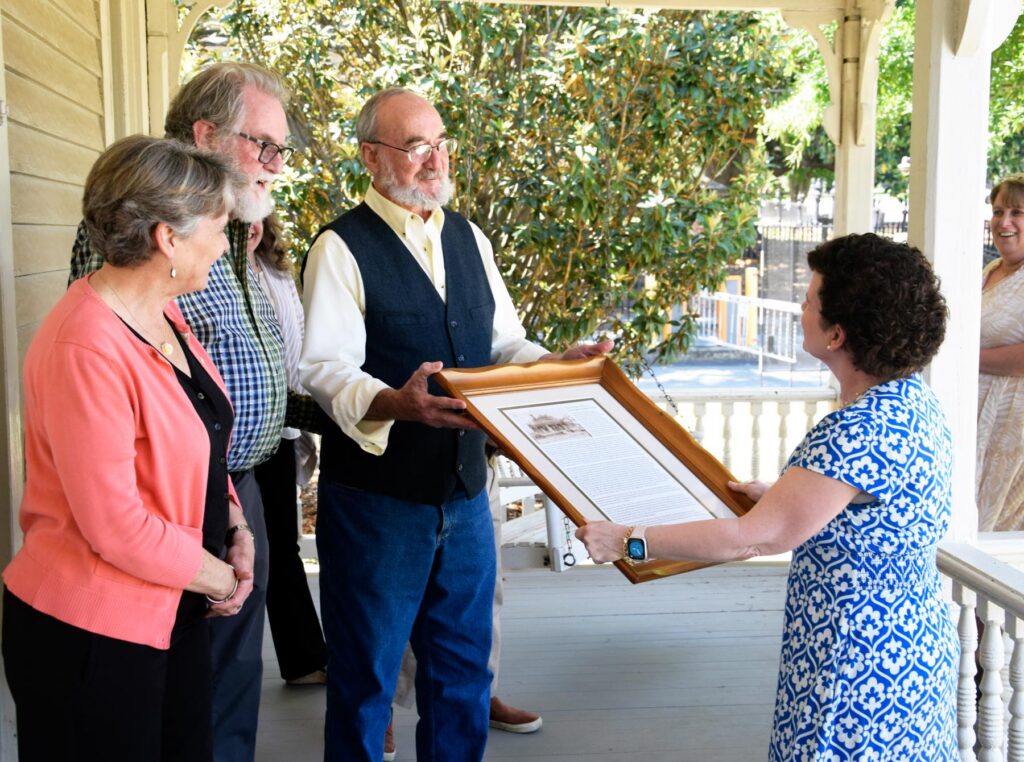
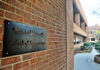
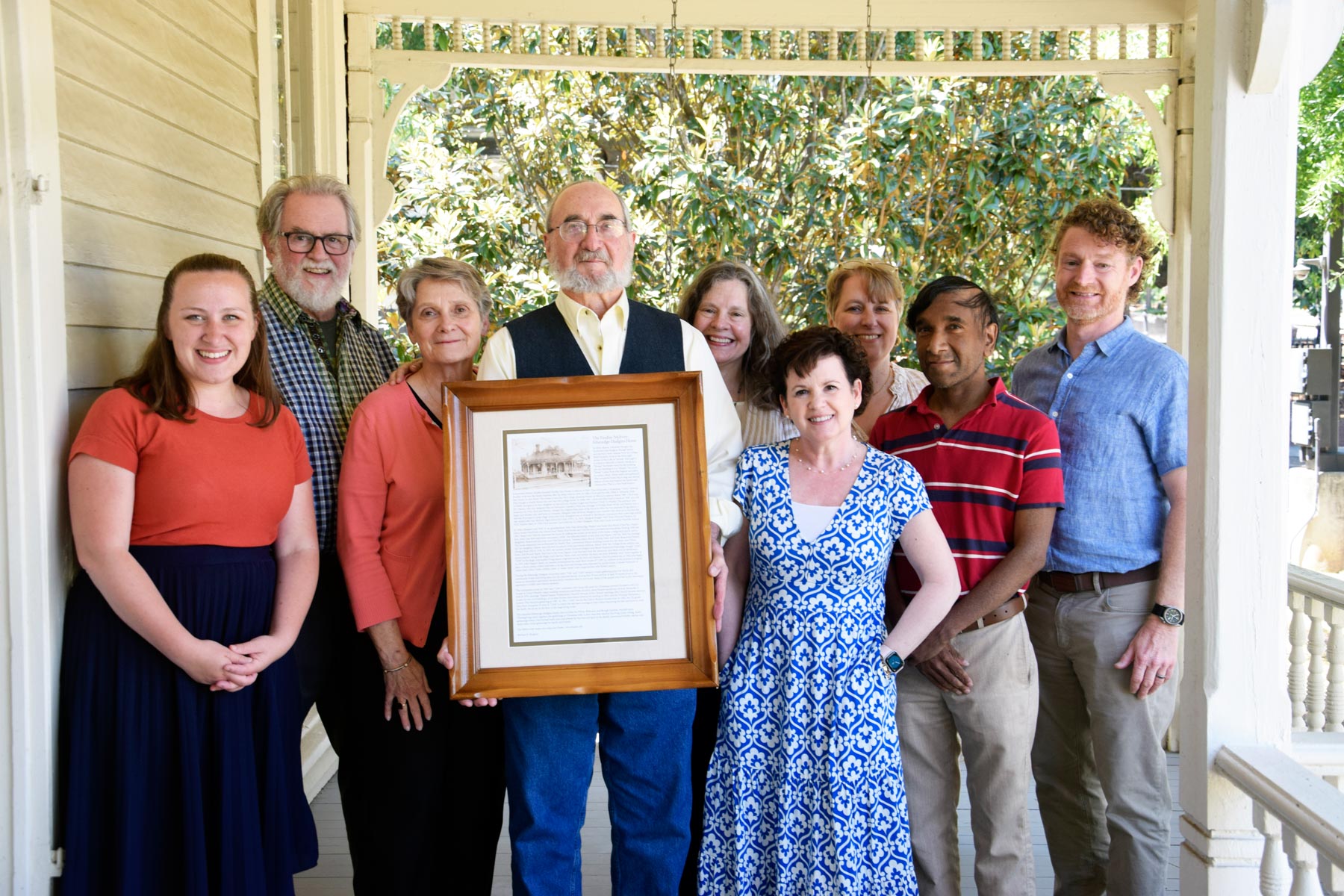
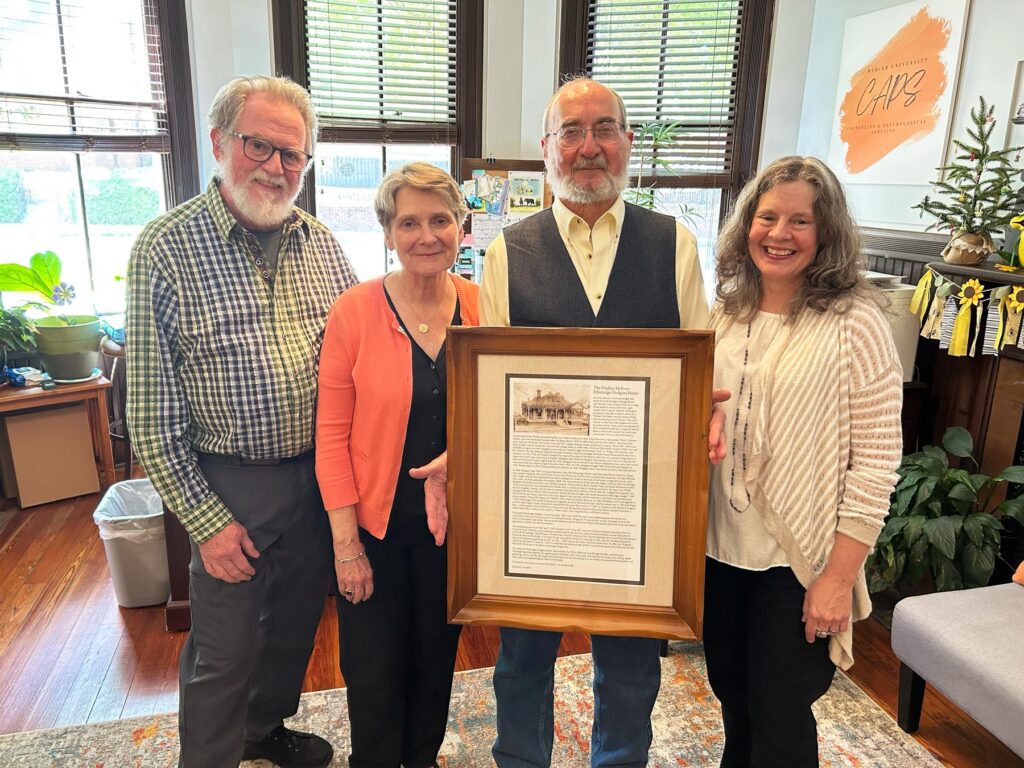
On May 13, siblings Dr. Michael and Rebekah Hudgins presented CAPS staff with a plaque detailing the history of their childhood home. It will be displayed in the entry hallway, a reminder of the beloved building’s past and its journey to Mercer.
“We’re excited to be able to share it and have some of the history documented in the house, and we are really appreciative to Mercer for saving and taking care of it,” Rebekah said.
Michael, a retired biologist and professor who has lived near Montgomery, Alabama, since 1983, and Rebekah, an anthropologist/epidemiologist who has lived in the Atlanta area since the mid-1980s, grew up hearing stories about the origins of their Macon family home. For the plaque project, they verified those details using family records, including National Register of Historic Places paperwork their mother started before she died, and online newspaper databases, Michael said.
“We both learned some new things about the house,” Rebekah said. “My mother was always really interested in the house’s history. She was a member of the Macon Historical Society and met with them several times about the house.”
According to their research, Christopher DeSwan Findlay, whose family owned Findlay Iron Works, and wife Ellen A. Edwards built their home — also now located on the Mercer campus as the Tift College Alumnae House — on Ash Street in 1880. A decade later, they constructed another house at 926 College St. — the address number was later changed to 1256 — for their son Richard “Dick” Findlay and daughter-in-law Pauline Logan. It cost $2,000, and the architect was P.E. Dennis, who also designed Riverside Cemetery and Centenary United Methodist Church.
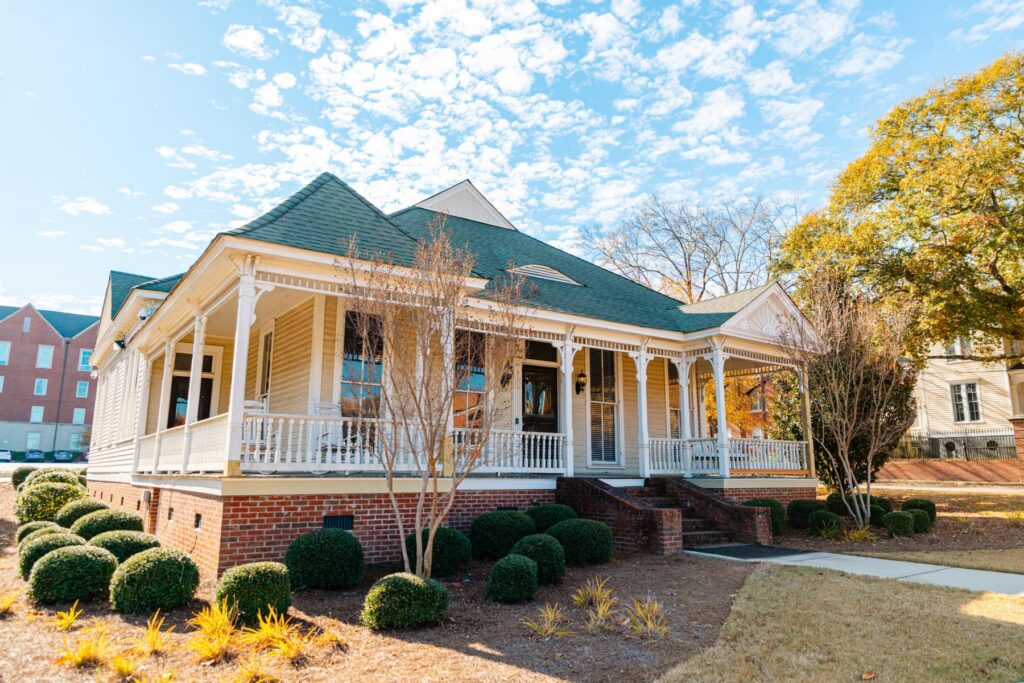
In 1910, Dick and Pauline renovated the home so there were two separate living spaces and took in a boarder, Margaret Julia McEvoy, a beloved teacher who later became principal of Lanier High School for Girls. Margaret bought the home from them in 1923 and sold it to John Olen Etheredge and Jessie Mae Burch in 1940. The couple added two rooms to the back of the house, a large back porch and a downstairs apartment.
John and Jessie continued to live in the home after selling it in 1955 to their daughter Bertie Rosamond Etheredge and son-in-law Robert Richard Hudgins, who had three children (Michael, Rebekah and Richard, who died in 2019). After John and Jessie passed, Rosamond and Robert returned the main floor rooms to their original floor plan. Many extended family members lived in the house over the years, and the home was a regular gathering place for both family and community events.
“I have a lot of fond memories,” Rebekah said. “The rooms were so large, and it was just a very unique, very different house. One of my sweetest memories is … when I was a small girl, my mother would always pick out the dress I was going to wear that day, and she would hang it on a coat hanger by the (heater) vent to warm it up. So when I got up out of my very cold room, my clothes that I put on would be warm. The fact that she did that always said a lot about her.”
Michael said their father was stationed in Augusta and overseas for extended periods of time for his work with the Army Signal Corps, so he spent a lot of time with his grandfather, John, as a child.
“My grandfather was quite good with his hands in a number of ways. I became his assistant,” Michael said. “I grew up repairing and taking care of that house along with him.”
Rosamond and Robert lived out the remainder of their lives in that house, and in 2010, Mercer bought it from their family, Michael said.
“My mother and my father loved that house,” Rebekah said. “So of course, we were concerned that the house would just be torn down, and we knew it was a special house and wanted it to be preserved. When we got that assurance from Mercer, that just meant everything. I grew up walking around the Mercer campus all the time. That was my playground in a lot of ways.”
In 2013, the house was relocated in its entirety to the corner of campus, making room for the construction of the Lofts at Tattnall. The move was another example of Mercer’s dedication to both community revitalization and the preservation of historic structures. Just two years prior, they relocated three homes they owned on Coleman Avenue for the Lofts at Mercer Village project.
“It took a full day,” Michael said of the relocation of his family home. “It moved across the Centenary United Methodist Church parking lot, across Ash Street and onto campus. Not a single window broke in the process.”
As part of Mercer’s campus, the house began as the Honors Program office and in 2022 became home to CAPS, previously located at the back of Porter Hall. Dr. Emily Piassick, CAPS director, said it had been her dream for CAPS to move into the home.
“It was this old house that had a lot of character,” she said. “It just seemed like a perfect fit for us. It would be a quiet, peaceful place. This house created this warm, calm space that you want for a counseling space. I think it just shows that mental health is a priority on this campus, that we have this building that is totally dedicated to what we do and to the counseling services we provide.
“It’s cool that (the family) wanted to share their history with us. I love this house, and I think everybody who works here loves this house and what it gave us as a counseling center.”