The path to medicine for Caitlyn Carter, a medical student on Mercer University School of Medicine’s Columbus campus, began like many others. She was fascinated by science, enjoyed helping others and looked forward to visits with her pediatrician.
While her dream of becoming a physician is not unusual, her commitment to rural pediatrics was shaped by a series of deeply personal experiences: a teacher who believed in her, a pediatrician who inspired her and a family loss that underscored the consequences of delayed access to care. Together, those experiences gave her a firsthand understanding of the difference a compassionate physician can make — and a clear sense of where she is called to serve.
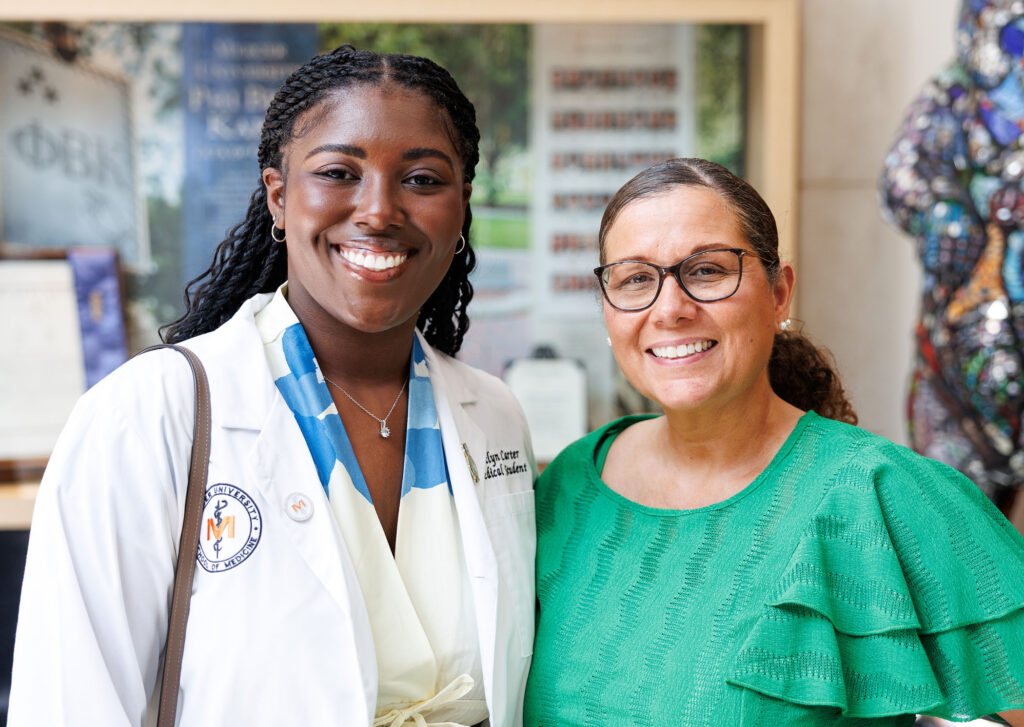
Her journey started on the first day of fifth grade in Amie Law’s classroom.
As part of a class activity, Law asked each student to create a keepsake for their parents that included what they wanted to be when they grew up. For Carter, the answer came easily.
“I want to be a pediatrician,” she said.
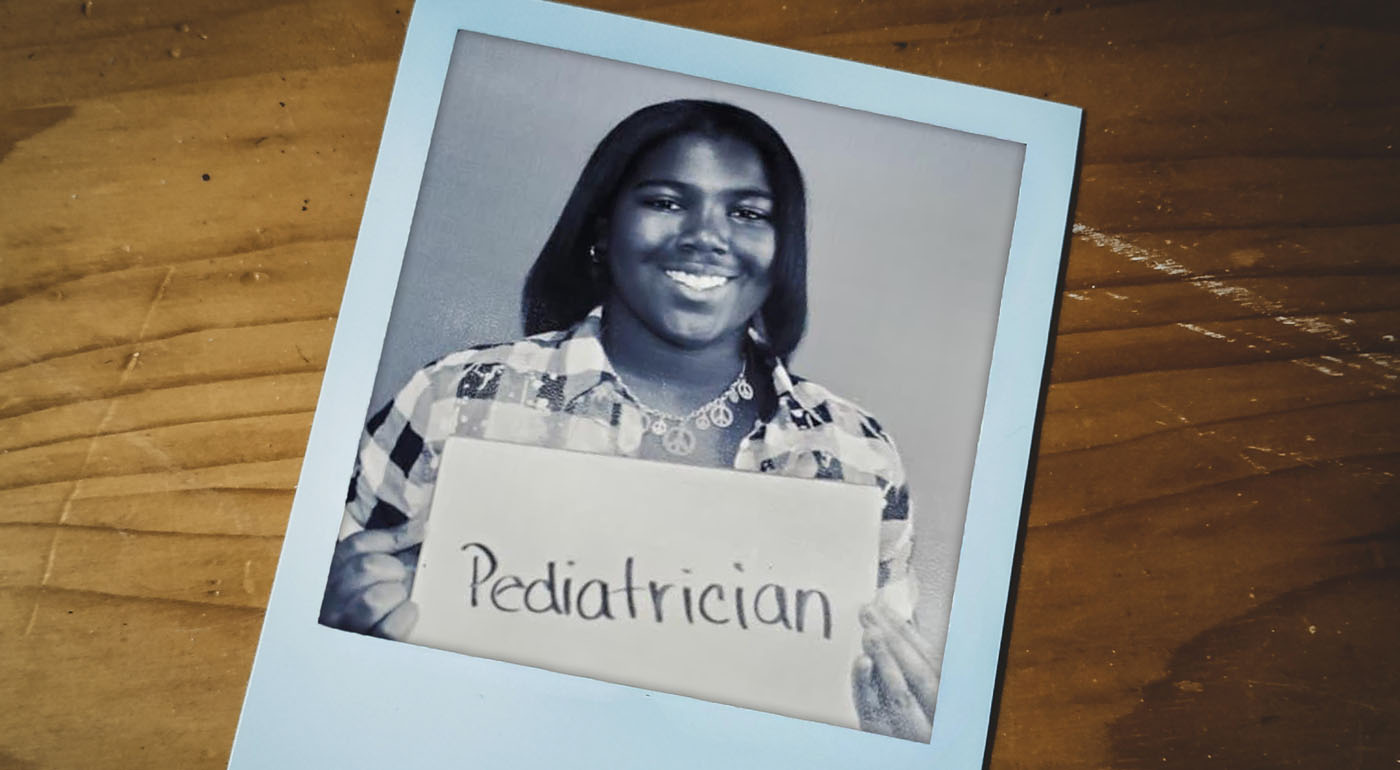
Law photographed each student holding a sheet of paper displaying their dream career. The photos were developed, turned into keepsakes and sent home for parents to save. What the students didn’t know was that Law kept copies for herself.
For Carter, fifth grade was a year she would never forget. Law quickly became one of her favorite teachers, leaving a lasting impression that extended far beyond the classroom.
Many medical students can point to a teacher who first inspired them to dream bigger, work harder or believe in their potential. For Carter, that teacher was Law.
At the time, becoming a physician was only a childhood dream. She had no idea how much work, sacrifice and perseverance it would take to get there. She didn’t even know what medical school was. What she did know was that she loved visiting her pediatrician.
“I remember being fascinated by the exam room, peeking into cabinets while I waited and wondering what medical tools I might discover,” Carter recalled.
Like most children, she appreciated the creative distractions that made vaccinations a little less scary. What stayed with her most wasn’t the office itself, but how her pediatrician made her feel during those visits.
Even as a child, Carter noticed the nurturing way her pediatrician cared for her patients and their families. When she was sick, her pediatrician explained what was happening, answered her parent’s questions and offered reassurance.
Looking back, Carter realizes she wasn’t just fascinated by medicine. She was paying attention to the kind of physician she hoped to become.
“I wanted to be like just her,” she said.
That childhood admiration stayed with her through years of studying, volunteering and working as a medical assistant for a local urologist. When she was accepted to Mercer University School of Medicine — her top choice — she knew she was one step closer to the future she had imagined since fifth grade.
On her very first day of medical school orientation, she received an unexpected message from Law, whose name is now Amie Reed. Attached was the photograph she had taken years earlier: a smiling fifth grader holding a sheet of paper that read “pediatrician.” Nearly a decade later, Carter was reminded that the dream she wrote down as a child was no longer a distant goal. She was finally living it.
Medical school would soon give her a new perspective on why becoming a physician mattered.
Growing up in Valdosta, Carter looked up to her older brother. He was her hero, and in many ways, he still is. As a social worker, he dedicated his career to helping children and families. Known for his compassion, commitment and ability to navigate difficult situations, he often advocated for some of the most vulnerable members of his community. Watching him work taught Carter an important lesson: No matter your profession, serving others matters.
“He showed me what it means to make a difference in someone’s life,” she said.
When Carter was 18 years old, her brother began experiencing severe headaches that would come and go. At their mother’s urging, he scheduled an appointment with his primary care physician. The earliest available appointment was several months away. A month before that appointment, he collapsed and died while out shopping. The loss devastated her family.
Was it a condition that could have been treated? Would earlier access to medical care have changed the outcome? Those are questions Carter’s family may never be able to answer.
The experience forever changed the way Carter viewed healthcare. For the first time, access to care wasn’t something she heard about in a lecture or read about in a textbook. It was personal.
Today, she often thinks about families who face long waits, provider shortages and limited healthcare resources, particularly those living in rural communities.
Her desire to become a physician existed long before losing her brother. But his death reinforced her commitment to ensuring others have access to the care they need, when they need it most.
That commitment aligns closely with Mercer University School of Medicine’s mission to prepare physicians to serve rural medically underserved communities across Georgia.
The need remains significant. Of Georgia’s 120 rural counties, 63 do not have a pediatrician. As a future pediatrician, Carter hopes to help change that.
“Focusing on healthy children means better chances for a healthy adulthood and family,” Carter said. “Healthy families mean healthy communities. Healthy communities mean less chronic disease. We must start with children to solve the complex problems surrounding healthcare in our state.”
While she is a few years away from graduation, Carter plans to eventually go back to South Georgia.
“Valdosta will always be home,” she said. “Being able to someday care for children and families in the region that helped shape me would be especially meaningful. So many people invested in me growing up, and I would love the opportunity to give back to the community that gave me so much.”
Helping students return to rural areas is one reason Mercer invests heavily in rural health scholarships and workforce development programs.
Like many medical students, Carter understands that educational debt can influence where physicians choose to practice. Rural communities often struggle to recruit and retain physicians, and the financial realities of medical school can make practicing in these areas more difficult.
To help address this challenge, Mercer offers several scholarship programs that support students who commit to serving rural Georgia after residency. Programs such as the Nathan Deal Scholarship, Children’s Healthcare of Atlanta Rural Pediatric Scholarship, the Primary Care Accelerated Track Program and the Rural Critical Need Accelerated Track Program help reduce the financial burden of medical school while preparing future physicians in high-need specialties.
Carter is a recipient of the Children’s Healthcare of Atlanta Rural Pediatric Scholarship. As a scholar, she can focus less on the financial burden of medical school and more on preparing for the career she has envisioned since childhood.
“It is not possible to adequately describe the impact this scholarship is making on my medical school journey,” she said. “Mercer and Children’s Healthcare of Atlanta have changed my life, and I am immensely grateful. I will devote my life to caring for children in rural communities and strive to be the kind of pediatrician who makes Georgia proud.”
Years ago, a teacher photographed a fifth grader holding a sheet of paper that read “pediatrician.”
Today, that dream is closer than ever to becoming reality. For the children and families in Georgia communities that need care the most, Carter hopes it is only the beginning.