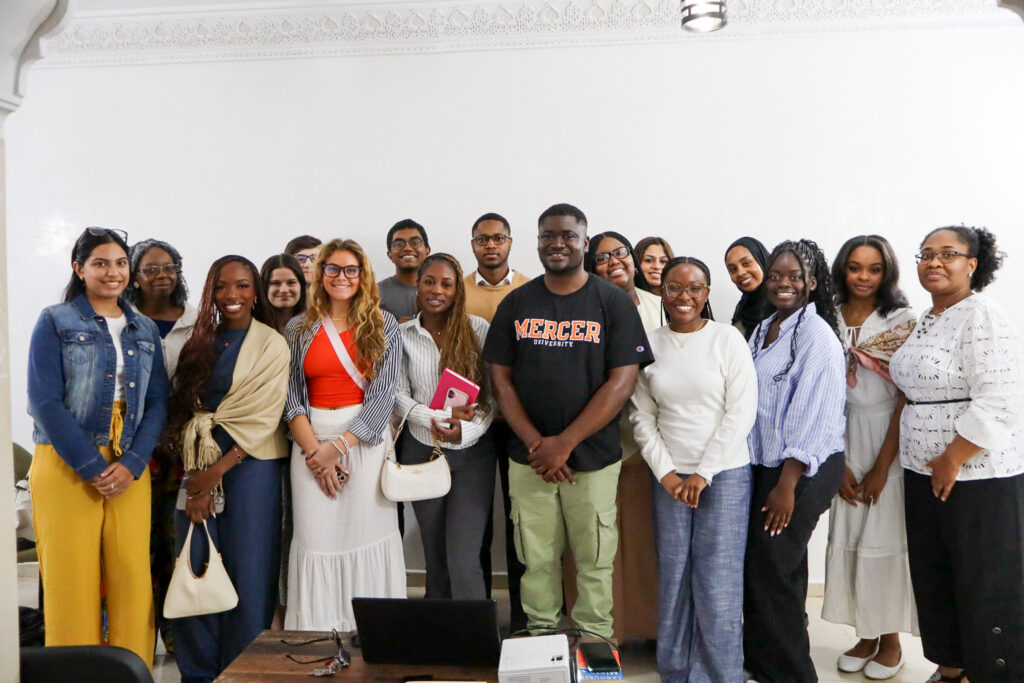
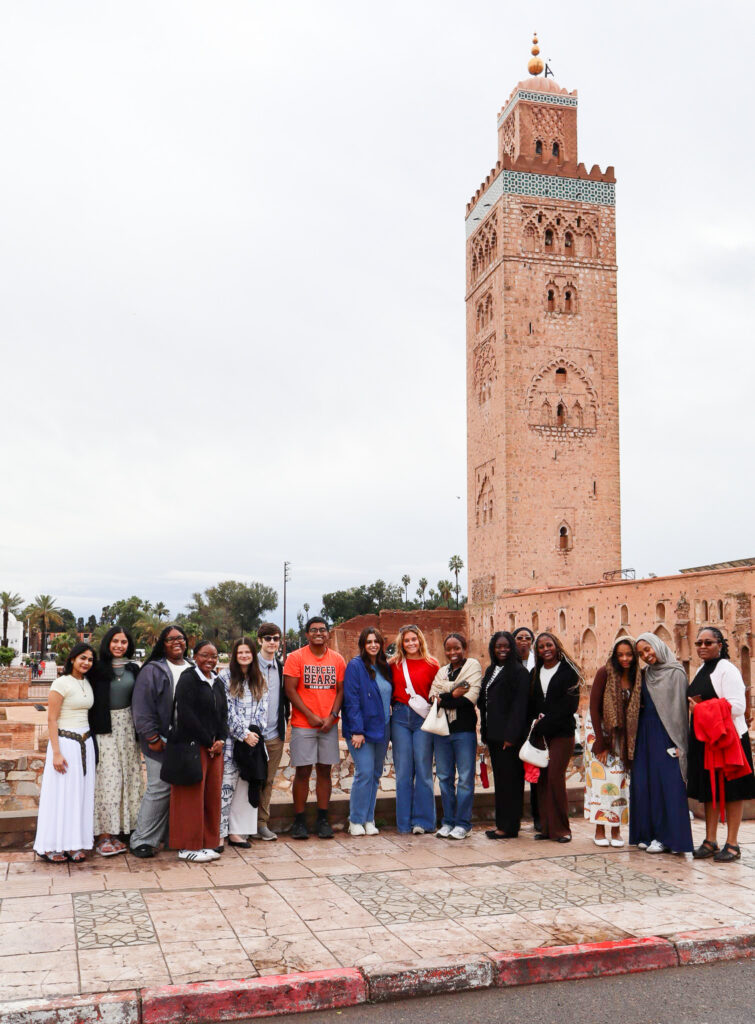
Mercer University students witnessed international approaches to public health intervention during a spring break study abroad experience in Marrakech, Morocco.
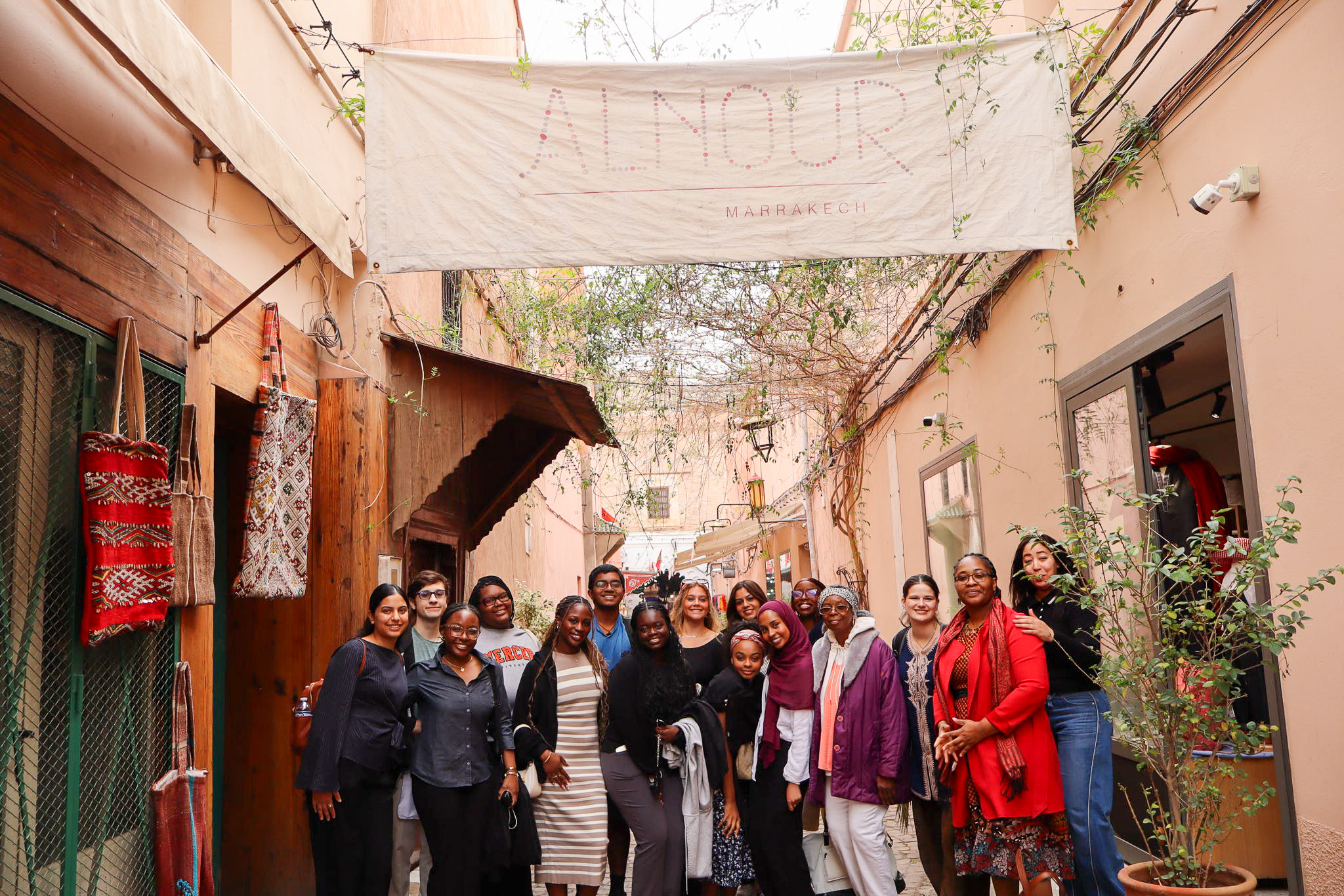
Dr. Chinekwu Obidoa, associate professor of global health studies and Africana studies, and Mary Brown, circulation assistant at Tarver Library, led 14 undergraduates on a trip themed around community-based interventions and cross-cultural learning.
“Studying in Marrakech pushed me to think about public health interventions in ways that went far beyond what I had previously understood in the classroom,” said Damilola Kasumu, a rising senior global health studies major. “Before this experience, many of the ideas we discussed in Global Health Studies 365, such as community-based interventions, social determinants of health, and the unintended consequences of interventions, felt somewhat theoretical. Being able to observe and engage with programs in a different cultural context helped me realize how complex these concepts become when they are applied in real life. I began to understand that health interventions cannot simply be copied and applied everywhere. They must be shaped by the culture, values and everyday realities of the communities they are meant to support.”
Dr. Obidoa first took Mercer students to Marrakech, a major economic center in Morocco that attracts people from all over the world, in 2017. She and five global health studies students attended the Association of Global South Studies conference, which aligned with her course’s focus on understanding the impact of globalization on Africa’s youth.
“That first trip was incredible. It left a mark on me. So when I was looking for another (trip), it was an easy pick,” Dr. Obidoa said.
This year’s participants included majors in global health studies, public health, neuroscience, biochemistry and molecular biology, psychology and biology. The trip was inspired by Dr. Obidoa’s international public health interventions course.
“(When you are) learning how to conceptualize, design and implement health interventions in international settings, immersing yourself in the space where such interventions exist is necessary,” she said. “This class really lent itself to an international exposure and experience.”
Prior to embarking on the trip, the students became familiar with Marrakech and learned about the principles and frameworks needed to design an effective public health intervention, as well as common mistakes and pitfalls.
“I really wanted to get the holistic view of not just caring for patients but also understanding them through public health, how mental health affects that, and how different interventions can affect their health,” said Chelsea Smith, a 2026 psychology graduate who plans to apply to medical school this year. “It depends on their culture, their community, the environment, and how all that comes together to (treat) the patient.”
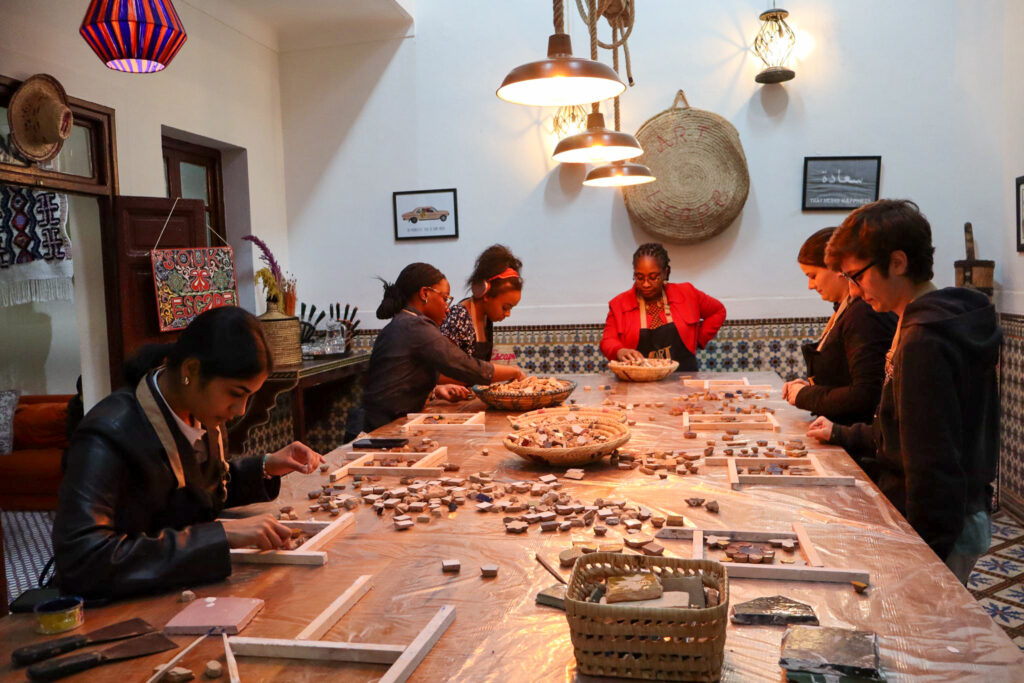
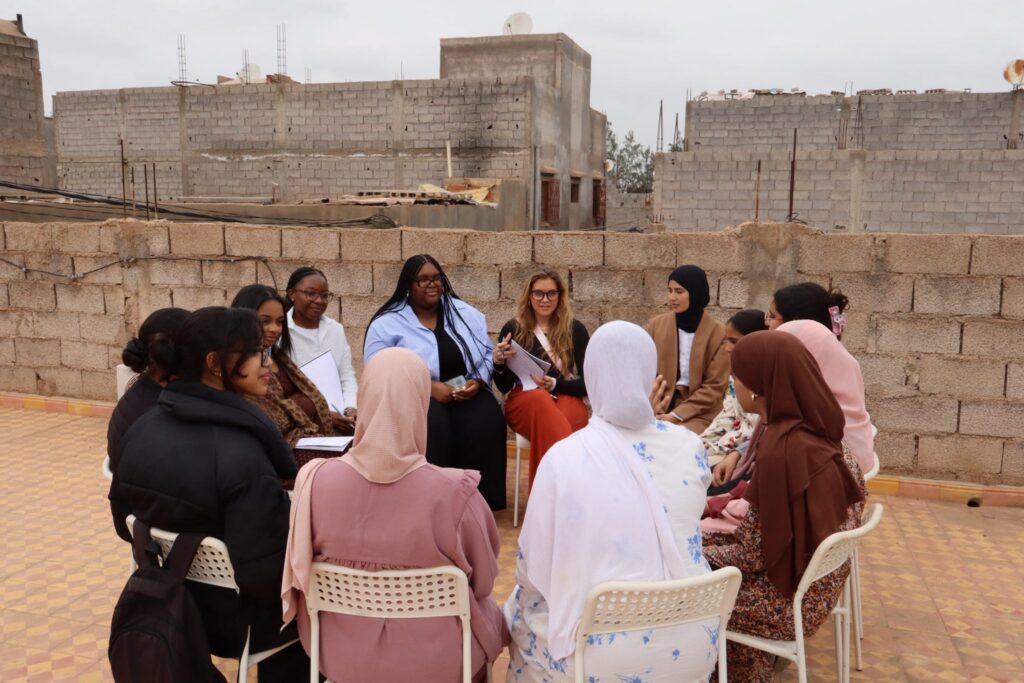
Once in Marrakech, they spent time with staff and clients at a variety of organizations to gain insight into how programs succeed in diverse social and cultural settings. The first stop for the Mercerians was Project Soar, an empowerment program for marginalized adolescent girls.
“We were all blown away with how diverse the activities and how incredibly motivated the students were. You could see that the organization was reaching them,” Dr. Obidoa said.
They also visited Association de Lutte Contre le Sida, the Middle East’s first nongovernmental organization dedicated to HIV prevention; Caritas Marrakech, a refugee support program run by a local Catholic parish; Amal Center, a nonprofit organization that offers professional culinary training for disadvantaged women; and Alnour, a social enterprise that provides training and employment to women with disabilities.
“I really appreciated going (to Association de Lutte Contre le Sida) and seeing how they work with their community,” said rising senior Harry Wolbert, a global health studies major who wants to pursue a career in epidemiology. “They’ve been working in the community for over 30 years, so it was interesting to see how they did trailblaze a lot of HIV interventions. I think just being exposed to a different health system in general was very eye opening. The way Morocco does health intervention is very different from the U.S.”
Smith said the work being done at Alnour especially resonated with her, since she knows firsthand what it’s like to have a family member who is often defined by their disability rather than being seen as a person.
“(Students) encountered interventions that they had never seen or heard about in America,” Dr. Obidoa said. “To say that the trip was life-forming, life-changing is not to exaggerate at all. For some of them, it was their first trip abroad. It was impactful in so many ways.”
In addition, the Mercer group spent time with Dr. Samuel Opoku Gyamfi, who runs a local medical clinic, and learned about his work, patients and the challenges. Smith said Dr. Gyamfi was an inspiring example of how care can be adapted to meet patients’ needs and cultural values.
“One thing I’ve learned with different interventions is you should look at the community as a whole,” Smith said. “As Americans, we think that everything we know is correct, but it’s not. You have to (use your) resources and not be afraid to reach out to the community and ask what they need from you.”
The students also did a cultural tour of Marrakech; went on a camel ride; visited the Marrakech souks, an artisan market area; and participated in an art workshop. They engaged in daily reflection with Dr. Obidoa and journaled every other day.
Dr. Obidoa said the experience was transformational for the students, with some noting that it helped them to become closer with their classmates, shape their future goals, and recognize a desire to pursue careers dedicated to health and helping others.
“It reaffirmed my choice to stay in global health and epidemiology,” Wolbert said. “Getting my toes wet with the kind of health intervention you look at and work with as an epidemiologist, it was nice getting exposed to that. I was able to connect with classmates really well. The study abroad format that we use was very good at building these bonds.”
The experience also made the students reach outside of their comfort zone. For instance, Smith said she is a picky eater but challenged herself to not eat any food during the trip that she could get in the United States. She ended up loving the local cuisine.