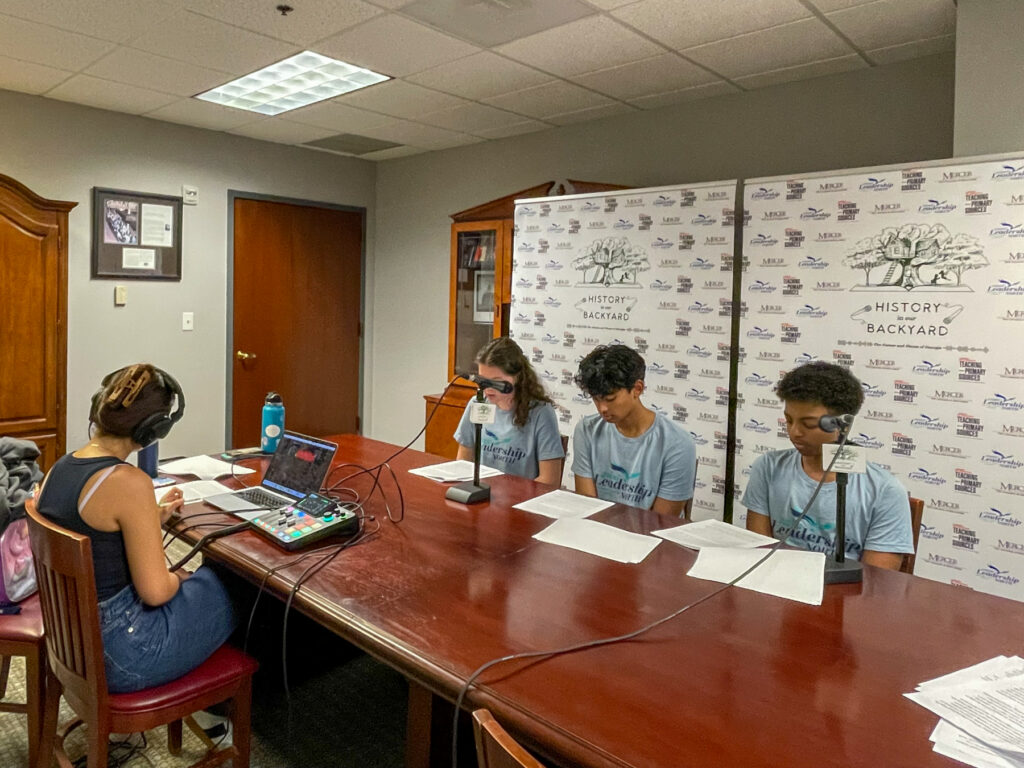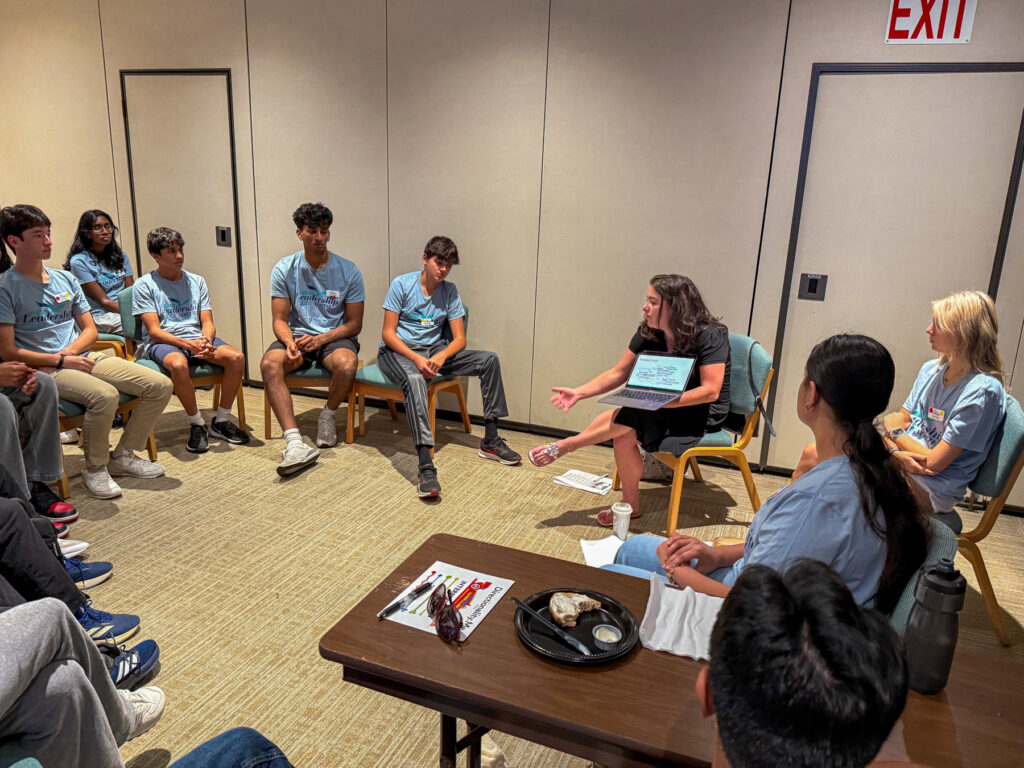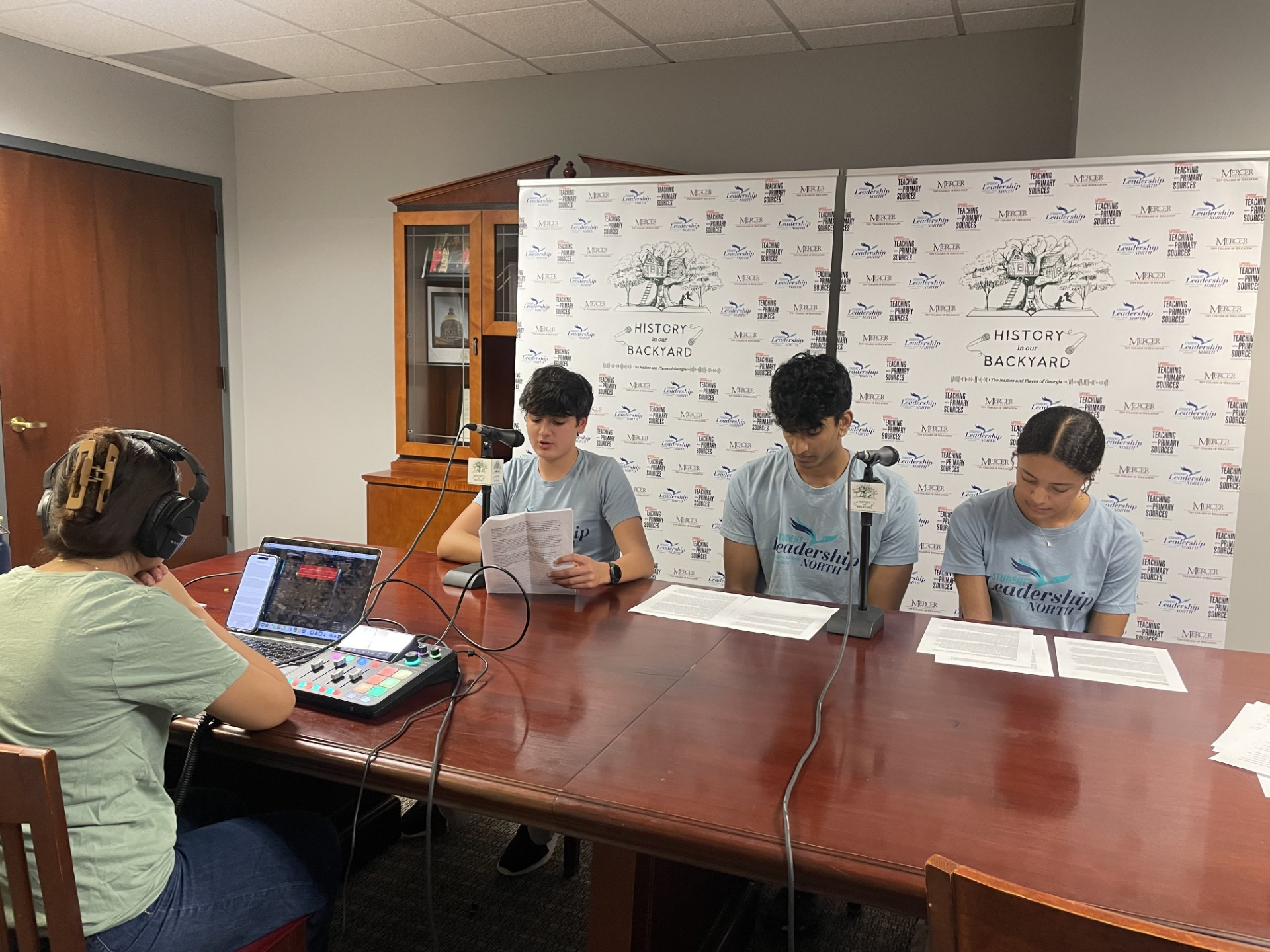
A group of high school students worked alongside Mercer University doctoral students and faculty to produce a podcast on Georgia’s role in the American Revolutionary War.
The podcast, titled History in Our Backyard: The Names of Places in Georgia, was created in collaboration with Dr. Katherine Perrotta, associate professor of middle grades and secondary education in the College of Education, and Student Leadership NORTH, a civic engagement program consisting of high school students in the Johns Creek, Alpharetta and Roswell areas. Funding was provided through a grant from the Library of Congress Teaching with Primary Sources Southern Region Program.
The second season of the podcast, released in March, highlights places that are named after people in Georgia who played a role in the American Revolution, including Button Gwinnett, Baron Johann de Kalb, Nancy Hart, the Battle of Kettle Creek, Fort Pulaski, the Siege of the Port of Savannah and more.
Dr. Perrotta said this season’s theme is even more relevant as America approaches its 250th anniversary.
“It is a once-in-a-generation event, so the students get to have a little part of it and amplify Georgia’s role in the revolution. A lot of times, we focus on the events like the Boston Tea Party, but the war did shift to the South, and Georgia played a role in those later years,” she said.
While conducting research for the podcast, students sorted through primary and secondary source material to find information. Irene Sanders, executive director of Student Leadership NORTH, said the hands-on experience of searching through archives allowed students to engage with history in a personal way.
“Through the research process, students learned to navigate the vast resources of the Library of Congress — a skill they will carry with them into college and well beyond. Perhaps just as valuably, it sparked a genuine curiosity about the world around them; rather than scrolling through their phones on a family car ride, they began asking why places and things are named what they are,” Sanders said. “Most profoundly, students came to see that every historical figure they researched was a real, flawed and imperfect human being — and I believe that realization helped them understand that history is not something that only happened in the distant past, but something that is being made every single day by ordinary people who are not so different from themselves.”
Over several months, Dr. Perotta, her doctoral students and a high school student mentor assisted the high schoolers in researching and scriptwriting. The students learned to continuously edit and refine their writing ahead of the recording process.
Brittny Johnson, doctoral candidate in the School of Business, provided feedback to students and hosted weekly virtual meetings to address questions. Over time, her meetings became a way for students to collaborate with one another and brainstorm how to connect their episodes.
“It was a fun experience, but it was also educational for me as well. I didn’t truly appreciate history until I became an adult,” Johnson said. “Allowing students to take the lead in their research and teach it back to others is a great way for them to make learning fun. Many of them expressed how much they learned in the process and how intrigued they were with their topics and connections to Georgia. It also gives students ownership over their education.”
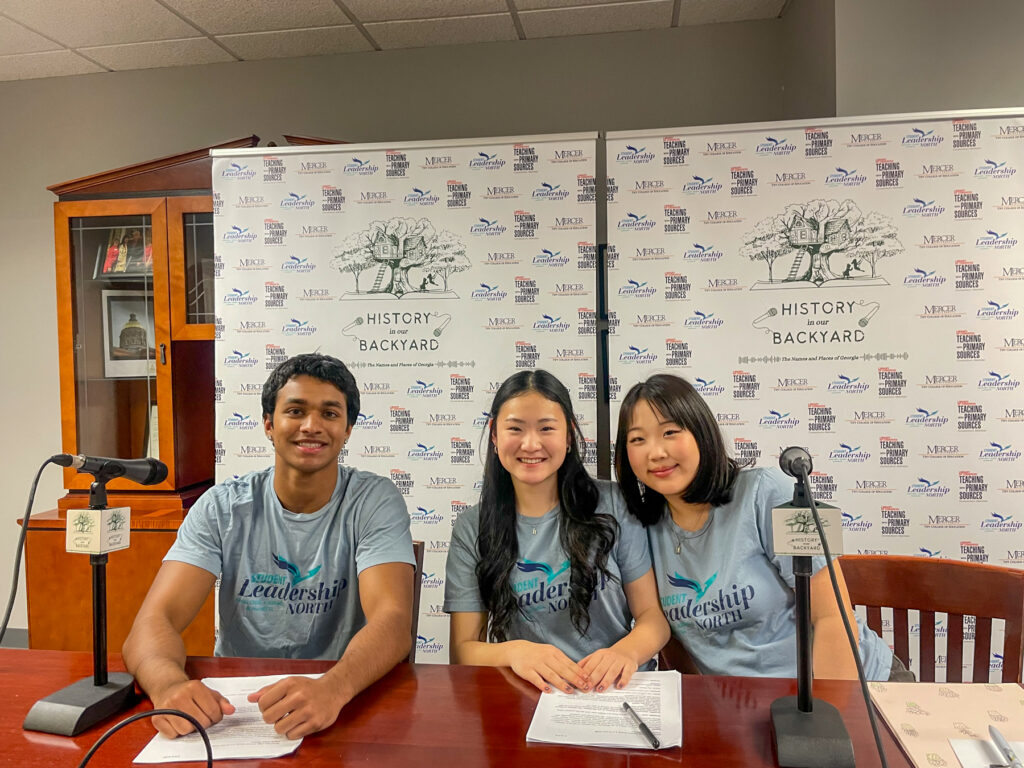
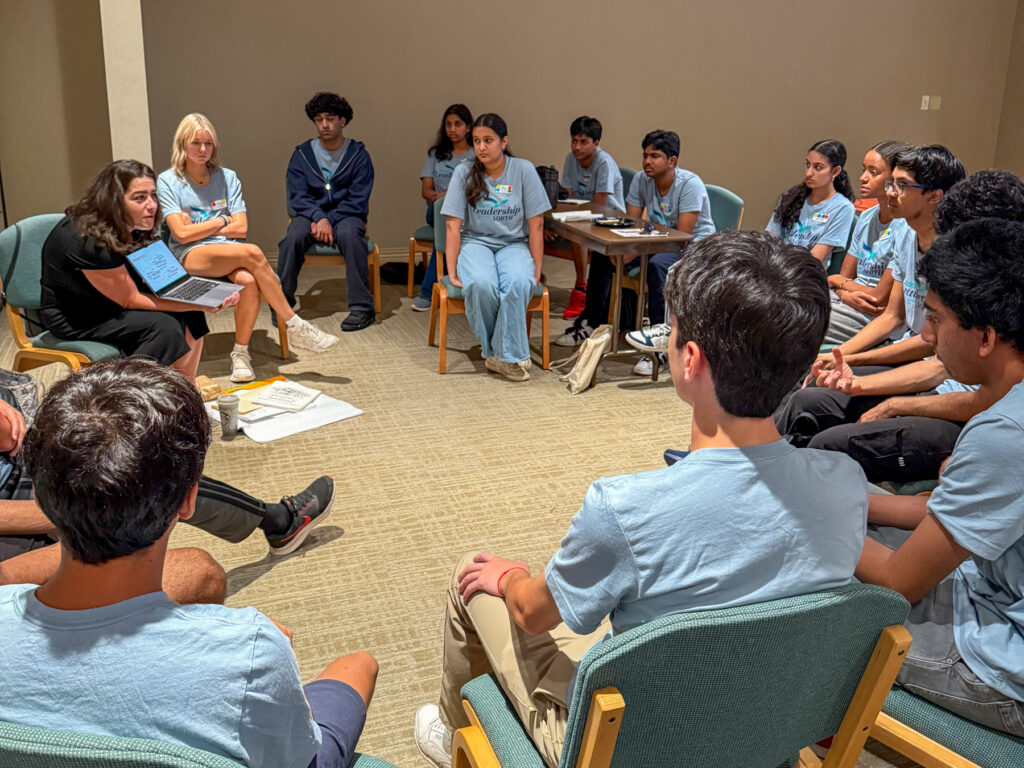
Prinsha Chanda, a junior at Chattahoochee High School, served as the student mentor during the production process. She participated in the first season of History in Our Backyard and returned to assist students in their planning and editing.
“Over time, I saw the different student groups become more detailed in their work. They were analyzing the numerous perspectives available to them and thinking about more than just the facts. I think through the podcast, and maybe this is an overly large term to place on us as high schoolers, the students discovered historical empathy,” she said. “Working on a project like this is unique in that students are forced to dig past the surface and pull out individual voices and opinions. Additionally, getting to think about it as informing people instead of learning for ourselves helps shape how we present the information. We learn how to become teachers and take on the role we’ve never had the chance to experience before.”
Dr. Perrotta said the skills students gained from their experience will be beneficial to them as they become adults.
“History is more than just passively taking on information. It’s very active, and in our daily lives we’re constantly interacting with the past to inform what we do today and in the future,” she said. “A lot of these kids are also taking AP U.S. History, so they take what they are learning in school and they’re able to apply it to a real-world situation. The real-world application is important because they’re learning that the past isn’t just facts and dates, but something that has a significance to their lives.”
Sanders said while some students seemed reluctant to participate at first, all of them grew in their abilities as they continued.
“Over the course of the process, students developed skills that go far beyond history — they learned how to communicate with clarity and confidence, eliminate filler words, and deliver a narrative in a way that truly engages an audience. Watching them grow from hesitant first takes to polished storytellers was an absolute joy, and I could not be prouder of every student and the incredible team that made this project possible,” she said.
Johnson said listeners may become more interested in Georgia’s rich history as they learn from the podcast.
“I hope people can find their own connections to Georgia, especially those who are not from here. This podcast is for those who always wondered where the names we see on street signs, historical buildings and maps come from,” she said. “You are guaranteed to learn some interesting facts and may even be inclined to visit some of the places the students discuss. History is truly in our backyards; we do not have to travel far to find it.”
The History in Our Backyard podcast can be listened to at historyinourbackyard.podbean.com. All episodes of Season 2 are available now.