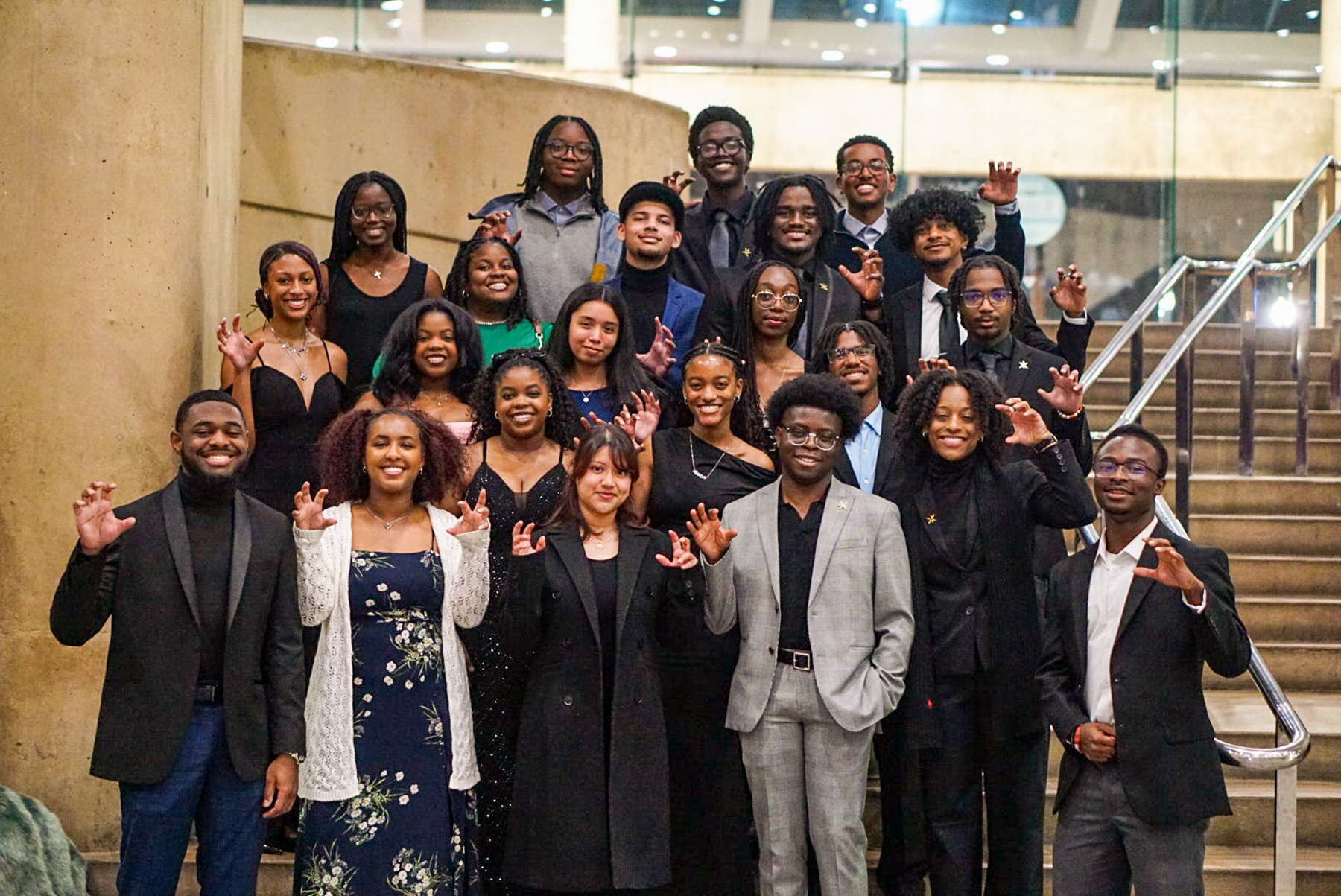
Mercer University senior Caleb Luo-Gardner spent last summer working for GE Aerospace, a global provider of jet and turboprop engines, at its Ohio headquarters. As an engines engineering intern, he worked on a team that researched solutions to make hardware last as long as possible.
“Being able to get a taste of what working at an engineering company such as GE was like was nothing short of amazing,” he said.
Luo-Gardner, a mechanical engineering major, directly attributes his landing of the internship to his attendance at the 2024 National Society of Black Engineers annual convention in Atlanta. There, he met a GE Aerospace recruiter, who was looking for interns for summer 2025.
“I was genuine with the recruiter (about my experience), and I asked for guidance on what I would learn at GE to improve myself and my technical abilities,” he said. “We came back to Mercer, and a week later I got an email that I was chosen for an interview.”
Attending national conventions and conferences accelerates students’ career and professional development by giving them the opportunity to connect with experts and gain insight into their chosen industry, said Kim Meredith, executive director of the Center for Career and Professional Development.
“Big things happen for college students who attend national professional conferences and engage themselves deeply in learning and networking,” she said.
To get the most out of a conference or convention, students should take some time before the event to prepare for the experience. Meredith offered the following tips:
- About a week before the event, study the itinerary and speaker bios. Download the event’s mobile app if one is offered.
- Create your own itinerary, including what you will attend and who you want to meet.
- Prepare physical or digital business cards and be ready to connect with people on LinkedIn.
- Dress professionally each day of the conference.
- On your first day, spend some quiet time in your hotel to make three goals for yourself.
Meredith suggests one goal should be to meaningfully connect with at least two people at the conference.
“When I say connect, I mean a connection on a level that you can follow up,” she said. “You’re leaving that conference with a plan to follow up with that professional with a conversation via phone or teleconferencing.”
Also, make sure not to miss any part of the conference, she said.
“Maximize every opportunity, including the wine and cheese socials, the networking, the lunches,” she said. “I know that people run out their battery, but if it’s at all possible, just consider this as your workday. Maximize every opportunity that the conference presents to you.”
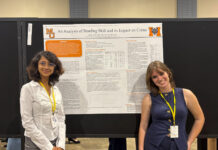
Huy Lam, a senior majoring in neuroscience, attended the 2025 Annual Biomedical Research Conference for Minoritized Scientists in San Antonio. He went to the conference with several goals, including to present his research and to connect with a representative from Stanford Medicine’s Post-Baccalaureate Experience in Research initiative, which he was interested in.
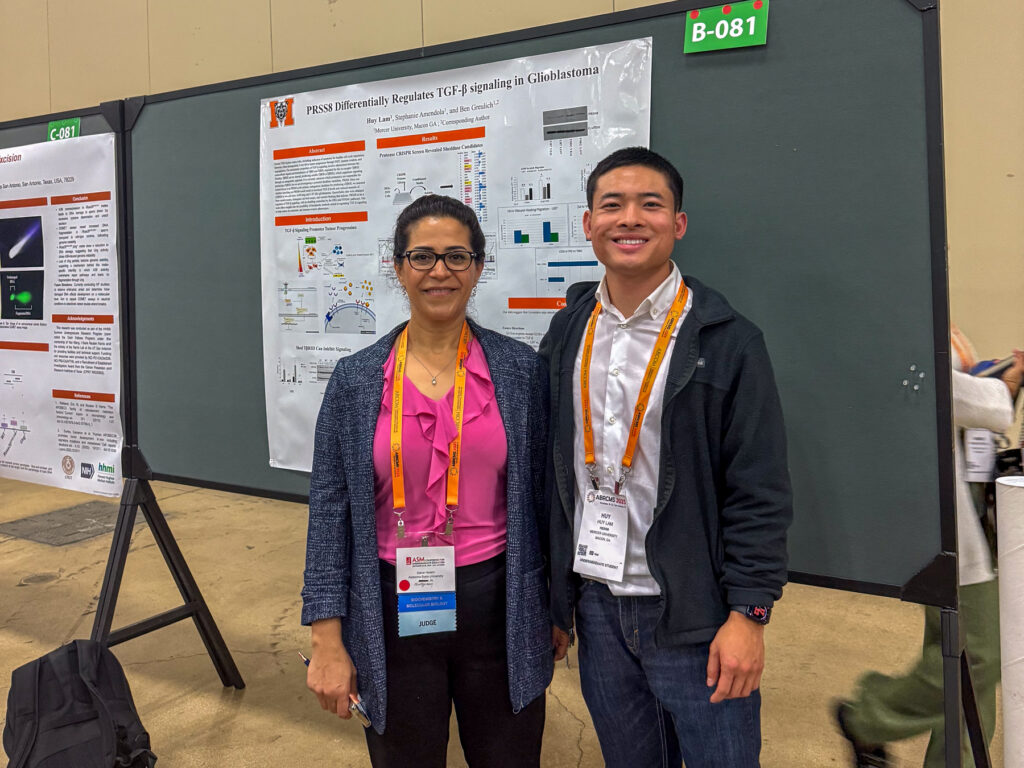
The conference “surpassed every expectation I had,” he said. “Not only was I able to visit Stanford’s booth but many others as well. I was also able to attend multiple presentations on topics I was interested in, discovering new ideas and career prospects.”
Like Meredith, Lam also recommended that students prepare for the conference in advance.
“If I had gone without an outline of the programs and directors and had gone solely to present, I think I would have felt more isolated,” he said. “I think the purpose of conferences is to present one’s research and receive feedback, but they can be far more than what an undergraduate might expect. There were internships, job opportunities and prospects from various institutions — it truly is what you make of it.”
Students who are interested in attending a national conference or convention but don’t know where to start should talk with their professors about potential opportunities and visit the Center for Career and Professional Development for help, Meredith said.
In addition, most national organizations offer a college student membership rate that is greatly reduced. Meredith recommends that students join at least one professional association before graduation. Professors and the career center can help students pick the right one.
Once you’ve chosen a conference to attend, Meredith suggested connecting with the convention association to explore volunteer opportunities as there may be registration discounts available to volunteers. Usually, associations are eager to engage college students in volunteer roles, she said.
“Attending a national convention, whether you’re presenting or simply participating, acts as a career development multiplier by accelerating your exposure to industry trends, expanding your professional network, and helping you translate what you’re learning into real-world opportunities,” Meredith said.
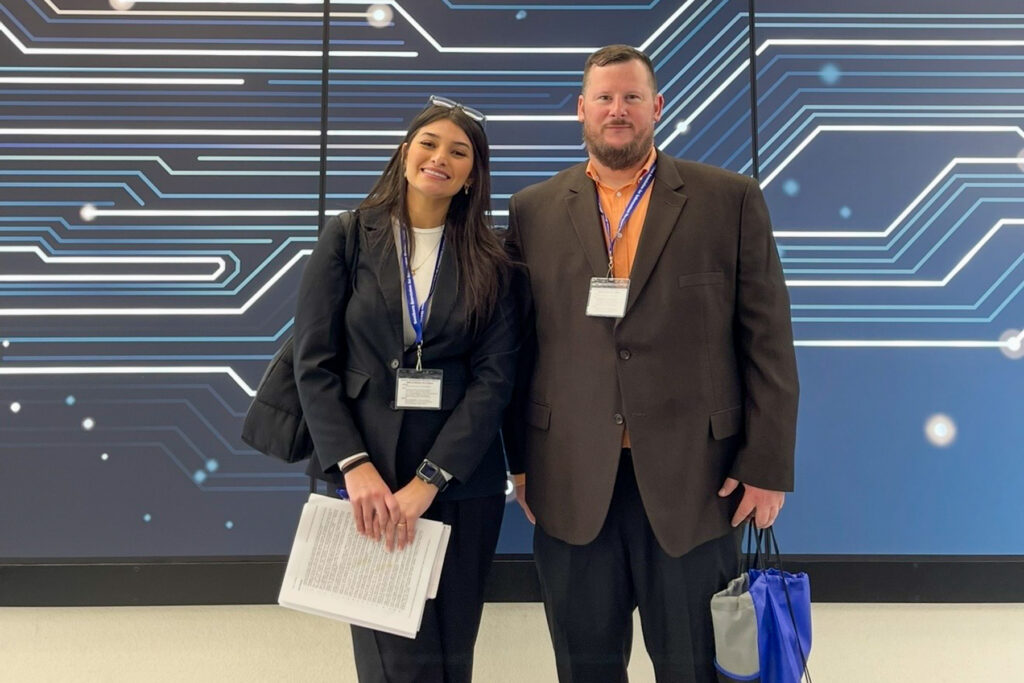
Frida Danson, who graduated from Mercer with a Bachelor of Science in cybersecurity in December 2024, said attending the 2025 Southern Association for Information Systems annual conference in Tampa, Florida, was a valuable learning experience.
“It gave me the opportunity to learn from other researchers and professionals in the field, which broadened my perspective on cybersecurity,” said Danson, who is now a staff cybersecurity specialist at Mercer Engineering Research Center. “It also sparked a deeper passion for the field and motivated me to continue improving my technical knowledge and public speaking skills.”
She added: “My advice to students is to actively engage and make connections. Don’t leave after your own presentation; stay and attend other sessions. Take notes, observe different presentation styles, and think about how you can improve your own skills. Most importantly, ask questions.”