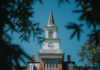
Mercer University has been recognized for being among the best colleges and universities when it comes to fostering student success — from enrolling students reflective of the communities it serves to producing graduates with higher earnings than their peers.
It is among just 12% of nearly 4,000 higher education institutions nationwide to receive the Opportunity Colleges and Universities-Higher Access, Higher Earnings classification as part of the Student Access and Earnings Classification of the Carnegie Classification of Institutions of Higher Education. The Carnegie Classification is the nation’s leading framework for categorizing U.S. higher education institutions.
“Mercer has long been recognized as an institution that opens doors of opportunity for students from all economic backgrounds,” Mercer President Dr. Penny L. Elkins said. “This new classification from the Carnegie Foundation for the Advancement of Teaching and the American Council on Education is further external validation of the value Mercer delivers.”
The Student Access and Earnings Classification — released for the first time in 2025 — examines whether institutions are providing access to a representative student population and how much its graduates earn after entering the job market.
Access was measured by colleges’ enrollment of Pell Grant recipients and students from underrepresented racial and ethnic groups compared to a similar population in their area. A Pell Grant is a need-based form of federal financial aid. Earnings were measured by looking at undergraduate student income eight years after leaving college, compared to a similar population in their area with a high school diploma or higher credential.
Receiving the Opportunity Colleges and Universities-Higher Access, Higher Earnings classification means that Mercer provides higher than expected levels of access to low-income and underrepresented students and its students experience strong earnings outcomes after graduation.
“The fact that Mercer is high on both of these metrics means we are admitting a wide range of students and we have the support structures in place to help all of our students go on to be successful,” said Dr. Troy Nash, director of university assessment.
Data show that 46.3% of Mercer undergraduate students reported identifying as an underrepresented minority, which is similar to Georgia’s demographics. In addition, 35% of undergraduate students receive Pell Grants. Meanwhile, eight years after graduating, Mercer students had median annual earnings of $53,833.
The University has strong support structures in place to help all students succeed. It starts before the first day of a student’s freshman year with the First-Year Experience, a comprehensive program designed to serve as a solid foundation for academic success and personal growth. This includes summer orientation, Opening Days and Bear Beginnings fall orientation, a dedicated group of first-year students led by a peer advisor, the University 101 classroom experience, and academic programs throughout the year.
Mercer also offers comprehensive advising services through the Office of Academic and Advising Services and tutoring and skills development through the Academic Resource Center. The University’s Office of Student Success is additionally committed to helping students thrive in the classroom and beyond.
“All students may struggle at some point, but Mercer does a great job helping all students know where their sources of support are for those times that they do struggle,” Dr. Nash said.
When looking at private colleges and universities with the same Carnegie institutional classification and research activity designation, Mercer is one of only two with the Opportunity Colleges and Universities-Higher Access, Higher Earnings classification. Drill down further, and Mercer is the only university that also offers several impactful graduate and professional degrees, such as Doctor of Medicine, Doctor of Pharmacy and Doctor of Ministry.
“There really is only one Mercer,” Dr. Nash said.