Editor’s Note: The Harry Vaughan Smith Lectures scheduled for Feb. 24-25 have been canceled. The speaker, Judith Weisenfeld, is snowed in and unable to travel to Macon. Organizers hope to reschedule, and new lecture dates will be announced.
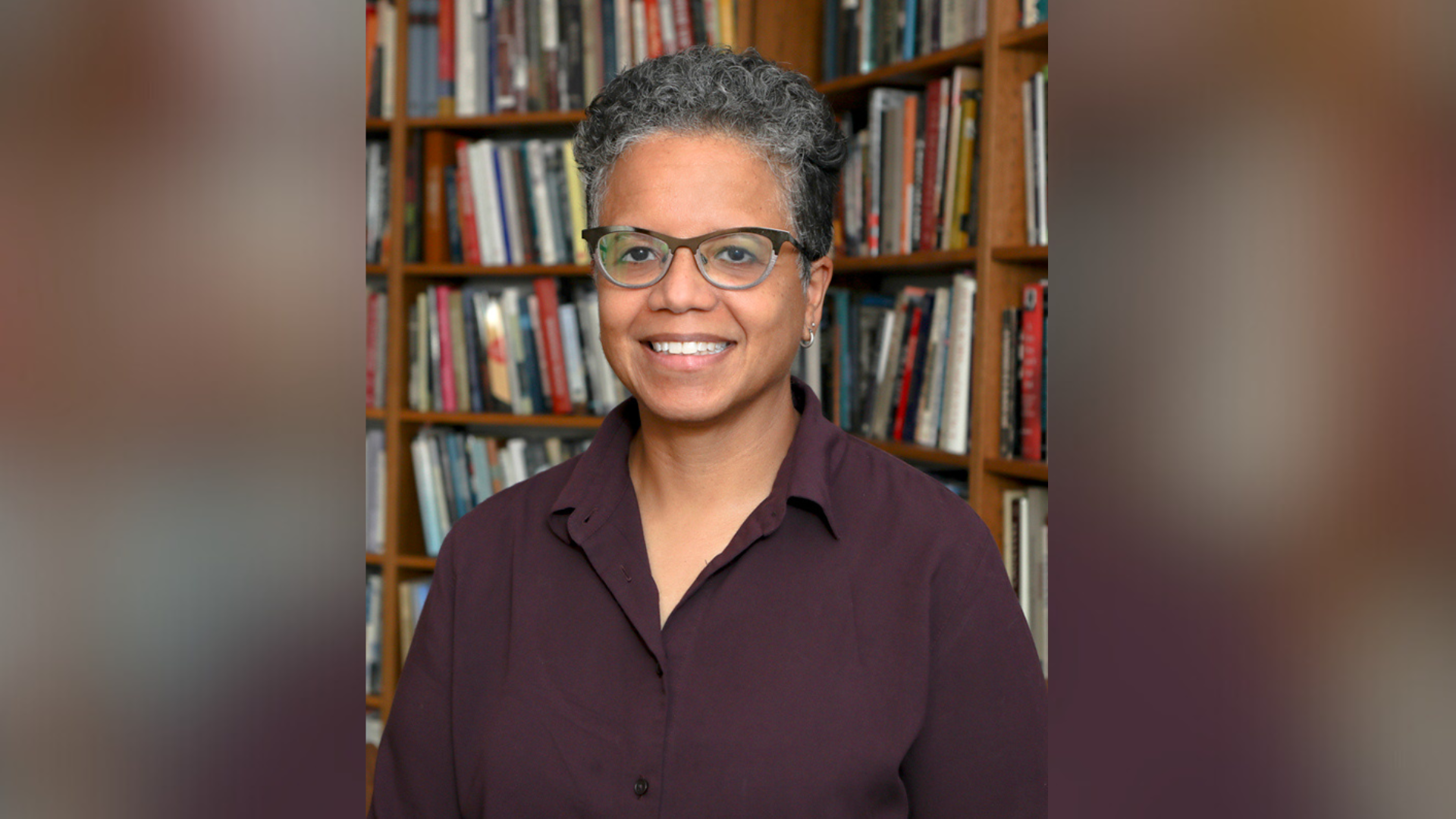
MACON, Ga. — Mercer University will welcome scholar of African American Religious History Judith Weisenfeld to deliver the 33rd annual Harry Vaughan Smith Distinguished Visiting Professor of Religion Lectures Feb. 24-25 in the School of Medicine Auditorium on the Macon campus.
Her lecture series, titled “The Crossroads of Race and Religion in African American History,” will explore how American racialization has shaped aspects of African Americans’ religious experiences and expressions from the late-nineteenth through the mid-twentieth century. It will highlight medicine, politics and popular culture as arenas in which Americans have constructed race and religion in relation to one another and reflect on the crossroads of race and religion in contemporary American life.
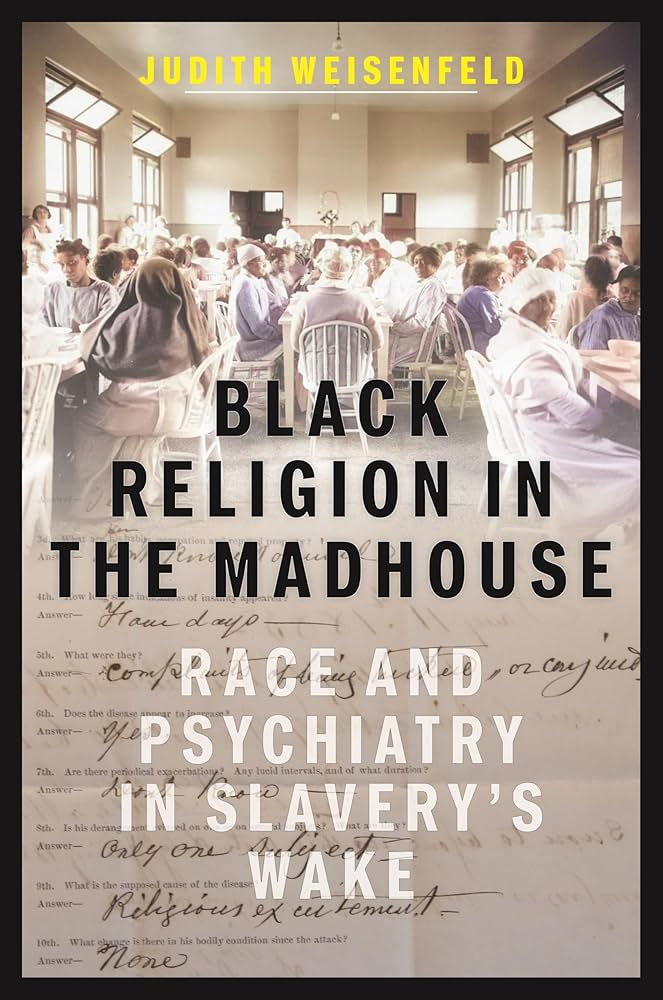
“The lectures dovetail nicely with her latest book, Black Religion in the Madhouse: Race and Psychiatry in Slavery’s Wake, which shows how racialized medical understandings of what constituted a ‘normal’ mind led to the pathologization of Black religion,” said Jason Smith, assistant professor of religion. “Having taught this book in the religion department’s seminar for juniors and seniors in fall 2025, I can attest to the fact that it is required reading for anyone interested in the overlapping histories of race, religion and science.”
Weisenfeld is an Agate Brown and George L. Collord Professor of Religion and chair of the Department of Religion at Princeton University. She is an associate faculty member in the Department of African American Studies, the Department of History and the program in gender and sexuality studies. In addition, she serves on the executive committee of the Effron Center for the Study of America.
She has received the Guggenheim Fellowship, a Ford Foundation Fellowship and fellowships from the Schomburg Center for Research in Black Culture, the National Endowment for the Humanities and the American Council of Learned Societies. In 2019, she was elected a Fellow of the American Academy of Arts and Sciences, was awarded a Doctorate of Humane Letters, Honoris Causa from Meadville Lombard Theological School in 2023, and the Barnard Medal of Distinction from Barnard College in 2025.
Weisenfeld currently directs The Crossroads Project: Black Religious Histories, Communities, and Cultures, which is supported by a grant from the Henry Luce Foundation. Her books include New World A-Coming: Black Religion and Racial Identity during the Great Migration, which won the 2017 Albert J. Raboteau Prize for the Best Book in Africana Religions; Hollywood Be Thy Name: African American Religion in American Film, 1929-1949; and African American Women and Christian Activism: New York’s Black YWCA, 1905-1945.
“Judith Weisenfeld’s scholarship exemplifies the capacious nature of religious studies today, combining sensitive archival research with an interdisciplinary focus that has led to groundbreaking work on Black racial identity, psychiatry, public health, and media and film,” said Smith.
The lecture schedule is:
Tuesday, Feb. 24, 11 a.m.
“Black Freedom and Religious Excitement: Inventing a Public Health Crisis”
Tuesday, Feb. 24, 7:30 p.m
“Apostles of Race: Religion and Black Racial Identity During the Great Migration”
Wednesday, Feb. 25, 10:10 a.m.
“Projecting Blackness: African American Religion in Early Twentieth-Century Film”
The lectures, co-sponsored by the Office of the President and the Columbus Roberts Department of Religion in the College of Liberal Arts and Sciences, are free and open to the public. Limited seating is available.
About The Harry Vaughan Smith Distinguished Visiting Professorship
The Harry Vaughan Smith Distinguished Visiting Professorship was established in 1990 after Dr. and Mrs. Harry Vaughan Smith made a major gift to Mercer to establish a visiting professorship and lecture series in the Department of Religion. The gift bears witness to the lifelong commitment of the late Dr. Smith to the University, which began when he enrolled as a freshman in 1920. A 1924 graduate, Dr. Smith served as pastor of several prominent churches in Georgia before becoming alumni secretary and assistant to the president at Mercer in 1946. From 1955-1970, he distinguished himself as executive director of the Georgia Baptist Foundation. In his many years of service, Dr. Smith was a faithful worker on behalf of all Georgia Baptist causes, but he always maintained a special interest in the University and the cause of Christian higher education.