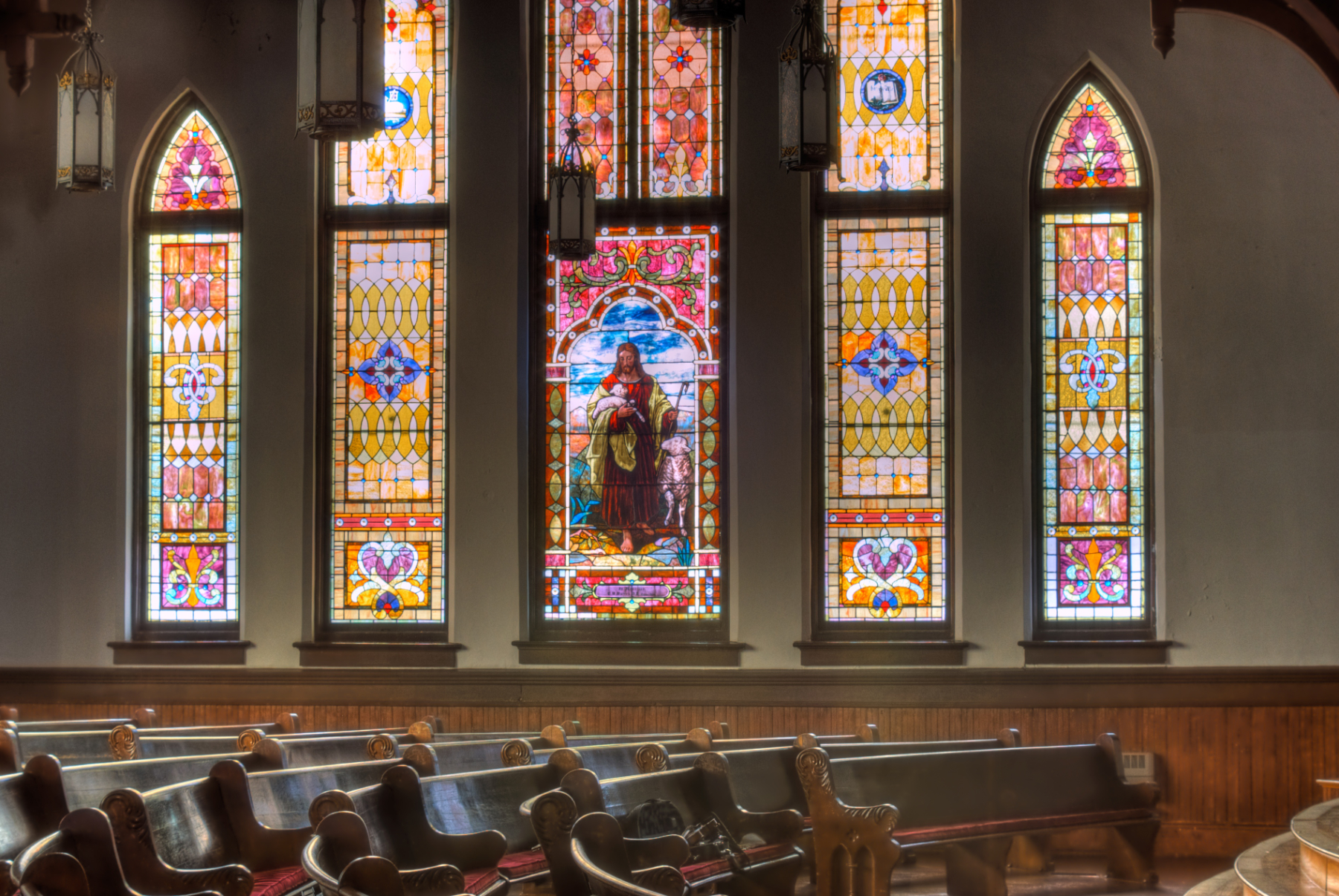
Mercer University researchers are in the early stages of a five-year project to discover ways to help churches better include neurodivergent children in worship services through music and the arts.
The Sacred Spectrum Project: Enhancing Worship for Neurodivergent Children Through Music and the Arts is funded by a $1.25 million grant from Lilly Endowment Inc.’s Nurturing Children Through Worship and Prayer Initiative.
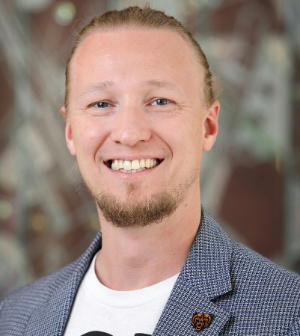
“The purpose of the project is, one, facilitating greater inclusion for all children in the weekly public worship service and, two, helping those children develop transferrable, socialized skills that they can then use once they graduate and become college students or go into the workforce or whatever that might be,” said Dr. Nathan Myrick, director of the Sacred Spectrum Project and assistant professor of sacred music in the School of Music.
Children develop those skills by building confidence in their social abilities, and that confidence comes from being included in a community where they know they are fully welcome, he said.
Despite growing awareness that attention-deficit/hyperactivity and autism spectrum disorders impede children from fully participating in worship services, best practices for addressing this impediment are not widely known or agreed on.
A recent study from the University of Aberdeen in Scotland found that sensory processing disorders are a key cause of dysregulation — the inability to manage emotions — in neurodivergent individuals. Bright lights, loud sounds and unexpected experiences with sensory data cause dysregulation, Dr. Myrick said.
“When someone’s dysregulated, they’re not able to learn or be engaged,” he said.
The Sacred Spectrum Project looks at how music and the arts can be tools to better facilitate inclusion and keep kids engaged. Dr. Myrick is trained as an ethnomusicologist, specifically in Christian congregations and communities.
“Within developmental psychology literature and music therapy literature, there are these strong correlations, if not causal relationships, between music and certain forms of emotional and mental regulation and, conversely, dysregulation when used inappropriately,” he said. “So, music can be and is often a profoundly powerful tool for emotional elicitation.”
Music, however, is not an isolated activity. Visual arts, performance arts and dancing intersect with music. Using an intervention that combines music and the arts takes a more holistic approach and is expected to yield better results, he said.
“If you can make an event, a space or a service inclusive to the least easily included, or the most marginalized person, you’re probably actually going to make it better for everybody because everybody gets to participate,” he said.
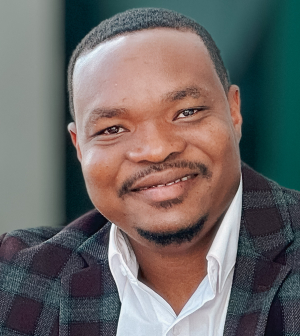
Dr. Eric Amouzou recently joined the Sacred Spectrum Project as assistant director of research. He earned his Ph.D. and master’s in church music from Baylor University.
“Having Dr. Amouzou join the project is wonderful,” Dr. Myrick said. “He brings tremendous energy and dedication to the team, and his contributions are already having an impact. The project team will benefit from his leadership and work ethic in the years to come.”
Dr. Amouzou said he is excited to join Mercer and the Sacred Spectrum Project. He is optimistic about what the project can accomplish.
“This research feels timely for the church,” he said. “Many communities have already taken important steps toward welcoming neurodivergent children and families, yet there is still much to learn about how worship, especially through music and the arts, can nurture a deeper sense of belonging. I’m grateful to be part of a team committed to the slow, faithful work of helping congregations create worship spaces where every child can belong and flourish.”
Researchers are currently in the literature review phase of the project. In early October, they attended Furnace Fest, a music festival in Alabama, to interview attendees in relation to the project. Dr. Myrick’s past research with the festival found a high percentage of neurodivergent individuals in attendance.
In January, researchers will begin working with three pilot congregations — First Baptist Church of Christ in Macon, Centenary Church in Macon and Grace Church International in Atlanta. Initially, the team will observe worship services and how congregants participate in them. Then, researchers will connect with families with neurodivergent children to talk to them about their experiences of worship. They also will interview church leaders.
After analyzing the data, researchers will discuss their findings with church leaders and offer resources and suggestions for improving inclusion in worship services. These suggestions might look like offering noise-canceling headphones, blankets, options for seating or a sensory processing room, Dr. Myrick said. It also may look like exploring technological interventions for the ways people process things like lighting and sound amplification.
Churches will spend the next three to six months testing out those resources and suggestions while researchers collect feedback on their use. In 2027, researchers will begin studying a new cohort of congregations using what they learned from the pilot group.
“It’s going to be a prolonged trial experience for the next four years,” Dr. Myrick said. “At the end of that time, we’ll essentially have a large enough sample set to put together resources that we can then offer to congregations.”