James Kitchens has forged a unique and multifaceted career centered around narrative. As a Master of Divinity student in Mercer University’s McAfee School of Theology, he’s woven his newfound knowledge and skills into his ongoing work as a pastor and historical interpreter.
Kitchens earned his bachelor’s degree in theater from the University of Montevallo in Alabama in 2010. After graduation, he held a part-time acting job for a few years at nearby American Village — a center that offers immersive educational programs and experiences on American history, civics and government — and did children’s theater with the New Stage Theatre for a year.
Despite his love for theater, Kitchens ended up in logistics transportation work for several years and found himself in need of a change.
“I was working in a job that I hated. I was not happy with it at all. I was looking for a way to get out,” he said.
Kitchens had always thought about being a minister. The pastor of his church had studied at Mercer’s theology school and told him about its new online program. In 2021, Kitchens became a Mercer graduate student, and he hopes to complete his degree next year.
“I fell in love with the teachers and the classes and the content,” he said. “I became incredibly interested in it, especially from an academic perspective, and just got really into it. I felt really passionate about it.”
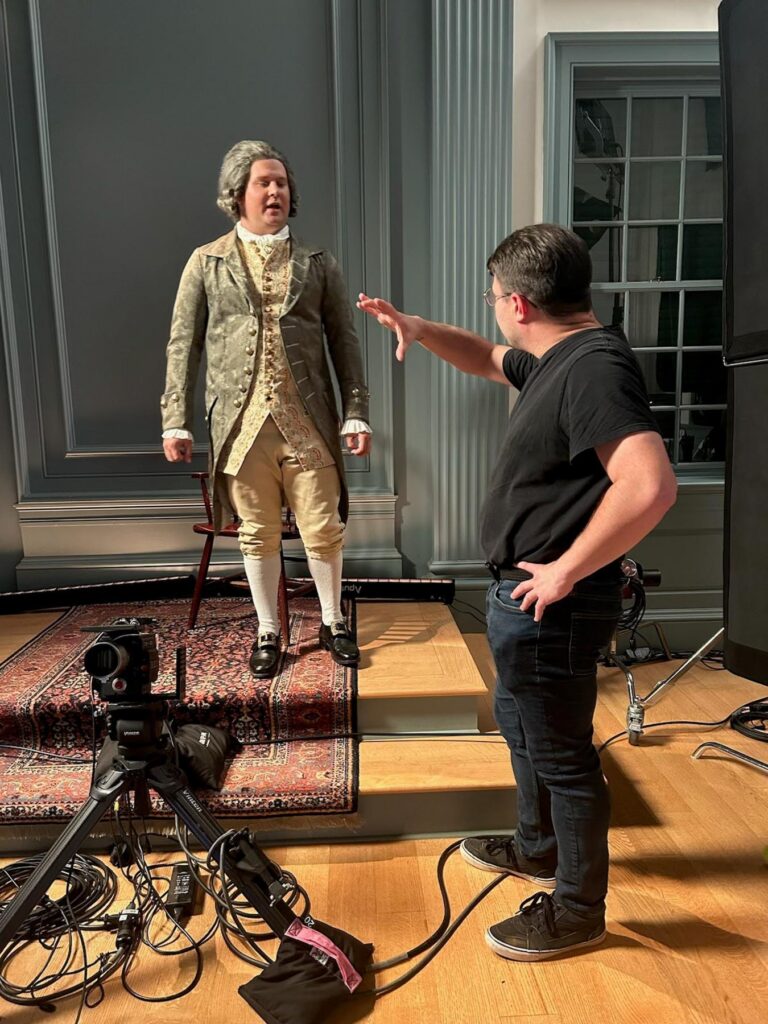
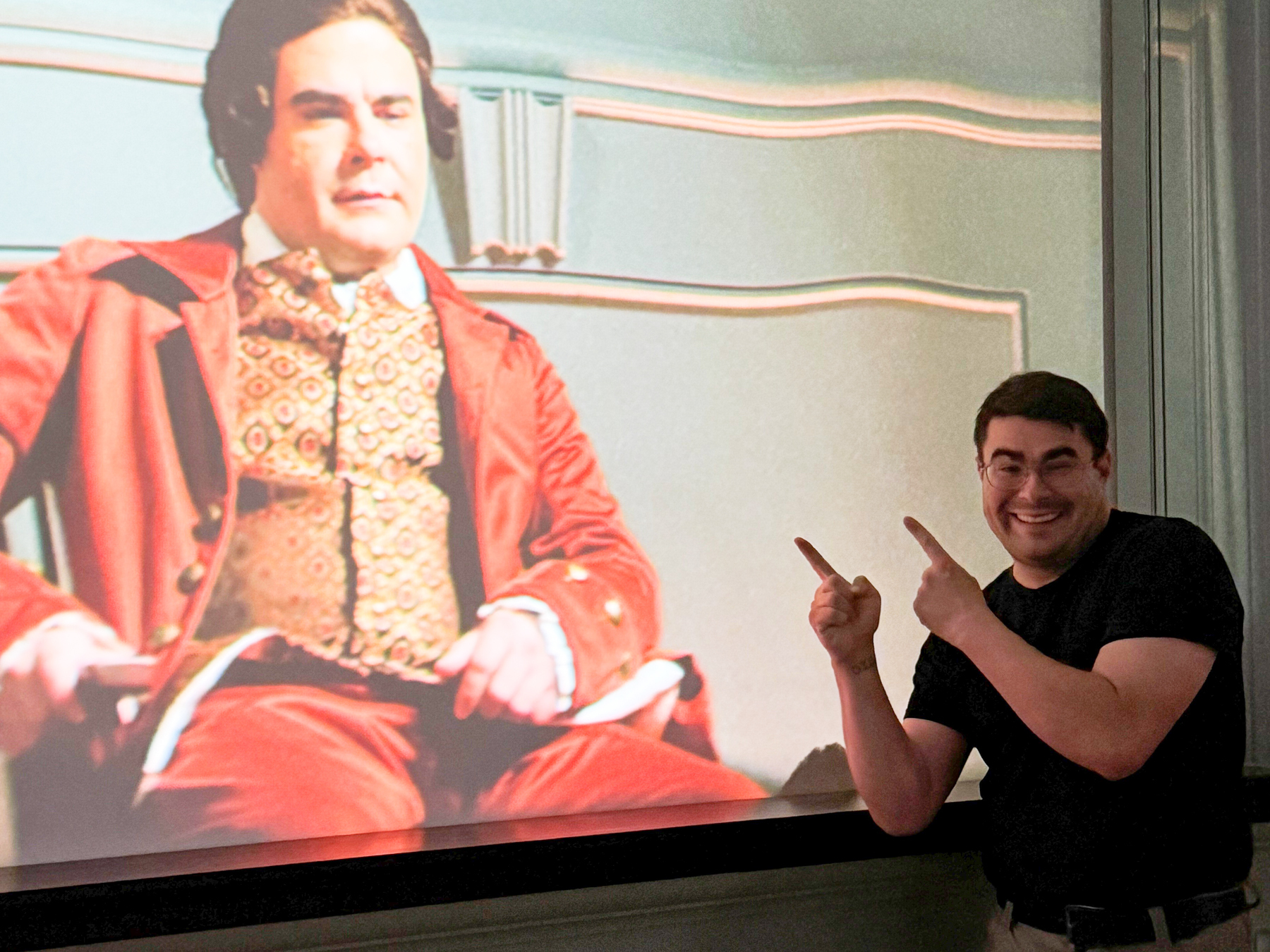
As he worked toward his degree, Kitchens had the opportunity to return to the work he had loved at American Village. He was asked to play John Adams in a film, which led to a full-time position as co-director of the junior interpreter program and then dramatic director.
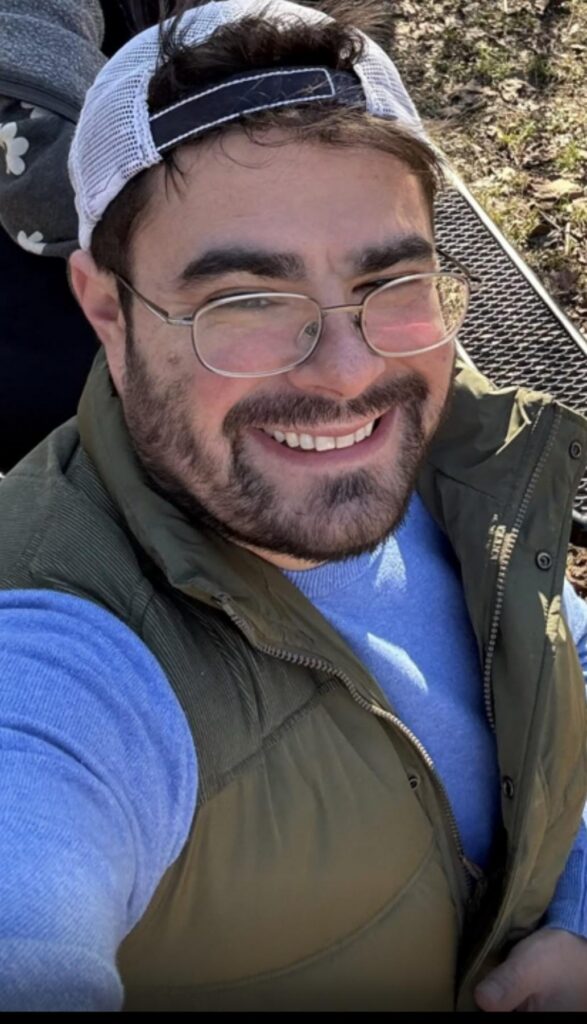
Today, Kitchens oversees the creative development and production of living history programs — sometimes also starring in them — that are performed for American Village guests, as well as educational videos. In partnership with Troy University, he is leading the creation of about 30 state history and civic education videos for 11th and 12th grade students that will be available to Alabama teachers next year. Kitchens said it’s been fun but challenging to figure out how to make topics like constitutional amendments and Supreme Court justices entertaining for teens.
Another big portion of his recent work has been video projects for American Village’s two-day festival in celebration of the country’s 250th birthday. He and a colleague are writing and planning about 25 videos for the festival, in addition to developing a new summer program and an interactive exhibit that will launch in September.
“I’m a narrative theologian,” Kitchens said. “(American Village) is all about living in the story, living in the narrative. This place really goes beyond. It’s not so much this is a slice of life; it’s more like, what were these people feeling and thinking and what were they going through? What were those human stories? (The team is) all interested in telling those character stories. It’s a very unique place. I wish more people could see and experience it.”
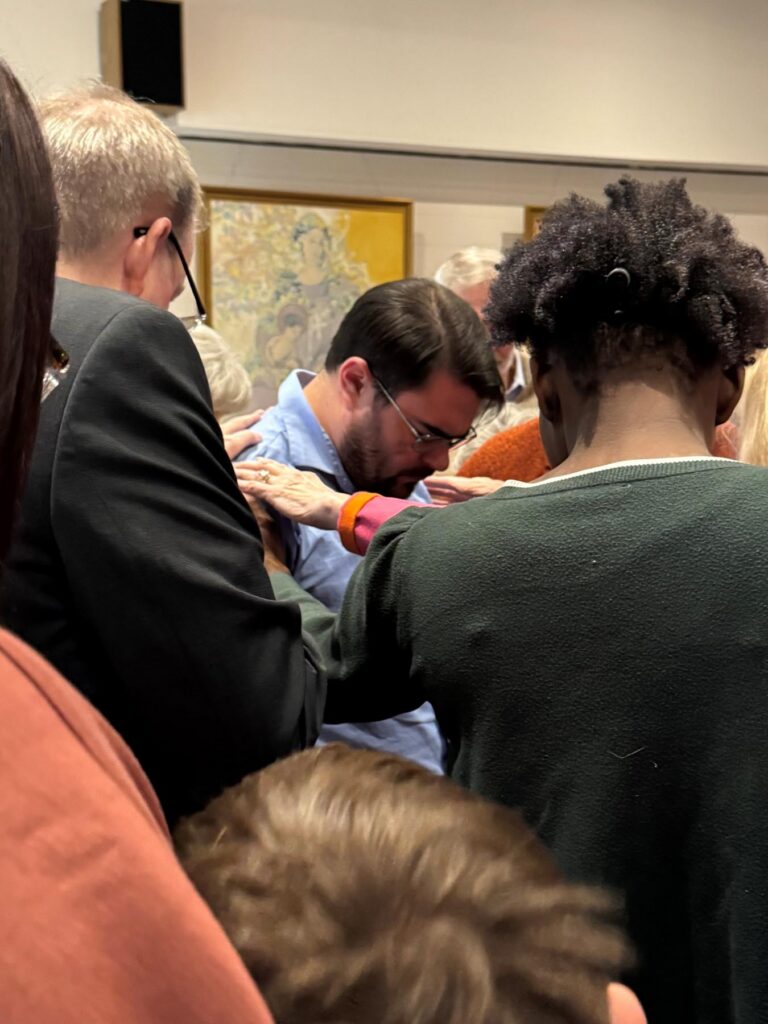
In December, Kitchens became pastor of Antioch Baptist Church, a small congregation in Titus, Alabama. It has been a fun new experience for him. He said his courses at Mercer have been helpful in both his ministerial and theater work. For one, he provides a lot of impromptu pastoral counseling to his colleagues at American Village.
“It’s benefitted me in a knowledge-base and given me a passion for that,” he said. “Through my studies, I kind of found a groove where I am academically and where I think theologically. McAfee gave me the scholars I can look up and follow and branch off from. It’s also been a benefit of what I’m doing at the village. Being here has made me such a better writer. I’ve gotten a whole lot better, and a lot of that is because of the work at McAfee.”
Kitchens said his theology courses have increased his interest in writing. He plans to spend more time on his independent writing going forward. Currently, he has a few projects in the works, including a film script for which he just wrote a theology monologue for a character who is a pastor.
“Both the job of a student and the job of a historical interpreter have a lot of times worked hand in hand and been very complementary of one another,” he said. “You can make things relate. I’m looking back on the time I’ve had (at Mercer) very positively. It was worth it. I would encourage people to do what they feel led to do … and don’t feel like education at McAfee won’t get you there. It might not seem like the straight path, but the straight path is kind of boring.”