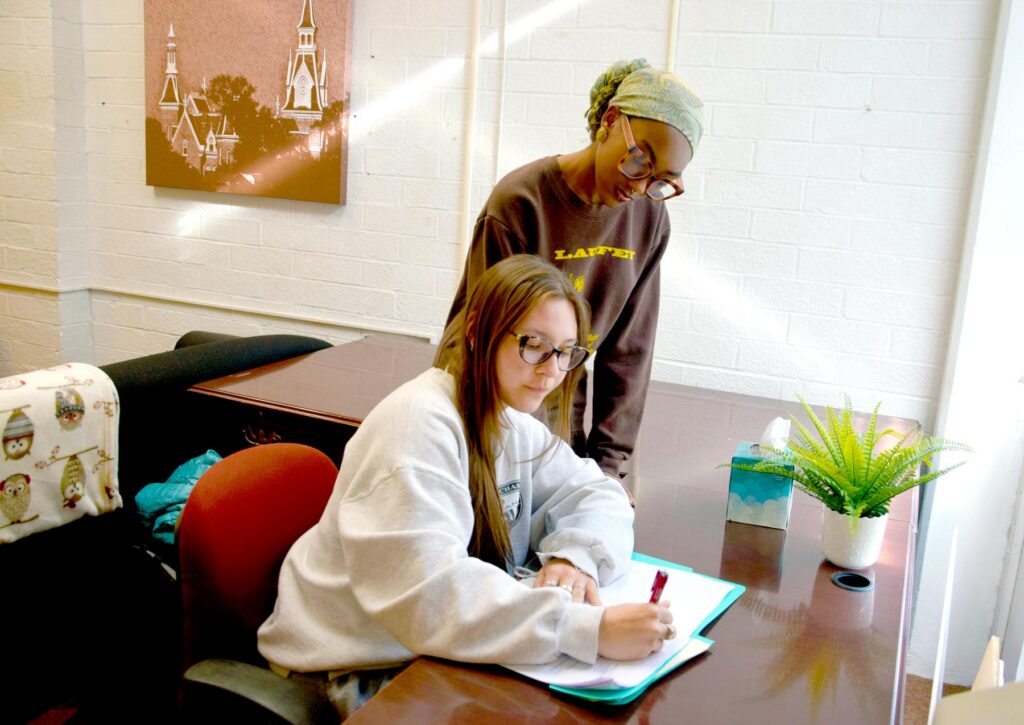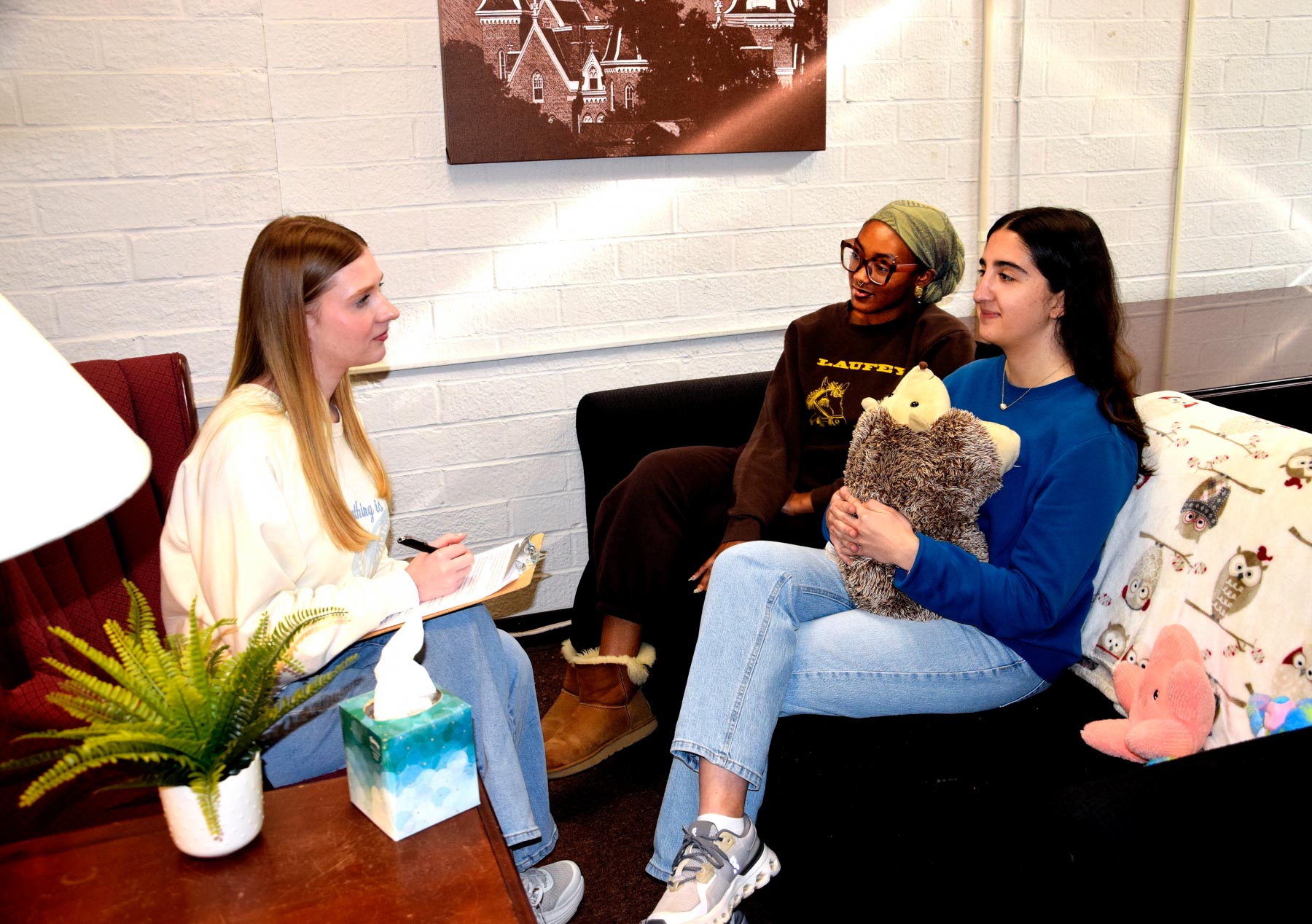
Students on Mercer University’s Macon campus now have access to another avenue of mental health support. Launched by Counseling and Psychological Services (CAPS) earlier this semester, the peer counseling program offers students the option to talk with a trained upperclassman about issues and stressors they may be facing.
Shaun Kell, CAPS assistant director, said traditional undergraduate students consistently requested the addition of peer counselors over the years.
“I think there’s a sense that they want to talk to someone who is kind of sharing their experience in a more lived way than the professional counseling staff,” he said. “Often, there’s a perception that perhaps the struggles that they’re going through don’t rise to the level of needing professional mental health counseling, which is what we do here at CAPS.”
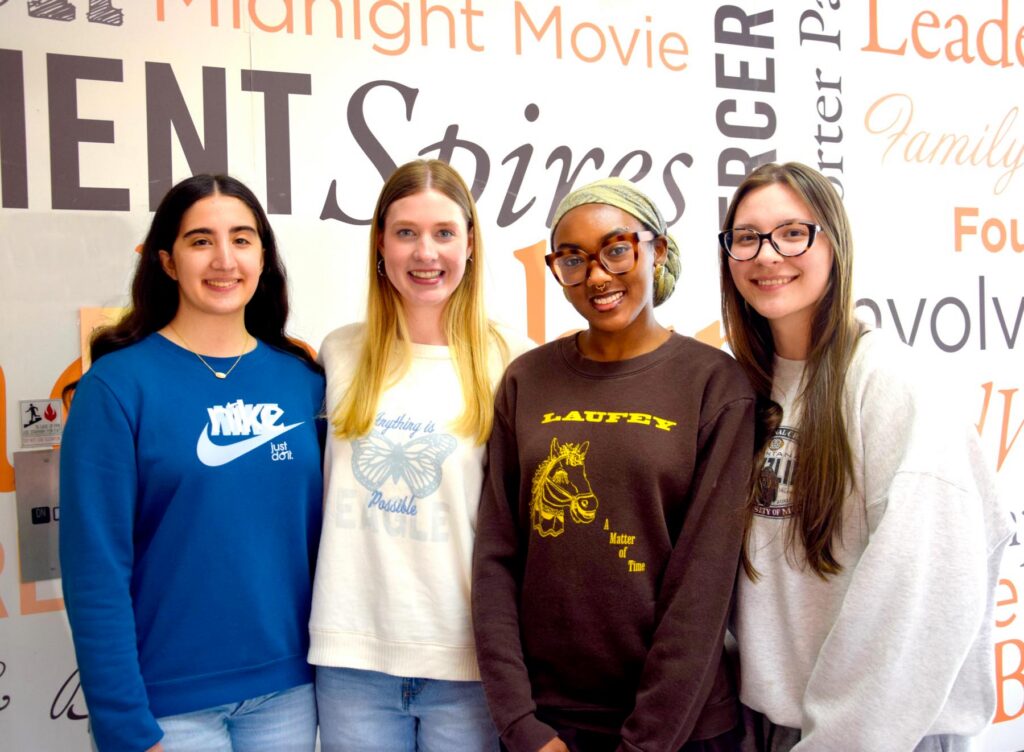
The student peer counselors are also members of AWARE, Mercer’s mental health awareness and advocacy group. After getting involved in the organization, interested upperclassmen can complete the 12-week Certified Peer Educator Training from NASPA: Student Affairs Administrators in Higher Education in the fall and begin working with students in the spring. This semester, there are seven peer counselors.
“They learned effective listening skills, how to create and work with clients to create change, and problem-solving skills,” said Kathryn Scoggins, CAPS staff counselor. “They learned about how identity affects our experiences and our relationships as well.”
Shelby Stevenson, a senior kinesiology major, and William Spurlock, a senior psychology major, said they found the role-playing portion of the training to be particularly useful. It helped them to become comfortable acting as a counselor and learn how to conduct sessions in a professional manner.
“The students are training in reliable, science-grounded information. The counseling is quality and it’s confidential, and that’s really important to us,” Kell said.
In addition to helping students in need, the program also provides an opportunity for students interested in pursuing mental health or medical careers to gain their first counseling experiences. Stevenson, for instance, hopes to go to medical school and pursue a specialty involving women’s health.
“There’s a massive part of mental health and mental illness to women’s health, and that’s something I’ve experienced myself and that I know is going to be a major factor in my future career,” she said. “Going into peer counseling was (a way) to get some more one-on-one experience and learn what that kind of relationship might look like with having a client.”
Spurlock, who wants to be a therapist, said few therapy opportunities exist for undergraduate students interested in the field. The peer counseling program is giving him valuable hands-on experience and will help set him apart as he continues his education.
“I like talking to people. I like when people are open about their emotions and how they feel. This program is a chance to experience it,” he said. “Everyone should be in therapy. You don’t need a crisis to go. It’s just part of general upkeep.”
CAPS staff meet weekly with the peer counselors to problem-solve and provide support, Scoggins said. Students dealing with more severe issues are referred to CAPS counselors.
“Ideally, the peer counselors would take people who are looking for help on … stuff that’s not super serious, so (staff) counselors can focus on people who need a little bit more help,” Spurlock said. “I think we can provide a unique kind of help. We can give an on-the-ground perspective. I think that gives us a lot of relatability.”
Stevenson hopes the program will help students to make the changes they want to see, meet their goals, and realize it’s OK to talk about their mental health. She conducted the program’s first peer counseling session.
“It was a really unique experience to get to do that,” she said. “It was really interesting and a good chance for me to express leadership in a different way.”
Kell hopes the program will build momentum as students try it out and share their positive experiences. He wants students to see that they don’t have to figure it all out on their own and can benefit from healthy relationships with their peers.
“What I’m hoping that the peer counseling program and the AWARE program will do is create a culture of mental wellness in the Mercer community,” Scoggins said. “We’re already doing really well with that. I think Mercer is a really great place to be a student. My hope is that we continue to amplify that.”
To request a peer counseling session, students need to fill out an online form. Then, they will be matched with a counselor who will reach out to them.