Mercer University junior Desiree Banks said she was inspired to learn American Sign Language when she was volunteering at a food bank several years ago. She remembers a man coming to look for food but not being able to communicate with anyone about what he wanted because he was deaf.
“It was frustrating to see people getting irritated with a person who was trying to get their food. I feel like in times like that, I don’t want there ever to be an instance where there’s that gap, and there’s nobody there to fill it,” said Banks, who knew only a few signs at the time.
Banks, a graphic design and Africana studies double-major from Hinesville, spent more time learning American Sign Language in high school and took ASL courses to fulfill her foreign language requirement. When she tried to do the same at Mercer, she found there were no ASL courses at the University and thought it would be fun to start a club where she could continue learning and practice with other students.
“I feel like it’s something that’s really important. There are a lot of people who are deaf and hard of hearing, and I feel like sign language can go a long way,” she said. “My advisor suggested that I should start a club to maybe show that there is an interest and one day gather enough people to get classes.”
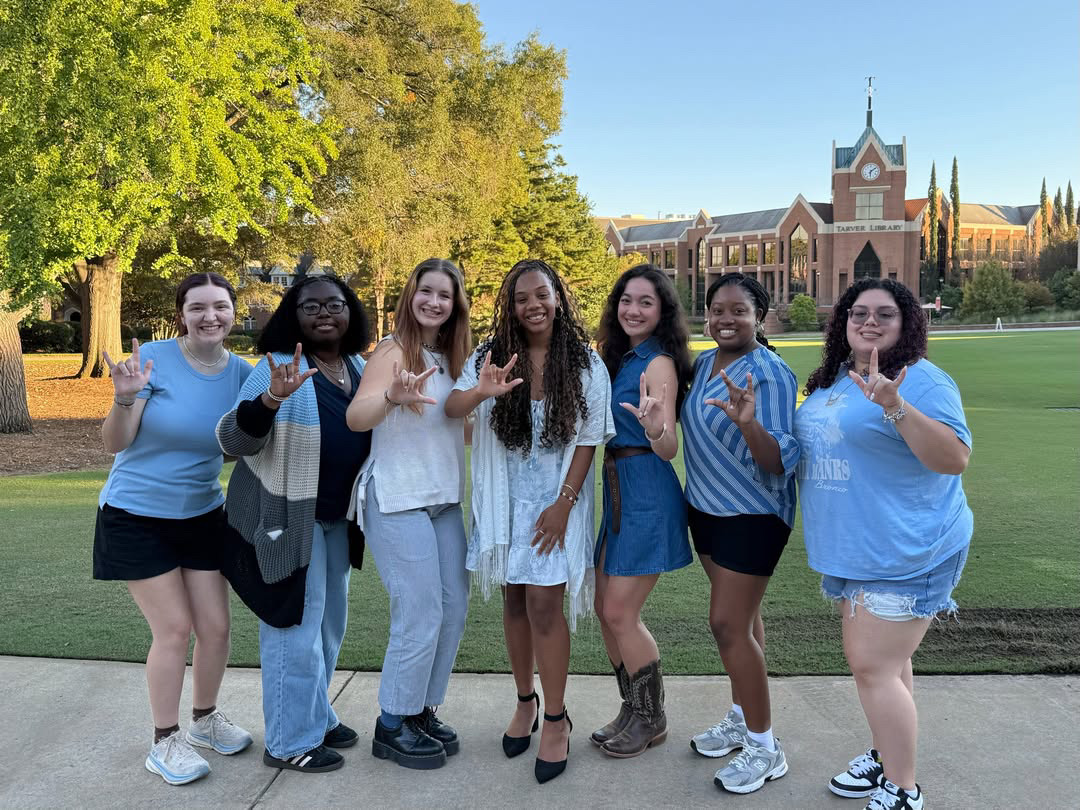
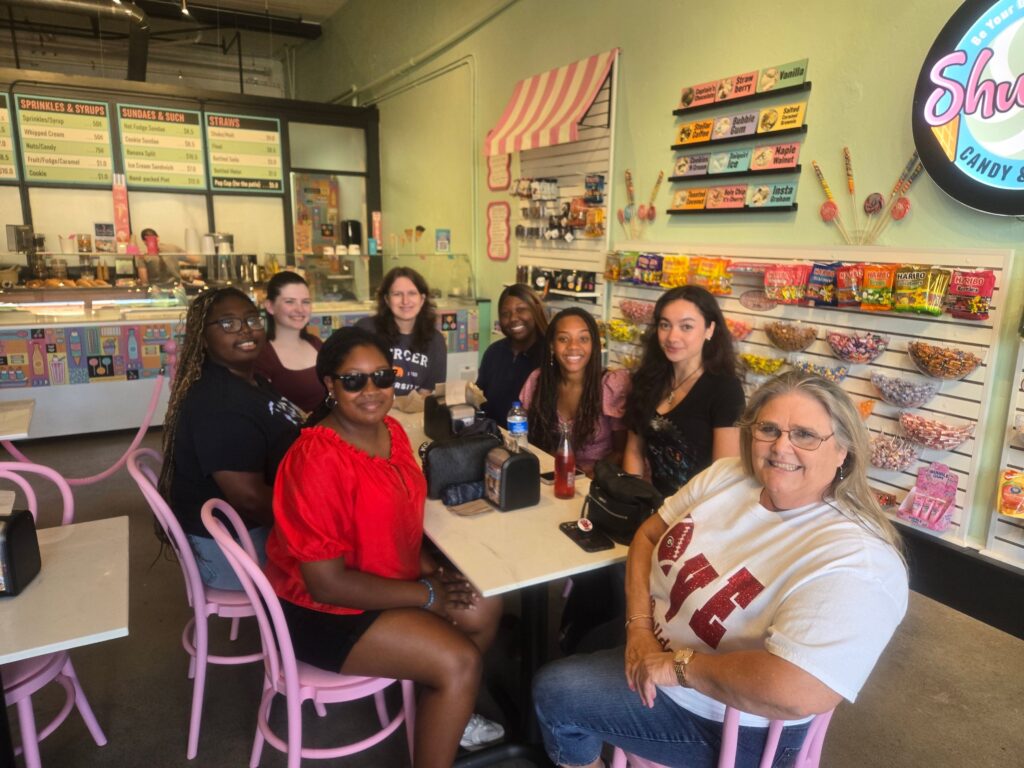
This year, Banks launched BearSign, an ASL and Deaf culture club that teaches students of all learning levels. The club’s executive board spends time learning from online resources — like sign language learning apps, websites and videos — to teach members how to communicate in ASL. The group also hosts socials where members meet with residents at the Middle Georgia Center for the Deaf and Hard of Hearing and an advisor who teaches the students regional signs and helps them gain a better understanding of Deaf culture and history.
Senior Eliza Penfield, BearSign’s event coordinator, said it was important to have events where students could socialize and interact with the broader Macon community to understand how everyday ASL is spoken.
“I feel like the best way to learn any language is to be in conversation with people who use that language and do social things where you’re kind of pushed into that proximity where you have to use the language,” she said. “Then you can learn other signs, not just the signs you’d learn in a classroom, but signs that flow in conversation because you’re with people who use it every day.”
Penfield, who is double-majoring in communication studies and anthropology, said she had previous experiences seeing deaf and hard of hearing individuals who couldn’t find people who understood them. She was glad to find a club where she could build her skills with others
“I think American Sign Language is one of those things that a lot of people think would be fun to learn, but they don’t really know how to get started, so I think now that we’ve created this club, it’s a fun thing for people to go and do with other people who are also learning, so it’s not a stressful environment,” she said. “It’s not like a classroom where you’re getting a grade for it, we’re all just learning together, and that’s been fun to watch.”
Banks said many students have joined the club to gain a skill that will help them communicate with more people in their professional journey.
“What I’ve enjoyed is when people who are pursuing medical and different fields have come up to me and said, ‘Hey, can we do extra lessons learning about how to interact with patients who might be hard of hearing or deaf?’ and they want to do sign language with them,” she said. “I think it’s really nice that people are taking it into their careers.”
It is estimated that about 11 million people in the United States are deaf or hard of hearing, 500,000 of whom use ASL as their primary form of communication. In the United States, for every interpreter, there are 50 individuals seeking assistance communicating with their doctors, educators, employers and those in other important settings.
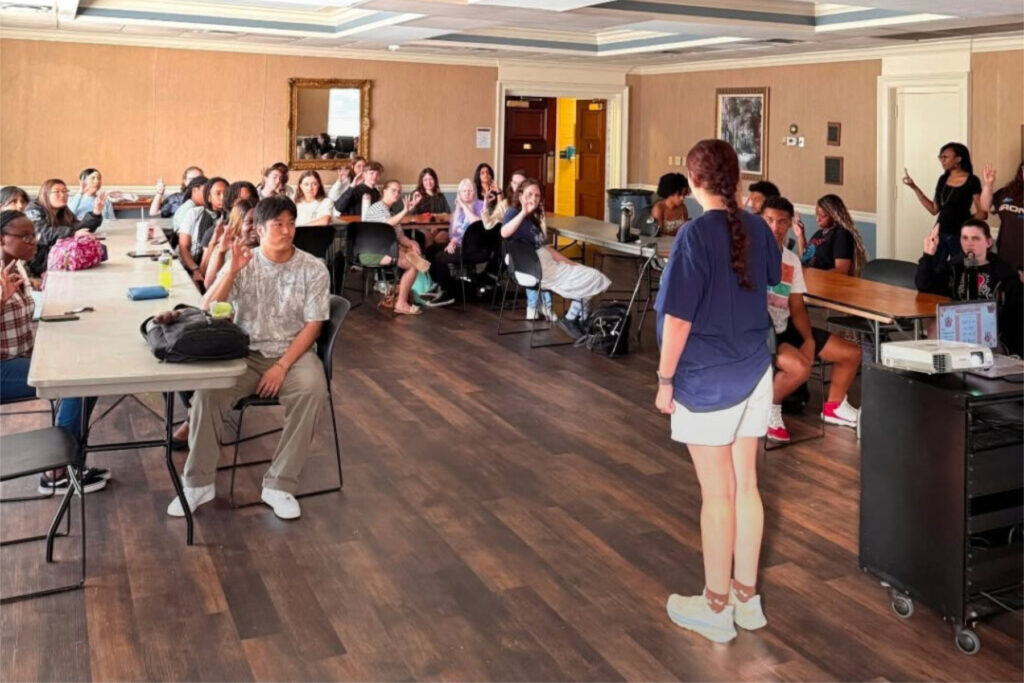
Keyana Hunt, a senior majoring in law and public policy, said as someone who is hard of hearing, she was glad to see how many people at Mercer wanted to join BearSign.
“I’ve always wanted to advocate for myself and others who also wear hearing aids because a lot of people don’t know that just because you wear hearing aids doesn’t mean you can’t hear; it just means that in certain situations you can’t hear as well,” said Hunt, the club’s advocacy coordinator.
Hunt said it’s been exciting to watch students join BearSign and commit to learning ASL.
“Growing up, a lot of people in my area shamed deaf people and ASL in general, so it makes me happy that there are people who actually like it and want to learn about it,” she said.
Banks said while ASL can be a valuable skill and benefit in the professional world, more people should take the time to learn ASL to help the people in their community who may need it.
“You never know when you’re going to run into someone and it’s going to be useful. There will be situations every day where you’re shopping, you’re working or something, and you’re coming into contact with people who may be deaf,” she said. “And not everyone wants to write on a piece of paper when you can easily use your hands to sign and communicate what you’re feeling the right way.”