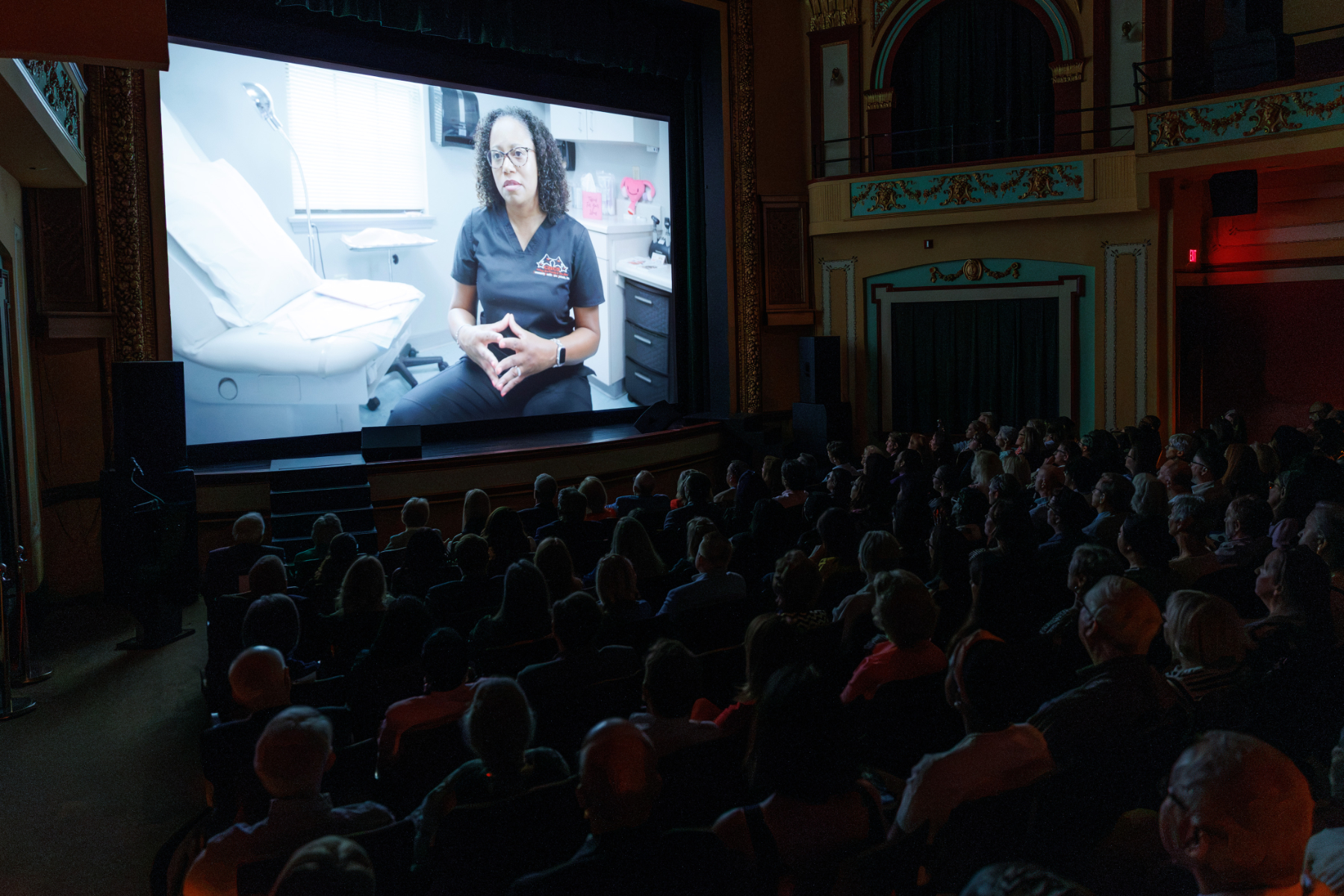
MACON, Ga. — The challenges facing rural healthcare and the people dedicated to addressing them were spotlighted Aug. 19 during a community screening of “Georgia Rising: A Rural Health Story” at the Macon Film Festival.
“Georgia Rising” explores the complex struggles of rural healthcare across the state and shares the stories of those who have dedicated their life’s work to caring for people and developing innovative, proactive solutions for underserved communities.
Georgia Public Broadcasting will air the documentary Aug. 24 at 9 p.m., and it will be available for streaming on pbs.org.
Funded by Mercer University School of Medicine’s Georgia Rural Health Innovation Center, “Georgia Rising” follows rural medical providers and their creative approaches to delivering care.
Georgia legislators, Mercer leadership, rural health advocates, medical students and those curious to learn more about rural healthcare filled Macon’s historic Douglass Theatre.
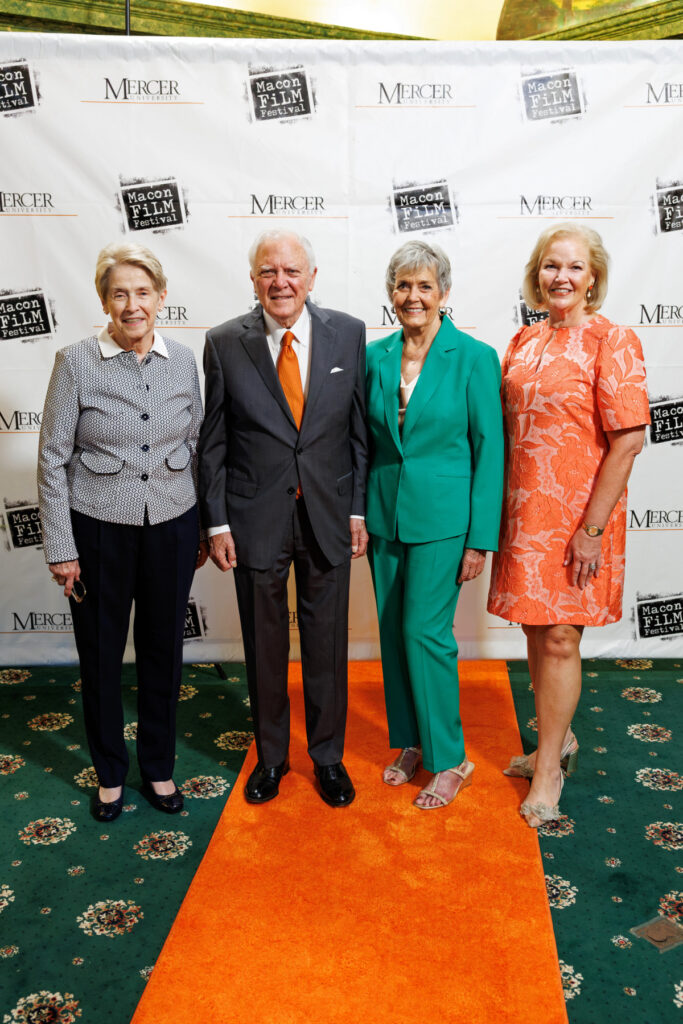
Former Georgia Gov. Nathan Deal, who is featured in the film, opened the screening by emphasizing the importance of access to healthcare across Georgia, where the vast majority of the state’s 159 counties are rural.
“One of the things that this film depicts is an issue that is important to all of us, and that is the importance of healthcare and the importance of distributing healthcare to as many of the citizens of our state as possible,” he said.
Following the screening, providers featured in the film took a deep dive into not only the obvious challenges in rural healthcare, such as transportation, income, insurance and lack of physicians, but also the systems, initiatives and collective community support that strengthen access and contribute to the overall well-being of rural people.
Panelists discussed the ingenuity it takes to keep hospitals open and for physicians to find ways to connect patients to the care they need. They emphasized that the relational side of medicine is a critical component of patient care — pharmacies, medical practices, schools and community service organizations must work together to create avenues to care through resources and health education.
Audience members praised the documentary for its portrayal of rural healthcare and the broader role healthcare institutions play in sustaining their communities.
One viewer called the film “a powerful reminder that investing in rural healthcare can change the very nature of people’s lives.”
“A healthcare facility brings more than just medical care. It brings hope, connection, opportunity and a renewed sense of community,” the viewer said. “Education can grow, and families and communities can thrive.”
Another viewer called the documentary “a must-watch for all medical students, physicians and patients alike.”
While metropolitan areas have a vast array of healthcare services and resources, rural communities often struggle to access primary care, much less specialty care for critical illnesses and diseases.
Although barriers to care are significant, the documentary offers a broader perspective on rural medicine — one that acknowledges these realities while highlighting the service, commitment and resilience found in rural communities. It shows the people behind rural healthcare and inspires others to see rural medicine not only as a challenge to overcome but as a calling worth celebrating.
“The heart of rural healthcare has always been its people. Too often, the narrative focuses on statistics about what is lacking,” said Glenda Grant, executive director of the Georgia Rural Health Innovation Center. “‘Georgia Rising: A Rural Health Story’ was created because rural healthcare deserves to be known for more than its obstacles.”
Grant said that behind every clinic, hospital, ambulance and community program are people who possess the determination and drive it takes to change lives.
“This documentary is about honoring those individuals whose compassion and ingenuity make quality care possible. Rural communities aren’t simply surviving — they’re leading, innovating and rising,” she said.
Georgia’s rural counties play a vital role in the state’s economy and quality of life. These counties supply the food, livestock, timber and other resources for the state.
“Rural Georgians are resilient and productive. They deserve quality primary healthcare services provided by well-trained physicians and other healthcare professionals. Rural hospitals save lives and bring new life into the world every day,” said Jean R. Sumner, M.D., MACP, dean of Mercer University School of Medicine.
Mercer School of Medicine has been unwaveringly dedicated and successful in educating Georgia physicians who are committed to serving rural areas. Practicing medicine in these areas requires exceptional skill and judgment, Sumner said.
“This film will help the viewer understand why rural physicians are critically important,” she said.
Featured in “Georgia Rising”:
Former Georgia Gov. Nathan Deal: Raised in Washington County, Deal has long been a staunch advocate of rural healthcare and medical education. During his tenure as governor, he championed efforts to strengthen the state’s healthcare workforce and access in rural communities. A four-year scholarship bearing his name at Mercer University School of Medicine provides full tuition for students who commit to living and practicing in medically underserved rural counties.
School of Medicine Dean Jean R. Sumner, M.D., MACP: A third-generation Georgia physician, Sumner has devoted her entire career to rural healthcare. She was the first Georgian to receive the American College of Physicians’ Ralph O. Claypoole Sr. Memorial Award and the inaugural recipient of the Georgia Chapter’s Commitment to Rural Care Award, which was renamed in her honor. After decades of serving rural patients, first as a nurse then as a physician, she brought her experience to MUSM when she became dean, a role she has held for the last decade. Since its founding, the School of Medicine has remained steadfast in its singular mission: to educate physicians to meet the healthcare needs of rural Georgia. Sumner continues to lead the charge in advancing that mission and advocating for rural healthcare.
Angela Handley: Handley overcame early life challenges to become a nurse before stepping into the role of CEO of Clinch Memorial Hospital in Homerville in 2017. Her path from the bedside to leading a Critical Access Hospital was shaped by a determined spirit, perseverance and a deep compassion for serving others. Handley is hands-on in every aspect of the hospital. She is committed to the patients who come through its doors and to the Clinch County community.
Justin Peterson, M.D.: Peterson, a MUSM graduate, is on the front lines of maternal healthcare as an OB-GYN physician serving Coffee County and the surrounding areas. For him, returning to his rural roots to practice medicine was never a question. His connection to the community and his patients is deeply personal as providing care — often in boots and scrubs — means caring for neighbors and families in a community that he has always called home.
Keisha Callins, M.D.: Callins holds MUSM’s Joy McCann Endowed Professorship, serves as a preceptor for medical students and is an OB-GYN serving Jones and Twiggs counties. She received the inaugural Sandra Dunagan Deal Rural Service Fellow award from MUSM. Her sense of purpose to strengthen maternal healthcare in rural underserved communities is profound. Whether she is in clinic caring for patients, mentoring the next generation of physicians, or advocating for rural healthcare at Georgia’s Capitol, Callins stands at the forefront of efforts to make impactful change in maternal health and access to care for women.
Garrett Streat, Pharm.D.: Streat, a Nathan Deal Scholar and MUSM medical student, aspires to be a primary care physician in his hometown of Nicholls in Coffee County.
“Georgia Rising: A Rural Health Story” was produced and directed by accomplished filmmaker and documentarian Tabitha Walker of Big Hair Productions. Emmy and Telly Award-winner Larry D. Brumley served as executive producer.